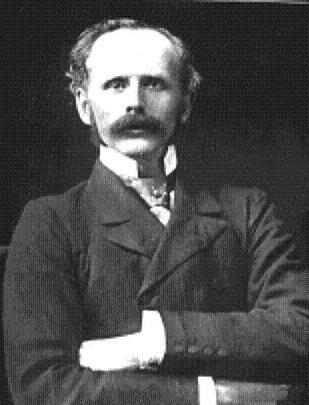
Henry Drummond
Scottish biologist and writerWikipedia
26
MENTIONS
15
EPISODES
11
PODCASTS
Search complete. 26 mentions across 15 episodes found for "Henry Drummond".
Oct 2, 2026

Marianne SpiegelNARRATOR
The writer of the Epistle to the Hebrews states the case thus, By faith we understand that the worlds have been framed by the word of God, so that what is seen hath not been made out of things which do appear.
Marianne SpiegelNARRATOR
So far as science can settle anything, said Henry Drummond, this question is settled.
Marianne SpiegelNARRATOR
The attempt to get the living out of the dead has failed.
Marianne SpiegelNARRATOR
God was the creator, however many ages may have been occupied in the vast work, or whatever the order or the processes of creation may have been.

AnkoNARRATOR
But to delineate that contest, and honestly to study the part played in the evolution of mankind, by each one of these three forces, would require at least as many years as it took me to write this book.
AnkoNARRATOR
Of works dealing with nearly the same subject, which have been published since the publication of my articles on mutual aid among animals, I must mention the Lowell Lectures on the Ascent of Man, by Henry Drummond, open bracket, London, 1894, close bracket, and the Origin and Growth of the Moral Instinct, by A. Sutherland, open bracket, London, 1898, close bracket.
AnkoNARRATOR
Both are constructed chiefly on the lines taken in Büchner's Love, and in the second work, the parental and familial feeling as the sole influence at work in the development of the moral feelings has been dealt with at some length.
AnkoNARRATOR
A third work dealing with men and treated on similar lines is the Principles of Sociology, by Professor F.A. Giddings, the first edition of which was published in 1896 at New York and London, and the leading ideas of which were sketched by the author in a pamphlet in 1894.

Marianne SpiegelNARRATOR
By faith we understand that the worlds have been framed by the word of God, so that what is seen hath not been made out of things which do appear.
Marianne SpiegelNARRATOR
So far as science can settle anything, said Henry Drummond, this question is settled.
Marianne SpiegelNARRATOR
The attempt to get the living out of the dead has failed.
Marianne SpiegelNARRATOR
God was the Creator, however many ages may have been occupied in the vast work, or whatever the order or the processes of creation may have been.

Stephen EidersteinHOST
I actually wanted to give a... just a overview of what my experience has been reading this chapter every day for a week so far.
Stephen EidersteinHOST
We just finished the book, Henry Drummond's The Greatest Thing in the World, where it talked about this.
Stephen EidersteinHOST
And right at the end of that book, in the last section, he provided a challenge.
Stephen EidersteinHOST
And the challenge was to read 1 Corinthians 13 every day for a week, then once a week for three months, and then once a month for three months.
Stephen EidersteinHOST
And it's been...
Stephen EidersteinHOST
It's interesting how it changes, you know, and I really just wanted to read the whole chapter again, chapter 13 from 1 Corinthians, and then give...
Stephen EidersteinHOST
You a little bit inside of what I'm seeing now, you know, because we going through the entire book that Henry Drummond wrote on it, which is was an analysis of this.
Stephen EidersteinHOST
He took it and put it into his own terms.

speaker_2NARRATOR
It was only when, with the dawning of the day, those who had sick folk in the city, and who had not received Christ's healing grace on the previous evening, began to knock at the door and inquire for him, that the disciples discovered he was not there.
speaker_2NARRATOR
and then they pursued that is the greek word in hot haste after jesus incidentally let us notice what a tribute there is here to the character of jesus these four disciples knew exactly where to look for him they had already become acquainted with his prayer habits they knew his love for quiet and solitary communion and so when he was missing they went straight to the place of prayer to look for him they pursued after him what an illustration this is of the difficulties of communion scarcely can we turn aside our hymn says for one brief hour of prayer jesus could scarcely turn aside it was with difficulty he found his quiet time something or other the clamour of the multitude the cares of the world was always following him even into the desert place we know this difficulty too what between the claims of business and family social and church duties we have no leisurefully quiet time every hour we are pursued by something or other nevertheless we must make time for prayer meal times and prayer times as the old saying puts it are not lost times all men are seeking thee said peter half petulantly and reproachfully and by that he meant that the people of capernaum wanted to hear more of the wonderful teacher and to see more of the wonderful healer who had so astonished them the day before but peter spoke better than he knew all men are seeking thee does not this express the attitude of the wide world is it not christ the world is wanting men are not able always to interpret their own needs but is it not true that far and wide though all unknowing pants for thee each mortal breast human tears for thee are flowing human hearts in thee would rest i read in john's gospel of certain greeks who came to philip saying sir we would see jesus john twelve twenty one i read in henry drummond's biography that the message the japanese gave him to bring over to england was this give us your christ all men are seeking thee christ is the common and universal need all are seeking thee said peter but jesus did not promptly return with them to capernaum all seething with expectancy and delight let us go was his reply elsewhere into the next towns that i may preach there also for thirty eight revised version behold says one old commentator remarking on this answer of our lord the philanthropy of christ the old commentator was quite right that is what shines out of this answer the philanthropy the broad and all-embracing love for men that filled christ's heart peter's appeal was a selfish appeal he would have confined christ's ministrations to but christ had a larger heart and a broader sympathy and a wider outlook than his disciple let us go elsewhere he said our lord was always thinking of the elsewhere when the minds of his disciples are full of copernim he is thinking of the elsewhere of galilee when their minds are full of judea he is thinking of the elsewhere of samaria and when they have taken in the elsewhere of samaria he journeys with them to tyre and sidon to remind them of the elsewhere of the wide world other sheep he said i have which are not of this fold them also i must bring john ten or sixteen let us go elsewhere in his larger sympathies the master wants his disciples to share a young missionary came home invalided his friends thought that under the circumstances a home pastorate would be the best thing for him but he himself longed and fretted to get back Why do you wish to return, said one of them to him? Because, was the reply, I can't sleep for thinking of them.
speaker_2NARRATOR
He felt the call and the pull and the appeal of the elsewhere.
speaker_2NARRATOR
Do we? Do we share in the philanthropy of Christ? Christ is ever on the march to the regions beyond, to the elsewhere, and if we would enjoy his company, we must keep step with him.
1 HR 14 MINS LATER
speaker_2NARRATOR
a man may so harden himself in sin as to become incapable of repenting and because he cannot repent he cannot be forgiven this is not so much a case of unpardonable as of indomitable sin it is not the grace of god that fails even here but the man cannot be renewed unto repentance does a man ever get into this awful state i cannot tell but at any rate those who give mourning because they think they have committed this sin prove by their very broken-heartedness that they have not committed it when a man gets into the grip of eternal sin he does not care he is past feeling the fact that men feel is proof that they are not in it As Bishop Chadwick says, No penitent has ever been rejected for this guilt, for no penitent has ever been thus guilty.
speaker_4NARRATOR
section
speaker_2NARRATOR
twenty four of the gospel according to st mark volume one by j d jones this librivox recording is in the public domain the parables mark four verses one to three and he began again to teach by the seaside and there was gathered unto him a great multitude so that he entered into a ship and sat in the sea and the whole multitude was by the sea on the land and he taught them many things by parables and said unto them in his doctrine hearken behold there went out a sower to sow this chapter brings us to another clearly marked stage in the history of christ or at any rate to a new development of his ministry from this point onward he taught the people in parables it is quite clear that he had not hitherto employed this method of teaching from the surprise expressed by the disciples in verse ten his preaching up to this time had been perfectly plain simple and direct as for instance in the great address known to us as the sermon on the mount but from this time onward the parable was his favourite method of conveying truth to the multitude and without a parable spake he not unto them now there must have been a reason for the adoption of the parabolic form of teaching at this particular time and i want if possible to discover what that reason was but before discussing the reasons why our lord adopted the parable as his vehicle for conveying truth just at this juncture we may profitably look at the facts which make the parable so useful the greek word literally means a placing of one thing beside another with a view to comparison now there is a deep correspondence between this natural world of ours and the spiritual world the world of nature and the world of spirit as archbishop trench says proceed from the same hand and grow out of the same root the things of earth are copies of the things in heaven the earthly tabernacle is made after the fashion seen in the mount the heavens declare the glory of god and the firmament showeth his handiwork it is the same god who reigns in glory who has also made this earth of ours and by understanding his laws in this lower realm we may gain glimpses into the laws of the realm of spirit and grace for the invisible things of god are declared to us by the things that are made and this earth is a ladder by which we can climb to heaven this entire moral and visible world says archbishop trench from first to last with its kings and its subjects its parents and its children its sun and its moon its sowing and its harvest its light and its darkness its sleeping and its waking its birth and its death is from beginning to end a mighty parable a great teacher of supersensuous truth a help at once to win faith and understanding this harmony and correspondence between the natural and the spiritual has been clearly discerned by the people of pure heart and open mind professor henry drummond that man of stainless soul that bayard of the modern christian church wrote his famous book natural law and the spiritual world just to illustrate and prove this correspondence but it has been observed long before drummond's time creation dr martineau has said is god thinking aloud i am thinking said kepler as he traced the movements of the planets god's thoughts after him earths crammed with heaven wrote mrs barrett browning and very common bushes afire with god what if earth writes milton be but the shadow of heaven and things therein each to the other like more than on earth is taught but no one ever walked earth who had so pure a heart as jesus he did no sin neither was guile found in his mouth and consequently no one ever walked earth who had so clear an eye he saw everywhere heavenly analogies and the natural everywhere to him shadowed forth the spiritual you perhaps remember how sir edwin arnold puts it the simplest sights we met the sower flinging his seed on loam and rock the darnel in the wheat the mustard tree that hath its seed so little and its boughs wide spreading and the wandering sheep and nets shot in the wimpled waters drawing forth great fish and small these and a hundred such seen by us daily never seen aright were pictures for him from the page of life teaching by parable and so he enriched the world for ever with those exquisite parables of the prodigal son and the lost sheep and the talents and the sower in this chapter which have given us some of our most precious glimpses into the realm of spiritual truth Now, speaking in parables was by no means a new form of instruction.
speaker_2NARRATOR
It was a popular method of teaching in the East.

Tory RobsonHOST
It has enabled man to discover laws whereby time and space have been annihilated and the law of electricity to be conquered.
Tory RobsonHOST
The operation of this law is dependent upon spiritual contact and as Henry Drummond says, In the physical world as we know it, there exists the organic and the inorganic.
Tory RobsonHOST
The inorganic of the mineral world is absolutely cut off from the plant or animal world.
Tory RobsonHOST
The passage is hermetically sealed.

Emily JonesGUEST
So Disraeli dies in 1881 and there's a bit of a moment and there are some figures that call themselves the fourth party.
Emily JonesGUEST
So figures like Randolph Churchill, who's Winston's dad, and the Gausts and Henry Drummond.
Emily JonesGUEST
There are parliamentary antics, but they also found in 1883, the Primrose League, which is founded in Disraeli's memory.
Emily JonesGUEST
It's important because in 1883, the Corrupt Practices Act really limits the amount of political work that certain types of people can do.
Stephen EidersteinHOST
The Greatest Thing in the World by Henry Drummond.
Stephen EidersteinHOST
The Defense.
Stephen EidersteinHOST
Part 4.
Stephen EidersteinHOST
Walking the Spiritual Walk.
Stephen EidersteinHOST
And I'm really excited to be doing this fourth installment of the last episode.
Stephen EidersteinHOST
section of henry drummond's book the greatest thing in the world and this will be the last episode actually in this series i was going to originally break this last uh two pages well four pages up into two uh episodes but i think i'll just make this one a little bit longer and cover the whole thing because it it really is a singular um section of this chapter that would be um i think doing it a disservice to try to break it up into two two uh episodes so uh we're going to be just finishing up with this last uh episode here which is episode 19 in this run so there was 19 episodes for this uh study of this uh well-known work by Henry Drummond.
Stephen EidersteinHOST
And there is some really great stuff in these last couple of pages.
Stephen EidersteinHOST
There's some instructions.

Julia DuthieHOST
i like that
Trevor HuntGUEST
and uh And as part of that process, Julia, I thought about this, which is what does five influences really mean? And this chap called Henry Drummond did this.
Trevor HuntGUEST
He said, the people who influence you are the people who believe in you.
Trevor HuntGUEST
So I've reflected on that a lot.

Gary ThomasGUEST
I was so struck.
Gary ThomasGUEST
I really borrow from Henry Drummond in this when he wrote a fabulous essay on peace, that it's often pursuing peace that we chase it away because we think peace is situational.
Gary ThomasGUEST
If I fix this, I have a certain amount of money set aside.
Gary ThomasGUEST
If I like my job, if I like who's in charge of the government, if everybody's good with me, if all of my children love me and they're following the Lord, then I'll finally have peace.
Jim DalyHOST
I'm still down here in darkness.
Jim DalyHOST
How do we help that person that can't see it yet or is in the emotional mire of the moment and they resent it or they're bitter about it?
Gary ThomasGUEST
or angry at god henry drummond has a recipe he says peace has a recipe just like baking a cake and he goes on to say restlessness has a cause and we don't have time to get into all of the recipe for that but one of the things he says that most upsets our peace if we want to get back is if we embrace when jesus said i am gentle and humble in heart it's the humility of jesus and the gentleness of Jesus.
Gary ThomasGUEST
If I embrace Jesus's humility and I'm mocked at by the world or even humiliated by the world, if I don't have pride, if I don't get my ego from the world's affirmation, I don't care how the world views me.
5 more episodes mention Henry Drummond.
Create an account to see the whole feed, search across every transcript, and follow the entities you care about.