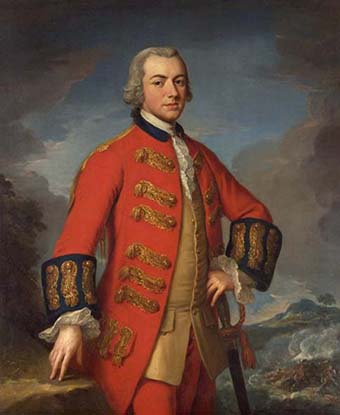
Henry Clinton
Former Governor of GibraltarWikipedia
86
MENTIONS
36
EPISODES
28
PODCASTS
Search complete. 86 mentions across 36 episodes found for "Henry Clinton".
Sep 20, 2026

Ted LienhartNARRATOR
At the time he carried on this trading, he was quartered in one of the buildings at Harvard College, and did his share of fatigue, made cartridges, ran ball, and even served his turn as cook for the company.
Ted LienhartNARRATOR
A curious agreement made between a soldier and a landowner near camp stipulated that the former was to clear a certain tract of land fit for mowing and was to receive a hundred dollars paper currency but if headquarters moved before he had finished the work he was to receive payment for what he had done among the many duties incident to army life the observance of sunday as a day for religious teaching was not forgotten washington himself impressed upon the men under his command the value of christian character and his own example must have aided the chaplains in their difficult labors public prayers were a part of the daily or sunday routine followed by the reading of orders and usually the roll-call washington's attitude toward religion in the army was unmistakably set forth when he said to the distinguished character of a patriot it should be our highest glory to add the more distinguished character of a christian and congress ready to promote the same ideals voted september eleventh seventeen seventy seven to import twenty thousand bibles it is curious to notice that all the members from new england were in favor of the measure and all those from the southern states except georgia were recorded as against it although lee of virginia and lawrence of south carolina were with the north a chaplain who it is said prayed and sang with the brigade has described the preparation made for services the music march up and the drummers lay their drums in a very neat style in two rows one above the other it always takes five and often the rows are very long occasionally they make a platform for me to stand upon and raise their drums a number of tears the sermon on sunday usually at eleven was often of a practical nature it referred to the hardships and the duties of a soldier it urged upon him temperance and vigilance cleanliness and honesty in many cases as in those cited herewith the minister altered the text to suit his need rev john gano who was attached to clinton's division of the expedition against the six nations in seventeen seventy nine was asked to preach to the troops at cannerjury and was requested to dwell a little more on politics than he usually did he preached from the words of moses come go thou with us and we will do thee good for he that seeketh my life seeketh thy life but with us thou shalt be in safeguard rev mr kirtland preached september fifteenth seventeen seventy six to the new jersey troops at fort schuyler from the text he that is not with me is against me and he that gathereth not with me scattereth abroad upon the fourth of july mr gano took for his text these words this day shall be a memorial unto you throughout your generations but these suggestive sermons did not always attract the men and even when they were present discipline was not maintained as rigidly as would be the case to-day to increase the audience a penalty was once imposed for absence from worship a few hours spent in digging out stumps in a new york woodland proved effective it should be said in defense of the men that the preaching was not always worth a hearing mr bliss said a fellow clergyman preached at cambridge august twenty seventeen seventy five from those words in dey twenty three nine to fourteen and had he have digested his subject might have done well but attempting to extemporise it was as it was the critic himself however rather outdid mr bliss on the following sunday when as he records he preached the entire day but perhaps he had relays of listeners and not one weary throng as might be inferred rev mr gano was a serviceable preacher when he was informed that many of the soldiers before whom he was to preach on a certain sunday were six and nine months men whose departure from the army would be unfortunate he told his listeners that he could aver of the truth that our lord and saviour approved of all those who had engaged in his service for the whole warfare the rank and file were much amused and those who had engaged for the whole war forced many short-term men by their jesting to re-enlist but the laugh was not always on the minister's side during the winter at valley forge many parsons were at home as the men were too poorly clad to stand in the cold and listen to preaching mr gano was away on leave when he returned to camp he asked a soldier how his commander and the men had fared the soldier replied gravely that they had suffered all winter without hearing the word of god mr gano explained that it was their comfort he had had in mind true said the soldier but it would have been consoling to have had such a good man near us deeply touched mr gano told general van cortlandt of his encounter van cortlandt a little later asked to have the soldier pointed out to him and was surprised to see the worst reprobate in the regiment chapter six chapter seven of the private soldier under washington by charles knowles bolton camp diversions rumors of victory or defeat lent a pleasant excitement to the lives of the rank and file a story of the patriot campaign in canada was passed on together with official dispatches from one post-rider to another along the almost impassable river routes of maine over the stony roads of massachusetts and connecticut through the tory settlements of new york and so southward to the congress at philadelphia the despatches reached their destination unchanged except for a coating of grime and wet but the verbal story grew with each retelling until the last post-writer had news to astonish those about the camp-fires the official news was printed upon handbills which were given out to the men the effect of good tidings is shown in a somewhat famous scene when the stores from the captured ship nancy arrived in the camp near boston there were demonstrations of joy the scene as pictured by colonel moylan is somewhat startling old putt general putnam was mounted on the mortar with a bottle of rum in his hand standing parson to christen while godfather mifflin gave it the name of congress bands of prisoners of war and captive tories passing through the camp awakened patriotic enthusiasm which found expression in shouts from the men and the coming of well-known or curious visitors delegates from congress sent to inspect the army or indian chiefs and their followers helped to while away the hours the impression made by such events is illustrated in the record in a soldier's diary that the king of the ingans with five of his nobles to attend him come to headquarters to congratulate with his excellency for many years june fourth the king's birthday had been celebrated in america and when the day was allowed to pass in camp with no festivity and no mirth even the rebel in arms could not but notice this sorry end of a time-honored custom when september twenty second the king's coronation day was referred to as the king's damnation day war had indeed come the great day was the fourth of july commonly called the anniversary of our independency few diaries fail to mention with some detail the usual ceremonies of the occasion the whole army was drawn up under arms at one o'clock with detachments of artillery interspersed and thirteen pieces at the right the celebration began with a discharge of thirteen shots for the states followed by a running fire of musketry and cannon from right to left through the front ranks and then from left to right through the second line repeated three times a speech sometimes followed and then three cheers from the entire army games and an extra allowance of rum closed the day on the british prison ships where all the horrors of starvation suffocation and disease were rife the day brought a speech or a feeble cheer another favorite anniversary was that of the day of burgoyne's surrender which was celebrated by the firing of cannon the throwing of sky-rockets into the air skillocats in the air and much merry-making when the welcome news was received that france had declared for the united states the delighted troops cheered for the king of france the friendly powers of europe and the thirteen states every continental soldier under arrest in washington's army was set at liberty to enjoy the day on more than one occasion a soldier under sentence of death profited by the news that the french king had shown his friendship for the colonies or that a distant battle had been won but the successes of the british bore hard upon the men in the patriot army and sometimes even those in captivity were made to know that their captors had won a victory major griffith williams in command of the detachment of royal artillery with burgoyne ordered that the american prisoners be drawn up in the rear of the british lines to hear the feu de joie given in honor of burgoyne's victories some it is said were stung by the insult while others threw up their caps with the british and were roughly handled by their more loyal comrades the customary holidays were not forgotten christmas and thanksgiving day brought greater liberties and an extra allowance of liquor even st patrick's day produced a noticeable change in camp the irishmen who had been born in america or had settled in the country before the war began were reinforced in some regiments by deserters from the british lines the widow izard a prominent lady in the south honored the name of st patrick in seventeen eighty two by a gift of a gill of spirits to each soldier in general greene's army a little later the same army celebrated may day with maypoles and festivities although this was declared to be something extraordinary as indeed it must have been victories and anniversaries brought merriment and noise with their accompaniment of drinking and cursing congress occasionally showed an interest in these celebrations and sent the inevitable present of rum thirty hogsheads were consumed by the gallant survivors of the battle of the brandywine but there were other forms of amusement in camp the men played ball or cards and now and then were allowed a rifle frolic a contest in marksmanship in which the vanquished was bound to treat his more skilful adversary to liquor a form of relaxation not so clearly understood is mentioned by private samuel hawes as an old fudge fairy well my friends during the winter of seventeen seventy five seventy six which was bitterly cold at the north men enjoyed skating on the rivers and ponds and in summer they bathed whenever it was possible they sometimes were able to get away into the country to fish hunt and to gather nuts but these privileges were more often granted to officers nothing so depressed the spirits of the soldiers as the inactive life of a camp far removed from the enemy a spice of danger was always welcome to train the raw recruits to be fearless under fire a trifling reward was offered for bringing to headquarters each cannon ball which was thrown from the enemy's batteries it was found however that the younger men failed to gauge properly the force and weight of a ball that ricocheted slowly along the uneven ground several soldiers in using their feet to bring a ball to a stop were knocked down or crippled this plan had to be given up when the shells from boston fell into the camp at roxbury shrieking like a flock of geese they did more said an observer to exhilarate the spirits of our people than two hundred gallons of our new england rum each shell as soon as it burst was surrounded by a throng of men eager for mementoes funerals some one has said must be counted with amusements in a description of uneventful country life the chastisement of wrongdoers may likewise fall into line with the diversions of camp life without great impropriety for the curious modes of punishment in vogue at the time afforded some relaxation if they did not convey the obvious lesson the moral to be taken to heart by the onlookers was weakened by the frequent reprieve of the culprit and this misfortune was only too well understood by the officers one hundred lashes the limit of corporal punishment allowed made little impression upon the spirit of a sullen and wilful transgressor to give a hundred lashes their proper value and importance standing as they did for the penalty next to death itself many serious crimes that needed severe treatment had to be met with inadequate punishment the result as it worked out in practice was that the death penalty was too often imposed and this led to reprieves another unfortunate outcome of the system was the invention of new punishments more or less cruel or savage when officers became exasperated by desertions and mutiny a corporal and two privates were making their escape from the first pennsylvania regiment when they were overtaken and captured after they had been secured a dispute arose some of the captors wished to kill all three on the spot without trial and without authority others counseled delay it was agreed finally to kill one of the three deserters immediately the three luckless fellows drew lots and fate selected the corporal whose head was at once cut off and placed upon a pole this gruesome object was carried into camp by the surviving captives to be placed over the camp gallows as a warning to all if there can be any excuse for such savagery it is to be found in the jeopardy of a great cause by desertions from an already inadequate army washington once wrote our army is shamefully reduced by desertion and except the people in the country can be forced to give information when deserters return to their old neighborhoods we shall be obliged to detach one half of the army to bring back the other in the country about new york many of the inhabitants were from principal or interest tremors in these uncertain times men when drafted were slow to respond to the call and many after enduring the hardships of camp life for a time returned home to aid a sick or impoverished household they had perhaps begged in vain for an honorable discharge telling, as others did throughout the colonies, of little ones without food or firewood.
Ted LienhartNARRATOR
And when they appeared in town again, the neighbors beheld the deserters with tolerance or with half-kindly eyes.
Ted LienhartNARRATOR
In a letter written at Rhinebeck, September 16, 1776, John White said, I suppose there are not less in this and northeast precinct than thirty deserters who keep in the woods and are supported by their friends.

Betty B.NARRATOR
Broadway always was.
Betty B.NARRATOR
Skipping history, passing the days when Manhattan Island was sold for $24, passing the days of Dutch and British rule, of the period when colonial society centered on Lower Broadway, when Lord Cornwallis, Lord Howe, and Sir Henry Clinton, Talleyrand, General Gates, Benedict Arnold, and other celebrities lived there.
Betty B.NARRATOR
When President Washington, during his short sojourn in the city, finding Cherry Hill, now the Manhattan terminus of the Brooklyn Bridge, too far out in the country to enable him to be in the social swim, moved down nearly opposite Wall Street, and passing scores of other interesting and important events in the street's national, municipal, commercial, and social history, we take it as it is today.
Betty B.NARRATOR
What a place Broadway is, and what a vast amount of entertainment can be gained by a visit to it.

James EarlyHOST
Yes.
James EarlyHOST
At a council war among senior Continental Army commanders, Benjamin proposes a battlefield tactic that uses Cornwallis' pride against him.
James EarlyHOST
Benjamin's militia joins the Continental Army Regiment and he confronts Cornwallis' troops at Cowpens.
James EarlyHOST
Watching the battle from afar, Tavington is impatient and decides against Cornwallis' express order to charge forth with his dragoon.

speaker_0NARRATOR
The reason for this order was already known to us.
speaker_0NARRATOR
Sir Henry Clinton, taking advantage of the withdrawal of the French fleet under the command of Admiral de Stone from Savannah in the previous October to the West Indies for winter quarters, had dispatched a large land and naval force from New York to besiege that town.
speaker_0NARRATOR
Rumors were already multiplying that its fall was certain and would be followed by an immediate attack on Charleston.
speaker_0NARRATOR
hoping to save the latter place congress had directed general lincoln who

Betty B.NARRATOR
Broadway always was.
Betty B.NARRATOR
Skipping history, passing the days when Manhattan Island was sold for twenty-four dollars, passing the days of Dutch and British rule, of the period when colonial society centered on lower Broadway, when Lord Cornwallis, Lord Howe, and Sir Henry Clinton, Talleyrand, General Gates, Benedict Arnold, and other celebrities lived there.
Betty B.NARRATOR
When President Washington, during his short sojourn in the city, finding Cherry Hill, now the Manhattan terminus of the Brooklyn Bridge, too far out in the country to enable him to be in the social swim, moved down nearly opposite Wall Street.
Betty B.NARRATOR
And passing scores of other interesting and important events in the street's national, municipal, commercial, and social history, we take it as it is today.
James EarlyHOST
Although the American campaign failed to retake Newport, it marked a turning point in the war by demonstrating the growing strength of the Continental Army and the profound strategic impact of France's entry into the conflict.
James EarlyHOST
In this week's episode, Audrey and I are going to head south with Generals Cornwallis and Clinton to discuss the British Southern campaign, a major shift in strategy in which the British hoped to regain the loyalty of the southern colonies and force the rest of the fledgling United States to the bargaining table.
James EarlyHOST
But before we do, listener, I want to hit you with one of my famous one-question quizzes.
James EarlyHOST
So all the battles and conflicts and struggles that we've talked about so far, Lexington and Concord, the Siege of Boston, the Battle of Long Island, the various battles in New York State, Battle of Trenton, Fort Lee, Fort Washington, Saratoga, Brandywine, Germantown, Monmouth, the campaign for Rhode Island.
James EarlyHOST
90% humidity
Audrey RogersHOST
[laughs] And we'll talk a little bit about kind of the background here a little bit.
Audrey RogersHOST
So Lord George Germain, who was the British secretary responsible for the war, wrote to Lieutenant General Sir Henry Clinton that capturing the southern colonies was, quote, "Considered by the king as an object of great importance in the scale of the war." You know, as we kinda talked about before, British leaders had concluded that the war in the North had reached a frustrating stalemate, so they thought if they couldn't end the rebellion there, perhaps they could do so in the South.
Audrey RogersHOST
Germain and the king believed that the majority of southern colonists were loyalists, and that if the British army could take certain key parts of the South, loyalists would rise up to join the British, and at the very least, the southern colonies could be brought back into the empires, at least the southern colonies.

Timothy BreenGUEST
And I think he still was a little intimidated by Burgoyne and the world he had lost.
Timothy BreenGUEST
He claimed there were rumors that General Clinton was coming up from New York with a support army that would erase the victory.
Timothy BreenGUEST
It turned out that Clinton didn't have enough troops, but Gates used that as a reason why he should be more accommodating.
Timothy BreenGUEST
The major thing was that these 6,000 battle-hardened troops would be shipped back.
Timothy BreenGUEST
to England and immediately General Washington and other people said, wait a minute, this is really a bad deal because several things can happen.

Michael TroyHOST
Washington sent more reinforcements under the command of General George Clinton.
Michael TroyHOST
This is a cousin of the British General Henry Clinton, and George Clinton is no relation to the Godfather of Funk.
Michael TroyHOST
Clinton also brought in artillery to bring to bear on the British.
Michael TroyHOST
On the British side, General Henry Clinton proposed crossing Harlem River, marching up and crossing behind the Americans to trap them.
Michael TroyHOST
But once again, Howe rejected any aggressive action that would have trapped the Americans.
Michael TroyHOST
He wanted to leave them a line of retreat so that they could leave Manhattan Island completely without forcing a bloody fight to the finish.

Bill FedererGUEST
And the, uh, historical marker, "Boyd's and Irwin's ferries to the west were used by Nathanael Greene in his passage at Dan River mid-February 1781 while Cornwallis was in close pursuit." The Americans are getting out the other side, the British show up, and before they can start crossing, a third flash flood.
Bill FedererGUEST
And the British commander Henry Clinton writes, "Here the Royal Army was again stopped by a sudden rise of the waters, which had only just fallen almost miraculously to let the enemy over, who could not else have eluded Lord Cornwallis's grasp so close was he upon their rear." And so the president of Yale, Ezra Stiles, says, "Should we not ascribe to a supreme energy," talking about God, "the wise generalship displayed by General Greene, leaving the roving Cornwallis to pursue his helter-skelter, i- ill-fated march into Virginia?" George Washington writes, "We have abundant reasons to thank Providence for its many favorable interpositions in our behalf.
Bill FedererGUEST
It has at times been my only dependence, for all other resources seem to have failed us." Now, have to talk about women in the Revolution.
Bill FedererGUEST
Um, women were called camp followers, but that term doesn't do them justice because they did everything.

Roger MelinNARRATOR
The reason for this order was already known to us.
Roger MelinNARRATOR
Sir Henry Clinton, taking advantage of the withdrawal of the French fleet under the command of Admiral Destonne from Savannah in the previous October to the West Indies for winter quarters, had dispatched a large land and naval force from New York to besiege that town.
Roger MelinNARRATOR
Rumors were already multiplying that its fall was certain and would be followed by an immediate attack on Charleston.
Roger MelinNARRATOR
Hoping to save the latter place, Congress had directed General Lincoln, who was in command of the Continental Army in the South, to hasten to its defense, and meantime was collecting a fleet there to aid the land forces.
5 MINS LATER
Roger MelinNARRATOR
The ships they have left in the lower harbor are enough to prevent our fleet from following them, and there isn't water enough for our craft to slip out this back way, so they can take their time and disembark the troops without fear of being disturbed by us.
Roger MelinNARRATOR
I believe you are right, the lieutenant responded.
Roger MelinNARRATOR
Sir Henry Clinton has got his thinking cap on at last.
Roger MelinNARRATOR
Well, this is so different from what our commodore expected, I will send you back to report.
26 more episodes mention Henry Clinton.
Create an account to see the whole feed, search across every transcript, and follow the entities you care about.