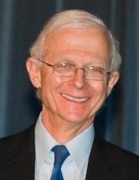
Henry Brodaty
Psychiatrist
47
MENTIONS
4
EPISODES
4
PODCASTS
Search complete. 47 mentions across 4 episodes found for "Henry Brodaty".
Oct 13, 2026

Nick MilesHOST
It suggests that low and middle income nations where average ages are now on the rise will show particularly rapid increases in dementia in the coming years.
Nick MilesHOST
Professor Henry Brodaty is co-author of the study that was carried out by the Center for Healthy Aging at the University of New South Wales in Australia.
Henry BrodatyGUEST
In countries like the UK and Australia where I'm from, particularly in the UK, I think you're already about 20% of your population over 65.
Henry BrodatyGUEST
We're at about 17%.
Henry BrodatyGUEST
You know, the Italian piazzas would be a nice example of that.
Henry BrodatyGUEST
And for every year we can delay the onset, we reduce the numbers of new cases by 10%.
Nick MilesHOST
Professor Henry Brodaty.
Nick MilesHOST
After almost eight months of the US-Iran conflict, a resolution seems as far off as ever.

Samantha Selinger-MorrisHOST
[gentle music] Dementia is the number one cause of death here, and it's a uniquely terrifying one given that it can often lead to a greatly eroded sense of self and lost memory of loved ones.
Samantha Selinger-MorrisHOST
The number of cases are set to double by 2061, when it's expected that one million Australians will suffer from dementia.
Samantha Selinger-MorrisHOST
But now some Australians are accessing new therapies which can, in the case of Alzheimer's disease, the most common form of dementia, slow its progress.
Samantha Selinger-MorrisHOST
I'm Samantha Selinger-Morris, and you're listening to the Morning Edition from The Age and The Sydney Morning Herald.
Clair WeaverGUEST
Lovely to be here.
Samantha Selinger-MorrisHOST
Okay.
Samantha Selinger-MorrisHOST
So Claire, many Australians know someone living with dementia or they've cared for a loved one with it.
Samantha Selinger-MorrisHOST
So just let's start off, can you tell us how do medical experts actually define dementia, and what is life actually like for the roughly 450,000 Australians who are currently affected by it?

Josh BryantHOST
UNSW researchers analyzed data across 18 countries, finding cases of the illness are higher in lower and middle-income countries.
Josh BryantHOST
Co-author Professor Henry Brodaty says it's the first time dementia incidence was tracked across geographically diverse populations.
Henry BrodatySOUNDBITE_SPEAKER
And the greatest growth in the number of people with dementia are going to be in those low and middle-income countries, where the least amount of services, least diagnostic opportunities, and least capacity to provide some of the new treatments and investigations.
Josh BryantHOST
Emergency physicians warn the country's health system isn't prepared for the growing number of older patients.

Jay ShettyHOST
I'll leave you with this.
Jay ShettyHOST
There's a paper from 2009 by Henry Brodaty and Marika Donkin, where they describe family caregivers as the invisible second patients.
Jay ShettyHOST
And I don't know whether you'll relate to that, but from what I can hear, it sounds like you deserve some care too.
Jay ShettyHOST
You're not just a caregiver.