Henoko
46
MENTIONS
13
EPISODES
6
PODCASTS
Search complete. 46 mentions across 13 episodes found for "Henoko".
Sep 17, 2026

Moeka IidaCORRESPONDENT
So in terms of getting along with the central government, Kojo takes a more pro-military base stance.
Moeka IidaCORRESPONDENT
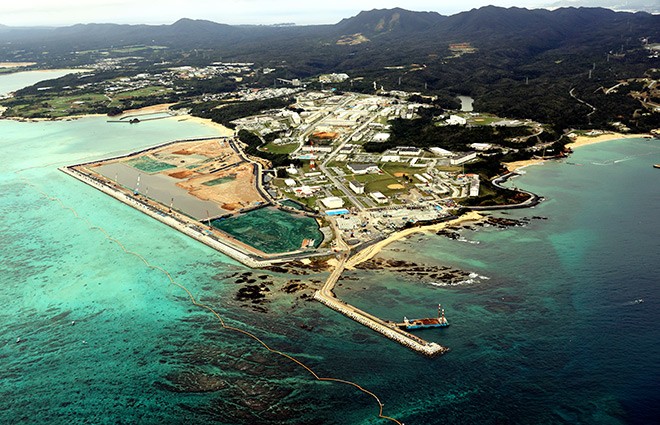
A symbolic project that characterizes this is the Henoko project, which involves relocating the Futenma air base from a crowded city to another site on reclaimed land along the east coast of Okinawa's mainland.
Moeka IidaCORRESPONDENT
Tamaki and the administration before him fiercely opposed that project.
Moeka IidaCORRESPONDENT
But Kojo, on the other hand, he was in favor of the Henoko project, so that marks a real shift.
Rosie BlauHOST
It seems surprising that Okinawans would now elect a governor who is keen on these military bases, having opposed them for so long.
Rosie BlauHOST
What's changed?
Moeka IidaCORRESPONDENT
He's in favor of the US-Japan alliance.
Moeka IidaCORRESPONDENT
So for him, it's a matter of protecting Okinawans' dignity.

Moeka IidaCORRESPONDENT
So in terms of getting along with the central government, Kojo takes a more pro-military base stance.
Moeka IidaCORRESPONDENT
A symbolic project that characterizes this is the Henoko project, which involves relocating the Futenma Air Base from a crowded city to another site on reclaimed land along the east coast of Okinawa's mainland.
Moeka IidaCORRESPONDENT
Tamaki and the administration before him fiercely opposed that project.
Moeka IidaCORRESPONDENT
But Kojo, on the other hand, he was in favor of the Henoko project, so that marks a real shift.
Rosie BlauHOST
It seems surprising that Okinawans would now elect a governor who is keen on these military bases, having opposed them for so long.
Rosie BlauHOST
What's changed?
Moeka IidaCORRESPONDENT
He's in favor of the US-Japan alliance.
Moeka IidaCORRESPONDENT
So for him, it's a matter of protecting Okinawans' dignity, and the base issue had a lot of momentum when he came into office.

Arjay AnaghaHOST
recommended relocating Marine Corps Air Station Futenma.
Arjay AnaghaHOST
By 2006, Japan and the U.S. agreed to move it to Henoko on landfill in Oura Bay.
MahimnaHOST
Okinawa's governor approved the landfill permit in 2013.
MahimnaHOST
The original estimate? 350 billion yen.
22 MINS LATER
Arjay AnaghaHOST
4.
Arjay AnaghaHOST
The cost and timeline overruns tied to environmental or geological conditions that nobody accounted for.
Arjay AnaghaHOST
Henoko's seafloor, Guam's typhoon and Nicobar's very obvious seismic exposure.
Arjay AnaghaHOST
And lastly, 5.

speaker_0NARRATOR
The council has not met since Takeshi Onaga was elected Okinawa governor in 2014.
speaker_0NARRATOR
Onaga opposed the relocation of the US Marine Corps Air Station Futenma in Ginowan to Henoko in the prefecture, a stance that contributed to years of friction between Tokyo and Okinawa.
speaker_0NARRATOR
Growth mandate.
speaker_0NARRATOR
The day before meeting Kōja, Takaichi welcomed the election results and the chance to expand Okinawa's economy.
6 MINS LATER
speaker_0NARRATOR
Tamaki gained support from seventy-three percent of those who selected the military base issue, but that group itself has shrunk.
speaker_0NARRATOR
In the twenty eighteen election, forty-six percent of voters picked the military base issue, and thirty-four percent did so in twenty twenty-two.
speaker_0NARRATOR
Exit polls over the years have also shown a decrease in voter opposition to the plan to relocate the US Marine Corps Air Station Futenma in Ginowan to Nago's Henoko district, also in Okinawa Prefecture.
speaker_0NARRATOR
In the latest election, which was conducted after the Supreme Court ruling in twenty twenty-five favored the central government's relocation plan, fifty percent of voters supported the move, outpacing the forty-four percent who opposed it.

Fiona WilsonCORRESPONDENT
Now, since, I think, 1996 is when they agreed that this thing had to be moved, this base, Futenma.
Fiona WilsonCORRESPONDENT
And the location that was chosen, Henoko, far north of, uh, Okinawa main island on the coast, very, very controversial.
Fiona WilsonCORRESPONDENT
And there have been relentless battles ever since.
Fiona WilsonCORRESPONDENT
And there's a huge amount of the population that does not want the base to be moved there.
Fiona WilsonCORRESPONDENT
Now, Denny Tamaki, who just lost the governor, uh, the gubernatorial election, he has been a two-time governor.
Fiona WilsonCORRESPONDENT
He was going for a third term.
Fiona WilsonCORRESPONDENT
He's very much opposed to the relocation of the base to Henoko.
Fiona WilsonCORRESPONDENT
He wants it off Okinawa altogether.

Yamaguchi HiroakiHOST
The 42-year-old will become the prefecture's first governor born after the return of Okinawa from US rule in 1972.
Yamaguchi HiroakiHOST
Koja accepts ongoing work to relocate the US Marine Corps Futenma Air Station from Ginowan City to the Henoko area of Nago City.
Yamaguchi HiroakiHOST
He also expressed his intention to ask the central government to realize an early return of land used by the base.
Yamaguchi HiroakiHOST
Tamaki, on the other hand, opposed the relocation project.
James TenganHOST
The 42-year-old will be the prefecture's first governor born after the return of Okinawa from U.S. rule in 1972.
James TenganHOST
Koja accepts ongoing work to relocate the U.S. Marine Corps Futenma Air Station from Ginowan City to the Henoko area of Nago City.
James TenganHOST
He also expressed his intention to ask the central government to realize an early return of land used by the base.
James TenganHOST
Tamaki, on the other hand, opposed the relocation project.
speaker_0NARRATOR
The election was primarily a race between Koja and Tamaki, despite an all-time high of six candidates.
speaker_0NARRATOR
Tamaki, who had long opposed the US Futenma base's relocation to the Henoko district of Nago in the prefecture, was seeking his third term.
speaker_0NARRATOR
The Supreme Court's 2025 ruling in support of the central government's relocation plan left Tamaki and the prefectural government with no legal means of blocking the move.
speaker_0NARRATOR
As a result, the election debate was mainly focused on economic measures.
speaker_0NARRATOR
Diet members from the six parties backing Koja also gave campaign speeches showing their support.
speaker_0NARRATOR
Mikio Shimoji, a 65-year-old former minister for postal privatization, also supported Koja after deciding not to run just before the start of the campaign period.
speaker_0NARRATOR
In voicing his acceptance of relocating the US air station from densely populated Ginowan to an offshore site in Henoko, Koja said it is the quickest, feasible plan to eliminate the dangers the Futenma base has been causing.
speaker_0NARRATOR
Unlike previous candidates, Koja required no conditions for the relocation plan to go forward in his policies or campaign messages.
speaker_0NARRATOR
The election was primarily a race between Koja and Tamaki, despite an all-time high of six candidates.
speaker_0NARRATOR
Tamaki, who had long opposed the US Futenma base's relocation to the Henoko district of Nago in the prefecture, was seeking his third term.
speaker_0NARRATOR
The Supreme Court's 2025 ruling in support of the central government's relocation plan left Tamaki and the prefectural government with no legal means of blocking the move.
speaker_0NARRATOR
As a result, the election debate was mainly focused on economic measures.
speaker_0NARRATOR
Diet members from the six parties backing Koja also gave campaign speeches showing their support.
speaker_0NARRATOR
Mikio Shimoji, a sixty-five-year-old former minister for postal privatization, also supported Koja after deciding not to run just before the start of the campaign period.
speaker_0NARRATOR
In voicing his acceptance of relocating the US air station from densely populated Ginowan to an offshore site in Henoko, Koja said it is the quickest feasible plan to eliminate the dangers the Futenma base has been causing.
speaker_0NARRATOR
Unlike previous candidates, Koja required no conditions for the relocation plan to go forward in his policies or campaign messages.
speaker_0NARRATOR
Naha Okinawa Governor Denny Tamaki, whose political identity has been defined by his opposition to a U.S. military base project, is barely talking about the issue in his bid for a third term.
speaker_0NARRATOR
At a Sept. 5 campaign rally in Naha for the Sept. 13 gubernatorial election, Tamaki, 66, did not once mention the planned relocation of the U.S. Marine Corps Air Station Futenmai in Ginowan to Henoko, also in the prefecture.
speaker_0NARRATOR
Instead, banners promoted rent support for the working generation while campaign leaflets touted the prefectural economy.
speaker_0NARRATOR
It was a striking departure from four years ago, when Tamaki put opposition to the relocation project at the forefront of his re-election campaign.
speaker_0NARRATOR
However, Tamaki and other opponents have essentially run out of legal options to halt construction at the Henoko site.
speaker_0NARRATOR
And Okinawans, particularly younger voters, have lost interest in the issue and want more done to revitalize the local economy.
speaker_0NARRATOR
Tamaki did declare at his official campaign launch on August 27, Henoko can never be completed.
speaker_0NARRATOR
I am absolutely opposed.
3 more episodes mention Henoko.
Create an account to see the whole feed, search across every transcript, and follow the entities you care about.