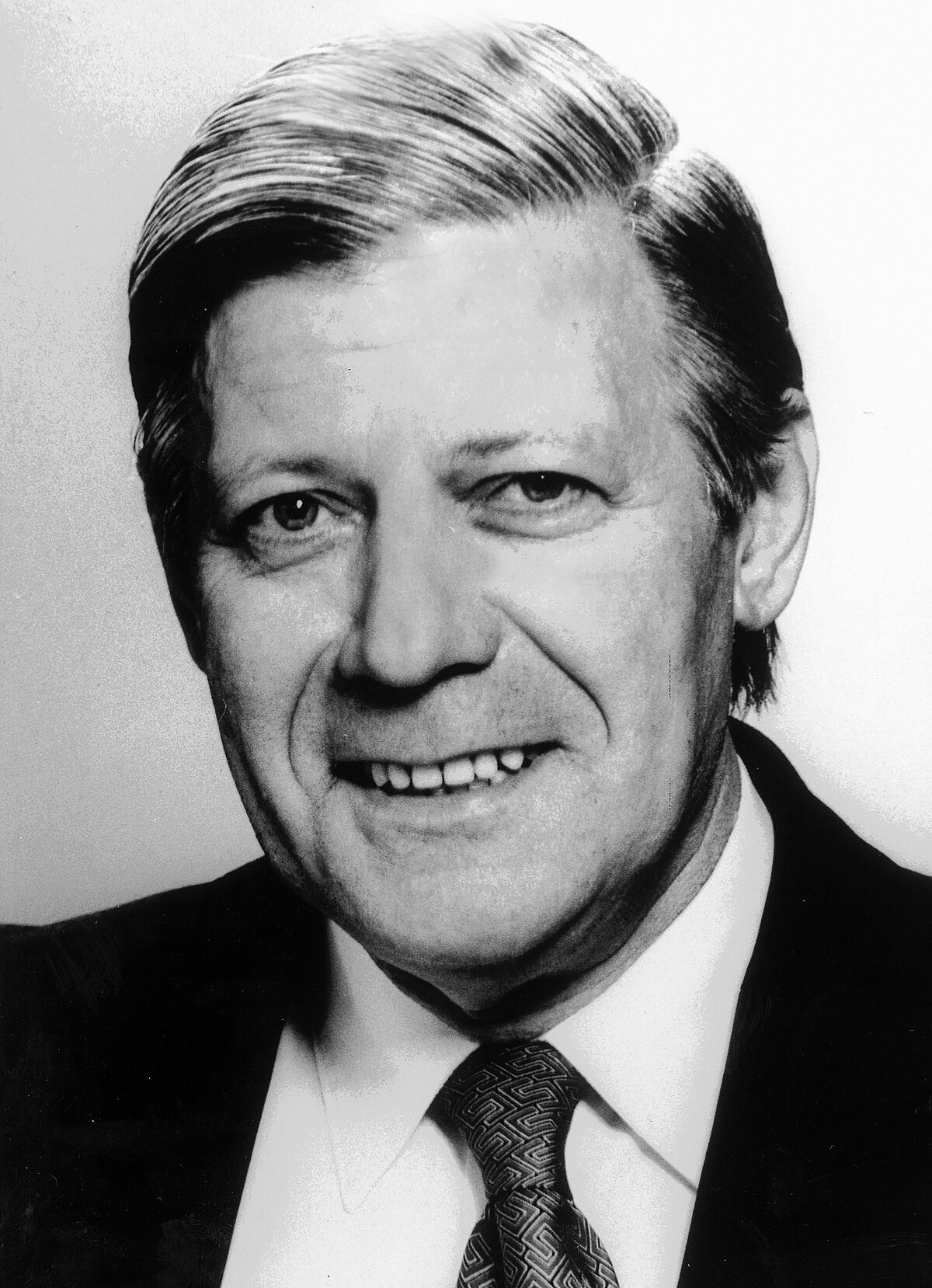
Helmut Schmidt
Former Chancellor of GermanyWikipedia
37
MENTIONS
23
EPISODES
18
PODCASTS
Search complete. 37 mentions across 23 episodes found for "Helmut Schmidt".
Oct 14, 2026

Alex JonesHOST
And then you've got deeper rituals that go on other times of the year there and other places.
Alex JonesHOST
And we know about that because a German chancellor, Helmut Schmidt, wrote about it in his book, his autobiography.
Alex JonesHOST
It's also leaked out where members have talked about how it's just a gateway into it.
Alex JonesHOST
So the point is, is that it is emerging.

Thomas777GUEST
...
Thomas777GUEST
Helmut Schmidt, uh, was a new chancellor who was very much, uh...
Thomas777GUEST
I, I mean, West Germany in, in the '70s was, was really kind of a mess, and, um, the, um, some people believe that the government, you know, you know, that's when, um, Willy Brandt, who was the longtime mayor of West Berlin, um, some viewed him as a fifth columnist, um, owing to his kind of friendly, uh, his overly friendly posture towards the DDR.
Thomas777GUEST
Uh, but that's a whole other story.
1 HR 46 MINS LATER
Thomas777GUEST
But, um, it, uh, pretty much immediately, um, after, uh, like after the, like, like I'm talking like, you know, days after the, uh, the incident, um, the, uh, a, a bunch of the imprisoned RAF members, uh, died, um, supposedly by suicide, um, including Andreas Baader, Gudrun Ensslin, Jan-Carl Rasp, and, um, Ingrid Möller, who, uh, supposedly attempted suicide but survived her injuries.
Thomas777GUEST
But, um, the belief, the claim of Möller, as well as others, was that, um, you know, these, these people were murdered by, by the guards.
Thomas777GUEST
And, uh, it was in the immediate, uh, aftermath, uh, Helmut Schmidt, um, who was the consular, uh, of the Buddhist Republic, he, uh, he was hailed as a hero in the Western world for, you know, for his decision to storm the aircraft and refuse to negotiate.
Thomas777GUEST
Um, and, you know, he, uh...
Alex JonesHOST
And then you've got deeper rituals that go on other times of the year there and other places.
Alex JonesHOST
And we know about that because the German chancellor, Helmut Schmidt, wrote about it in his book, his autobiography.
Alex JonesHOST
It's also leaked out where members have talked about how it's just a gateway into it.
Alex JonesHOST
So the point is, is that it is emerging.

ThomasGUEST
But Only in Europe, man.
ThomasGUEST
But, um, Helmut Schmidt, uh, was a new chancellor who was very much, uh...
ThomasGUEST
I, I mean, West Germany in, in the 70s was, was really kind of a mess.
ThomasGUEST
And, um, the, um, some people believe that the government, you know, you know, that's when, um, Willy Brandt, who was the longtime mayor of West Berlin, um, some viewed him as a fifth columnist, um, owing to his kind of friendly, uh, his overly friendly posture towards the DDR.
1 HR 46 MINS LATER
ThomasGUEST
But, um, it, uh, pretty much immediately, um, after, uh, like after the, like, like I'm talking like, you know, days after the, uh, the incident, um, the, uh, a, a bunch of the imprisoned RAF members, uh, died, um, supposedly by suicide, um, including Andreas Baader, Gudrun Ensslin, Jan-Carl Raspe, and, um, Ingrid Möller, who, uh, supposedly attempted suicide but survived her injuries.
ThomasGUEST
But, um, the belief, the claim of Möller as well as others was that, um, you know, these, these people were murdered by, by the guards.
ThomasGUEST
And, uh, it was in the immediate, uh, aftermath, uh, Helmut Schmidt, um, who was the consular, uh, of the Buddhist Republic, he, uh, he was hailed as a hero in the Western world for, you know, for his decision to storm the aircraft and refuse to negotiate.
ThomasGUEST
Um, and, you know, he, uh...

Alexander MercourisGUEST
I saw Europe as one of the great stabilizers in world affairs.
Alexander MercourisGUEST
I remember the Europe of the past, the Europe of Willy Brandt and Helmut Schmidt and Helmut Kohl in Germany, of de Gaulle and Pompidou and Giscard and Chirac in France, and that Europe was always the Europe that acted as the brake.
Alexander MercourisGUEST
It, it would work against war.
Alexander MercourisGUEST
It would be...

Alex JonesHOST
Just like Bohemian Grove is an hour north of San Francisco, and th- they have the rituals and stuff that are kind of for the outer members and, and, and guests, and then you've got deeper rituals that go on other times of the year there and other places.
Alex JonesHOST
And we know about that because the German chancellor, Helmut Schmidt, wrote about it in his book, his autobiography.
Alex JonesHOST
It's also leaked out where members have talked about how it's just a gateway into it.
Alex JonesHOST
So the point is, is that it is emerging.

George BogdenHOST
And I mention this because, you know, if you look at those who really, um, adored him and rejoiced in his intellect across the world, they, they come from all different kinds of political stripes.
George BogdenHOST
I mean, um, the, you know, Helmut Schmidt, for example, is, you know, of the German left, and they, you know, I think had a long-standing, deeply, um, you know, sort of- ... fruitful, you know, dialogue for decades.
George BogdenHOST
And so I just wonder, you know, I mean, I'm, I'm constantly trying to persuade young, young people to go abroad and to take the Fulbright or do, you know, this or that fellowship.
George BogdenHOST
I mean, do you think that there's something of a lost art in, in the fact that, you know, in order to accomplish that sort of communication, you have to, you know, kind of learn the art of omission, uh, and sort of try to find ways to, uh, really foster common ground? Uh, you know, the, the-- we might consider this as part of the typical diplomatic toolkit, but I mean, as someone who, you know, spent much of his sort of active career outside of government after this incredibly, you know, intense stint, um, I just wonder whether there might be something to learn from, from how he communicated, because it, again, as I say, I, I, I just find myself running up against people's sort of fear of this and unwillingness to try and sort of, those sorts of things.

E. Michael JonesHOST
This is also the same time that, uh, the meeting in Schloss in, uh, Ch- Chateau Rambouillet took place.
E. Michael JonesHOST
So it was Helmut Schmidt and Jimmy Carter and Giscard d'Estaing, and, uh, who else? Maybe Margaret Thatcher.
E. Michael JonesHOST
And they all agreed that they're going to, uh, outsource, uh, industry.
E. Michael JonesHOST
They're gonna go global.
E. Michael JonesHOST
Uh, Helmut Schmidt said, "We're gonna get rid of the German textile industry." He said, "It's not...
E. Michael JonesHOST
It, it's a shame because it's a, a viable textile industry, but we're gonna outsource it all to, to, uh, China, uh, and the East." This all happened around the same time.
E. Michael JonesHOST
So I'm trying to put together the category that no one has to describe, to, that will unify all of these events that happened during the '70s.

Moritz EndersGUEST
Das heißt, wir werden endgültig zum Vasall.
Moritz EndersGUEST
Das waren wir vorher auch schon, aber es gab mal, sage ich mal, so unter Willy Brandt und, äh, ähm, Helmut Schmidt immer noch so Bestrebungen innerhalb des Spielraums, den sie hatten, den auch irgendwo auszureizen und noch mal deutsche Interessen durchzusetzen.
Moritz EndersGUEST
Und das sehe ich jetzt im Moment nicht, dass es deutsche Politiker gäbe, die sich für deutsche Interessen einsetzen.
Philip HopfHOST
Und das ist doch, ich mein, ich glaube, wir kommen immer näher auch zu dem Punkt, ähm, dass man ganz klar sagen muss, wenn Sie das ja selbst auch schon ausdrücken.
6 MINS LATER
Moritz EndersGUEST
Und wir opfern hier unsere Interessen, äh, sozusagen für, für andere Interessen.
Moritz EndersGUEST
Und das ist das große Problem.
Moritz EndersGUEST
Ich glaube, das hätte früher Helmut Schmidt, äh, nicht gemacht, ja, weil der das kapiert hätte.
Moritz EndersGUEST
Er wär auch den Ukrainern auf die Füße getreten, dass sie die Minsker Abkommen, äh, einhalten.

Steven KuhnGUEST
Because they had some really good leaders there.
Steven KuhnGUEST
Up until Kohl, Helmut Schmidt was the bomb, Adenauer, all these people.
Steven KuhnGUEST
They were great leaders.
Steven KuhnGUEST
They did a lot for Germany.
13 more episodes mention Helmut Schmidt.
Create an account to see the whole feed, search across every transcript, and follow the entities you care about.