Hellenization
126
MENTIONS
55
EPISODES
48
PODCASTS
Search complete. 126 mentions across 55 episodes found for "Hellenization".
Sep 13, 2026

Nicole LeeNARRATOR
But for this conversion, we must not try to oust them from their places and to contend for machinery with them, but we must work on them inwardly and cure them of Hebraizing.
Nicole LeeNARRATOR
Yet the days of Israel are innumerable, and in its blame of Hebraizing too, and in its praise of Hellenizing, culture must not fail to keep its flexibility and to give to its judgments that passing and provisional character which we have seen it impose on its preferences and rejections of machinery.
Nicole LeeNARRATOR
Now and for us, it is a time to Hellenize and to praise knowing, for we have Hebrewized too much and have overvalued doing.
Nicole LeeNARRATOR
But the habits and discipline received from Hebrewism remain for our race an eternal possession, and as humanity is constituted, one must never assign them the second rank today without being ready to restore them to the first rank tomorrow.
3 HRS 57 MINS LATER
speaker_2ADVERTISER
Visit SpinQuest.com for more details.
Nicole LeeNARRATOR
Here again, therefore, as in the confusion into which the thought and action of even the steadiest class amongst us is beginning to fall, we seem to have an admonition that we have fostered our Hebraizing instincts, our preference of earnestness of doing to delicacy and flexibility of thinking too exclusively, and have been landed by them in a mechanical and unfruitful routine.
Nicole LeeNARRATOR
And again we seem taught that the development of our Hellenizing instincts, seeking skillfully the intelligible law of things and making a stream of fresh thought play freely about our stock notions and habits, is what is most wanted by us at present.
Nicole LeeNARRATOR
Well then, from all sides, the more we go into the matter, the currents seem to converge, and together to bear us along towards culture.

Rita ButrosNARRATOR
The world was not subdued by Rome with rosewater or modern humanitarian methods.
Rita ButrosNARRATOR
Five generations later the Italians were in a fair way to being Hellenized, so powerful had been the reaction of the eastern provinces upon them in the interval.
Rita ButrosNARRATOR
During this epoch of rapid denationalization, the Roman aristocracy, which had guided the state first to internal harmony, then to stable leadership in Italy, and finally to world empire, became divided against itself.
Rita ButrosNARRATOR
The empire had nurtured a stock of contractors, money lenders, grain and slave dealers, the so-called equestrian order, which pushed the great landed proprietors who constituted the senate from position to position, wrested from them control of the provinces, which it then pillaged most outrageously, and helped on the paralysis of government from which the rule of the emperors was the only escape.

Benjamin ShanksHOST
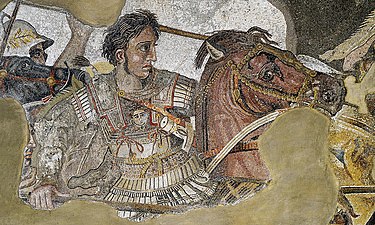
Do you remember Alexander the Great from history? He was from Macedon, modern-day Macedonia in the north.
Benjamin ShanksHOST
He swept south and conquered all of the known world, spreading Greek language and culture, and it's called Hellenization, the process of making Greek.
Benjamin ShanksHOST
We actually don't have anything in our Bibles about from the Greek Empire.
Benjamin ShanksHOST
In fact, the time of the Greek Empire is literally the gap between the Old Testament and the New Testament.

BenGUEST
Cross-cultural, that's a great term to use here because by this time...
BenGUEST
the people jesus is speaking to the pharisees the religious leader why did you go no i know where you're going okay they're very very greek they're also very very satanic i don't know if this comes as a shock to people but post-babylonian exile after they came out of babylon They became very Babylonian, very Talmudic, very Kabbalistic, and also very Hellenized, very Greek.
BenGUEST
They were influenced by those cultures that ruled them, and they started adopting their versions of things.
BenGUEST
Bro, in the New Testament, they start calling hell, they start talking about Sheol, they ditch that term.
BenGUEST
And so if Jesus is at the table with one of the leaders of the Pharisees and he's telling him parables and the afterlife comes up, do you think Jesus is going to sit there and be like, no, you idiot.
BenGUEST
Everybody's asleep and it's unconscious and you're all just waiting for resurrection and it's the Old Testament.
BenGUEST
You've been wrong because you're freaking Kabbalah and Hellenized Greek Roman...
BenGUEST
No, he just uses the concept the guy already believes and tells him, hey, even with your own concept, you know there's no going back.

Justin SledgeHOST
But it is Jewish literature that is happening within the larger Hellenistic world.
Justin SledgeHOST
And therefore, we can't simply isolate Judaism outside of Hellenism, because in many ways, the Judaism of this time period is an extension of Hellenism insofar as they are colonial subjects or post-colonial subjects in the process of the wider Hellenization of the world.
Justin SledgeHOST
But Philo posits that another intermediary, his intermediary between god who's again for philo as a good middle platonist god is completely unknowable if you've read your plotinus right he's already prefigured and philo the god of philo is utterly unknowable that creates the logical problem the logical problem is you need an intermediary who's the intermediary in philo the logos the word Now, again, this is going to be taken wholesale into the New Testament in some ways, or at least a similar kind of idea.
Justin SledgeHOST
But the logos, the divine word coming out of stoicism primarily is the bridge to the divine.
Justin SledgeHOST
This is the platonic realm of the forms.
Justin SledgeHOST
So you can go into the realm of the utmost vault of the intelligibles, but you can't go any higher than that.
Justin SledgeHOST
So again, Philo, for all of his Hellenization, you would expect that he would go full Hellenization and say you could become reunited with God.
Justin SledgeHOST
But Philo's a Jew.

Thomas DinasHOST
So then Judea became part of the Seleucid Empire of Syria and Middle East and Mesopotamia.
Thomas DinasHOST
And basically what most historians think happened is the king... intervened in an internal civil war between the Maccabean Jews and the Hellenized Jews in Jerusalem.
Thomas DinasHOST
And this competed violently over who would be the high priest, and with traditionalists with Hebrew-Aramaic names contesting against the Hellenizing high priests with Greek names.
Thomas DinasHOST
In particular, Jason's Hellenistic reforms would prove to be a decisive factor leading to eventual conflict within the ranks of Judaism.
Thomas DinasHOST
Of course some authors and historians point to possible socio-economic reasons in addition to the religious reasons behind the civil war.
Thomas DinasHOST
So what happened is the civil war escalated with the Hellenistic kingdom of Syria which obviously sided with the Hellenistic Jews and they lost the conflict against the traditionalists.
Thomas DinasHOST
So what happened is basically Yeah, the Maccabees won, and I reckon a lot of these defeated Hellenized Jews over the next few decades settled in Greece, especially in places like Macedonia, like Thessaloniki and Veria, and of course in other places throughout the Macedonian kingdom and Greece as well, ancient cities on the west in the side of Epirus.
Thomas DinasHOST
And that's in contrast with Thessaloniki Jews.

Roel KonijnendijkGUEST
So Agesta is asking for Athenian help because they have a border dispute with Selinous, which is a Greek city on the coast.
Roel KonijnendijkGUEST
And that city, I mean, the Illyrians themselves, the people of Agesta are not Greek, technically, they're Hellenizing, right? So there's a culture that is under Greek influence and is starting to adopt Greek ways.
Roel KonijnendijkGUEST
But they also have certain things that...
Roel KonijnendijkGUEST
We're not really sure if they adopt those things because they genuinely want to live like Greeks or if they're doing that in order to essentially butter up potential Greek allies, right? So they have this magnificent unfinished temple on the site of Segesta, which is one of the only truly unfinished temples that is preserved from antiquity.

Luise Schmidt-KrayerGUEST
And then a lot of just other archaeological finds that people have made, not we, but people have made from the Roman times because the Romans were there.
Luise Schmidt-KrayerGUEST
You also had Hellenization going around through Alexander the Great.
Luise Schmidt-KrayerGUEST
So a lot of just different historical findings and then piecing the puzzle together.
Mark WeinsteinHOST
So last question about this specifically, I don't know if you have the answer, but specifically, what are we looking at here? This

Kenny BurchardHOST
Yeah
Matt SwaimHOST
... that it's hard to understand just how much resentment there was in the Jewish world over the Hellenization, uh, that they underwent and over the ways that the Greeks, you know, kind of tried to overrun the Jews.
Matt SwaimHOST
So I...
Matt SwaimHOST
You can, you can sort of maybe picture yourself in the world and thinking, "Hey, if we don't have the Hebrew of this, if all we've got is the Greek, then..." You know, like, there's, there's this attitude.

NeophytosSOUNDBITE_SPEAKER
Perhaps part of the blame also lies with the hierarchy of the institutional church itself, which tends to intervene in educational issues only when it is already too late.
NeophytosSOUNDBITE_SPEAKER
only once it realizes that the new educational programs of this or that government are moving away from the national and religious ideals and oppose a risk of de-Hellenization and a distortion of history.
NeophytosSOUNDBITE_SPEAKER
Rather than a reactionary type of intervention, it would be better to have a more proactive and dynamic engagement, first of all concerning the raising of children, directed towards the faithful, and then to society at large.
NeophytosSOUNDBITE_SPEAKER
rooted in the pedagogy and teachings of St.
45 more episodes mention Hellenization.
Create an account to see the whole feed, search across every transcript, and follow the entities you care about.