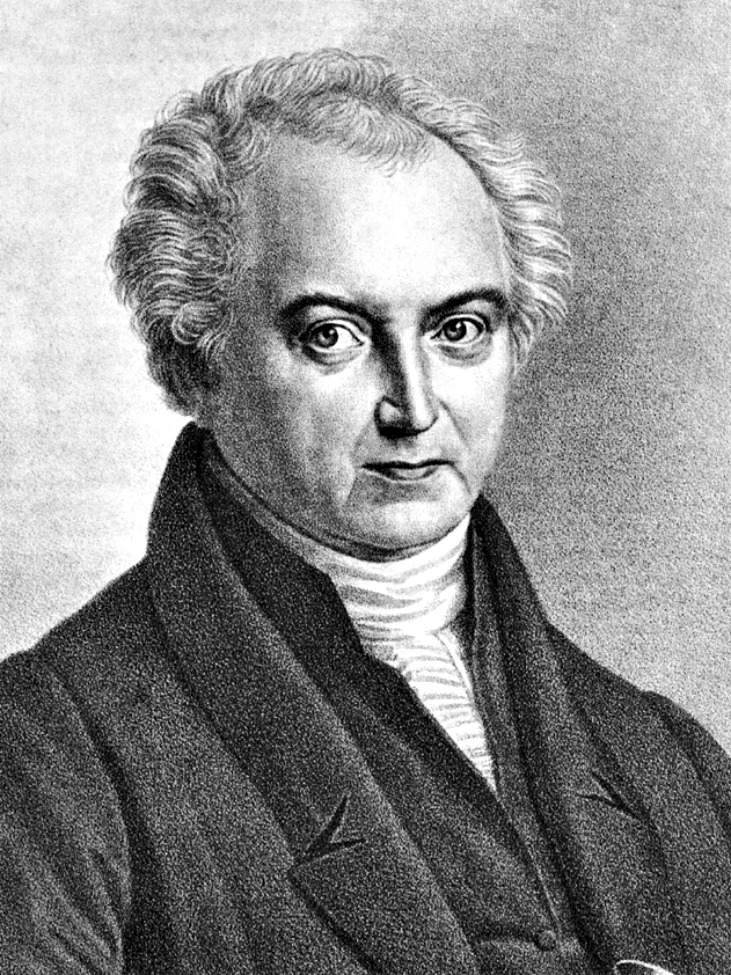
Heinrich Wilhelm Matthias Olbers
German astronomerWikipedia
5
MENTIONS
4
EPISODES
4
PODCASTS
Search complete. 5 mentions across 4 episodes found for "Heinrich Wilhelm Matthias Olbers".
Oct 9, 2026

speaker_0HOST
If there were an infinity of stars, he argued, then the sky would be completely filled with them at night and would not be dark.
speaker_0HOST
This point was re-discussed by the astronomers Edwin Halley of England in the eighteenth century, but it was not popularized as a paradox until Wilhelm Olbers of Germany took up the modern problem in the nineteenth century.
speaker_0HOST
The discovery became potentially very real with American astronomer Edwin Hubble's measurement of the enormous extent of the universe of galaxies with its large-scale homogeneity and isotropy.
speaker_0HOST
His discovery of the systematic recession of the galaxies provided an escape.

Lulu MillerGUEST
And I think about whatever it is.
Lulu MillerGUEST
Like, we're doing a story about darkness itself and someone who is afraid of the dark, but then does, you know, learns about this thing called Olbers' paradox, which it's the darkness paradox, which is this idea that scientists started wondering maybe there shouldn't be darkness if the universe is infinite because then there'd be all stars everywhere, so the sky should be bright.
Lulu MillerGUEST
And that's the scientific idea we're gonna get to.
Lulu MillerGUEST
That's very fun, but I'm like, "How do I make this a narrative journey?" And so I sit down and I'm like, "Well, it'd be cool if the storyteller was, like, starting out in the dark, and we hear about how she used to be afraid, and then..." And I kinda go through the scenes, and I imagine how they would go and what I wanna hear.

Sky CarambaHOST
Pallas is the second object discovered in the asteroid belt between Mars and Jupiter.
Sky CarambaHOST
German astronomer Heinrich Olbers discovered it in 1802.
Sky CarambaHOST
That was an exciting time in astronomy.
Sky CarambaHOST
Those newly discovered objects move like planets, but they look like stars.
Sky CarambaHOST
Here's a bonus.
Sky CarambaHOST
Another asteroid, Vesta, will be at opposition next week.
Sky CarambaHOST
It's another one that orbits between Mars and Jupiter, and it's another one discovered by Heinrich Olbers.
Sky CarambaHOST
This one in 1807, and the fourth found in the asteroid belt.

Dalton PolignoNARRATOR
It seems simple, but for astronomers, this idea leads to one of the most interesting questions in science.
Dalton PolignoNARRATOR
If the universe is full of stars, why isn't the night sky bright everywhere you look? This puzzle is known as Olbers paradox, which is named after a German astronomer who wondered why an infinite universe that is filled with stars doesn't glow like the inside of a light bulb.
Kate FedakHOST
If the stars were all scattered even directions,
Dalton PolignoNARRATOR
and if the universe has always existed, then every line of sight from someone should land on a star, the whole sky should be blazing with brightness.