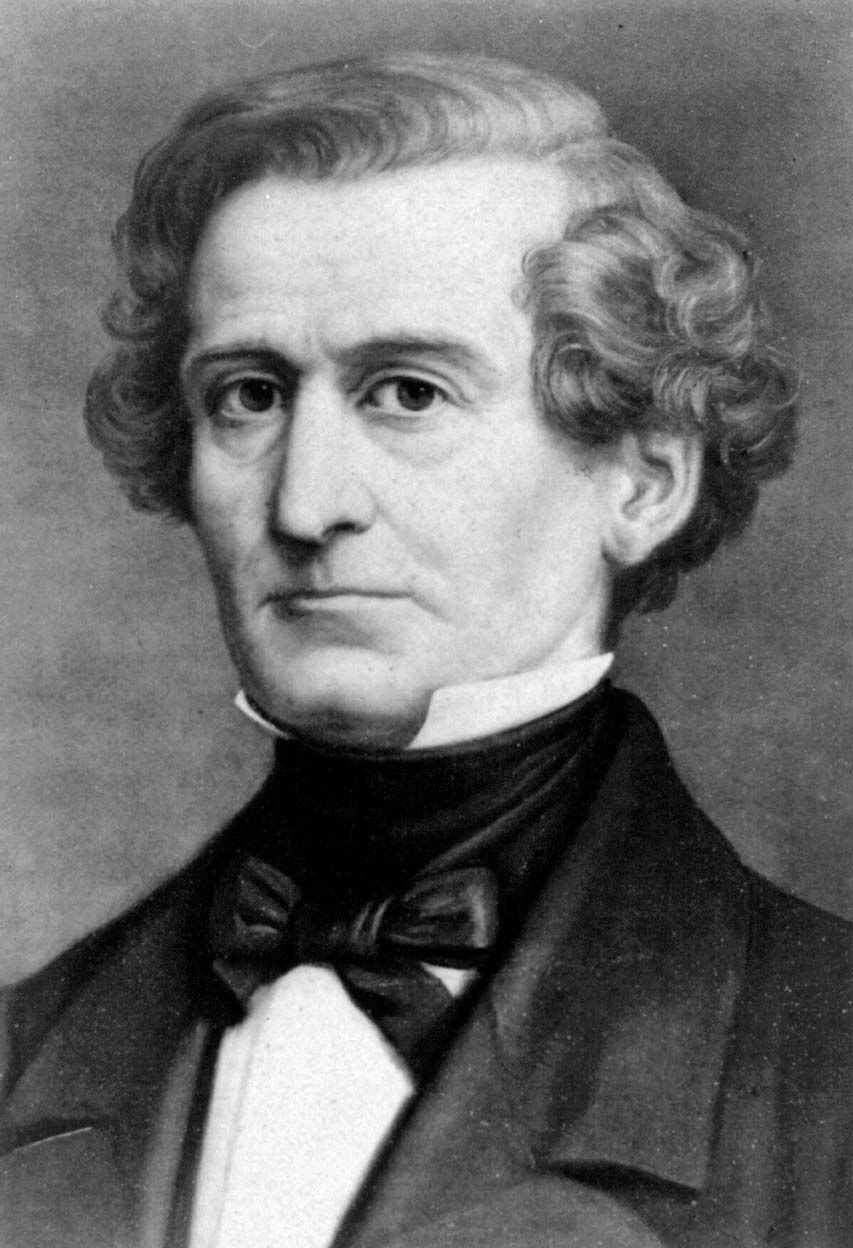
Hector Berlioz
French composer and conductorWikipedia
69
MENTIONS
29
EPISODES
27
PODCASTS
Search complete. 69 mentions across 29 episodes found for "Hector Berlioz".
Sep 21, 2026

MikeHOST
The author is Stratis Mirivilis.
MikeHOST
This work is like a programmed symphony along the lines of something like Berlioz's Symphonie Fantastique.
MikeHOST
The 11 sections of the work, all played without a pause between them – that's a lot of music, let me tell you – have their narrative detail explained extensively in the booklet note.
MikeHOST
Basically, the story, set in the village of Sykamnia on Lesbos in the early 1900s over late Ottoman rule, is narrated retrospectively by a man recalling his childhood.

Jon JacobHOST
I'm reminded of friends at university who introduced me to listening to music in a different way.
Jon JacobHOST
I mean, I don't think they did it intentionally necessarily, but I recall vividly them seeing people my own age playing incredibly energised listening to Berlioz's Symphony Fantastique.
Jon JacobHOST
I think it's London classical players.
Jon JacobHOST
Roger Norrington had released a period performance of Symphony Fantastique and I just remember seeing them incredibly energised about what it felt like.

speaker_18NARRATOR
And who can recall one more beautiful? In the following year, 1841, in contrast with his own and Wagner's self-sacrificing natures, Liszt had publicly accused Paganini, his greatest rival, of being a, quote, narrow egotist, unquote, and referred to the, quote, artistic royalty, unquote, and even to the, quote, divine service of devotion, unquote, which elevates genius to a priestly power that reveals the very souls of men to their God.
speaker_18NARRATOR
he closes with the significant words may the artist of the future with joyful heart renounce a frivolous egotistical role which we hope has found its last brilliant representative in paganini may he fix his goal in and not outside of himself and virtuosity be to him a means not an end may he never forget that although it is a customary saying noblesse oblige it is a far more honourable saying It must be frankly conceded that List has devoted himself with the greatest enthusiasm to the laudable task of securing the appreciation of new works which are unknown or misunderstood and old works which have been forgotten, as well as of the latest works belonging to the opposition school, says a notice of him, written in 1876. quote thus we owe to liszt our nearer acquaintance with berlioz the introduction of many unknown works of franz schubert richard wagner robert schumann raff beerwald frank and paris and other masters which secured their first public performance through him there is still further evidence of this in the following letter which has only recently come to light It was written in the year 1849, when Wagner had been compelled to be a fugitive and was bargaining for Lohengrin, and is addressed to one Herr B. in Paris, but not Berlioz.
speaker_18NARRATOR
Dear B, it says, Richard Wagner, Kappelmeister of Dresden, has been here since yesterday.
speaker_18NARRATOR
He is a man of astonishing genius, of a génie si trepanique, as befits this country.
2 HRS 26 MINS LATER
speaker_35NARRATOR
LIFE OF LIST by Ludwig Noll.
speaker_35NARRATOR
Translated by George P. Upton.
speaker_35NARRATOR
Appendix, Heine on Liszt, a letter from Berlioz to Liszt, Hess's criticism of Liszt.
speaker_35NARRATOR
Heine on Liszt.

speaker_3NARRATOR
The mop of red hair that surmounted his head like an umbrella was His gaunt visage, fiery appearance, and generally hysterical demeanor must have given her reason for alarm, and she probably breathed more freely when she left Paris for Holland.
speaker_3NARRATOR
End of Part 1 Part 2 of Hector Berlioz's A Romantic Tragedy by Herbert Francis Pieser.
speaker_3NARRATOR
This LibriVox recording is in the public domain.
speaker_3NARRATOR
everyone who has interested himself even slightly in berlioz is doubtless familiar with the lurid fiction the composer invented to form the plot of the fantastic symphony in this episode in the life of an artist a high-strung youth is represented as seeking release from the torments of disappointed love by means of an overdose of opium instead of killing him the drug afflicts him with a succession of perturbing not to say terrifying grotesque or macabre visions through each of them there moves the image of the beloved musically represented by a recurrent string of notes a sort of representative theme or The youth is a plaything of passions, reveries, jealousies, frenzies at the outset.
29 MINS LATER
speaker_3NARRATOR
Meanwhile the composer had been working by fits and starts on The Damnation of Faust.
speaker_3NARRATOR
he wrote page after page of it at the most unbelievable times of day and night and in the unlikeliest places on the boulevard poissonier on a stone of the boulevard du temple in the park at enghien when in a somnambulistic trance he had boarded a suburban train and it had simply deposited him there at lille at rheims in passau in prague in silesia while walking while eating while traveling when he left vienna for budapest he prepared to perform at his first hungarian concert the rakotsky march of which he had made what in effect has long been the standardized and most overpowering orchestration of all this national melody invariably drove magyar listeners into frenzies of patriotic enthusiasm for that matter few audiences even now can hear it unstirred and on the programme piloted by berlioz it led to such a wild demonstration that as he directed it the composer's hair stood on end and he was seized for a few moments with a kind of nightmare terror he thereupon introduced the march into the score of the damnation and placed the opening scene of the faust action in hungary so as to motivate the presence in the score of the volcanic page it is hard to grasp to-day that the first performance of the damnation of faust at the peristopera comic december sixth eighteen forty six was the most heart-breaking fiasco of berlioz's life it was not a question of violent opposition if only it had been but of abysmal devastating indifference only a scattering of friends occupied the first rows of the south avar with further back a handful of cynical faces otherwise an inhuman emptiness sat enthroned in the gaping theatre the comic journal charivari sniggered that if the song of the rat went unnoticed it was because there was not so much as a cat in the house from the outset berlioz knew himself ruined materially and spiritually it was less the few remaining francs saved on his travels which mattered than the irreparable hurt done the morale of the afflicted man nothing in my artistic career wounded me more deeply than this unexpected indifference he was to write in his memoirs lapsing for once into pitiful understatement not until eighteen seventy seven was the damnation of faust revived in paris by which time the composer had been dead eight years although berlioz recouped some of his financial losses from the faust misadventure when he went to russia the following year he was the plaything of destiny once again when late in eighteen forty seven he accepted an invitation from louis antoine julien to go to london and conduct opera at the drury lane theatre of which julien was then the manager this spectacular french adventurer and charlatan who speculated ruinously went to jail for debt and died in a lunatic asylum failed shortly after berlioz suffered himself to be inveighed into what he thought would be a six years engagement and the composer after giving a few concerts of his own music found himself back in Paris by July 1848.
speaker_3NARRATOR
But England saw him again in 1851-52, when the new Philharmonic Society of London secured him as conductor, and in 1855 when he occupied the same post, not to mention a visit two years earlier when he was lured across the channel to witness a covent garden representation of his first opera benvenuto cellini this turned out almost as distressingly as had in paris the damnation of faust it is one of the real misfortunes of musical history that hector berlioz and richard wagner never became to each other the kinsmen and spiritual brothers they should have been some unhappy flaw in their respective natures always thwarted a consummation which one feels fate should have preordained or some barrier sprang up between them precisely at the moment they should best have complemented each other they had in the larger sense the same ideals the same luminous visions the same majestic aims the same reluctance to palter and to compromise they were both tortured by nerves and exacerbated by futile suspicions and jealousies yet each had the true measure of the other's importance whether admitted or not prejudices and preconceptions sometimes artificially fostered if not fed by envy or rankling disappointment had a way of cropping up to blind them as soon as they gave promise of seeing eye to eye wagner was the stronger of the two not only as to creative power but in toughness of fibre but if they were not equally matched the differences and disparities of the one fitted perfectly into the natural flaws and crudities of the other as wagner himself once took occasion to point out berlioz appears to have recognised in wagner much as he may have resented it a force of the future which sooner or later must challenge him all the same it is wrong to imagine that wagner underrated his french rival however he discerned the weaknesses of his work his appreciation of the artist berlioz was broader and more fundamental than the appreciation of berlioz for him which was so often soured by jealousy and blinded by bias wagner was incontestably sincere when he wrote we must honor berlioz as the true renewer of modern music too few people are familiar with that extraordinary episode in bayreuth long after the frenchman's death when the aging wagner flew into a towering rage on hearing the still youthful felix motto criticise some detail of a berlioz work when a master like berlioz writes something you are too shallow to grasp your duty is to accept it without question or murmur he had screamed at his astonished disciple only once did the pair draw close enough to justify the belief that they might have developed under more hospitable circumstances a lasting friendship this was in eighteen fifty five when the two men in the depths of discouragement met in london whither wagner had come to conduct the old philharmonic The improved relations were only temporary.
speaker_3NARRATOR
The creator of Tristan appreciated that the jealous Marie Riccio stood in the way of any lasting rapprochement, and he confided to Liszt that a malicious wife can ruin a brilliant man and bring out the worst aspects of his character.

Amy BishopCORRESPONDENT
Yep, she was born October 31st, so she has a fondness for the season.
Amy BishopCORRESPONDENT
Some of the music in the concert reflects that, like Danny Elfman's suite from The Nightmare Before Christmas, a Dia de los Muertos work by Gabriella Lena Frank, Berlioz's hair-raising symphony fantastique, and a contrabass concerto by Tan Dunn.
Amy BishopCORRESPONDENT
That's the guy who wrote the music for Crouching Tiger, Hidden Dragon.
Amy BishopCORRESPONDENT
Brunet notes that there are not a ton of concertos written for double bass, and that at first people might raise their eyebrows at the idea, but she's conducted this piece with the soloist that night, Rachel Martin, and it was previously met with an enthusiastic reception.
Amy BishopCORRESPONDENT
American-born Jacob Joyce leads the PSO in a French-themed program in November.
Amy BishopCORRESPONDENT
He currently serves as associate conductor of the Pittsburgh Symphony, but has some history with North Texas, both as a conducting fellow previously with the Fort Worth Symphony and guest conductor with the Dallas Symphony.
Amy BishopCORRESPONDENT
He'll lead the PSO in Gershwin's American in Paris, Berlioz's overture to Benvenuto Cellini, Saint-Saëns' cello concerto with cellist Bennett Tsai, and a lesser-known piece by Francis Poling titled Les Biches.
Jacob JoyceSOUNDBITE_SPEAKER
Kind of what we call neoclassical in that it was written in the early 20th century, but... based on music that's much older.

David WalesNARRATOR
There was not much truly spectacular about the course of his life, which was most happily free from the material troubles which bedeviled the existence of so many great masters, and he was not called upon to starve or to struggle to achieve the material rewards of his gifts.
David WalesNARRATOR
He had not to pass through the conflicts which embittered the lives of Wagner or Berlioz, and he was never compelled to suffer like Mozart or Schubert.
David WalesNARRATOR
There is no record of his ever humiliating himself or performing degrading chores for publishers in return for a wretched pittance.
David WalesNARRATOR
He had wealth enough without compromising his art to keep the pot boiling.

Corey MixdorfSOUNDBITE_SPEAKER
So University of Northern Iowa had an incredible jazz program, and I did well there.
Corey MixdorfSOUNDBITE_SPEAKER
But also, I was in a history class where they introduced a recording of Berlioz's Symphonie Fantastique, and I heard the trombones in that, and I was just like, I really need to do that.
Corey MixdorfSOUNDBITE_SPEAKER
That's pretty awesome.
Corey MixdorfSOUNDBITE_SPEAKER
At the same time, there were skills being developed in jazz that I just, I didn't have the heart for.

John BantherHOST
But then there's a, a, a big work that comes about that changes the scene for a lot of instruments, mine included, and I think maybe yours, too.
John BantherHOST
We get to 1830, and it's the Symphonie Fantastique by Hector Berlioz.
John BantherHOST
We weren't really using harps.
John BantherHOST
Now we don't have one, we have two, and in some performances they'll put four up there.
John BantherHOST
this, the Symphonie Fantastique, if you, if you can tell us about what this meant for the harp and what the part is even like.
John BantherHOST
It seems very complicated.
Nadia PessoaGUEST
complicated.Yes, that is harpists', at least orchestral harpists', number one excerpt, and it's just really written, you know, as you know, Berlioz was one of the pivotal figures in terms of orchestration and, and trying different things.
Nadia PessoaGUEST
And yes, the harp parts for that are very intricate.

Denise Finnegan-HillHOST
I'm your host, Denise Finegan-Hill.
Denise Finnegan-HillHOST
A concert overture by Hector Berlioz, which incorporates music from his opera, Benvenuto Cellini.
Denise Finnegan-HillHOST
This is Roman Carnival.
Denise Finnegan-HillHOST
And here's the San Diego Symphony Orchestra under the direction of Yoav Talmi.
Denise Finnegan-HillHOST
[classical music]Music of Hector Berlioz, his concert overture Roman Carnival.
Denise Finnegan-HillHOST
Yoav Talmi led the San Diego Symphony Orchestra.
Denise Finnegan-HillHOST
Rounding off the hour with music from the late Baroque.

Nate BrownHOST
So I did not do Die Walküre there.
Nate BrownHOST
So when I was going the first time around, I just skipped Epic Opera, and then the second time, when I was going through all the alternates, I did the alternate there, which was Les Troyens by Berlioz.
Nate BrownHOST
And then the last chapter is Psychological Opera, and the example is Elektra.
Nate BrownHOST
And hope I don't have to say much more about that if you listened to Elektra along with me.
19 more episodes mention Hector Berlioz.
Create an account to see the whole feed, search across every transcript, and follow the entities you care about.