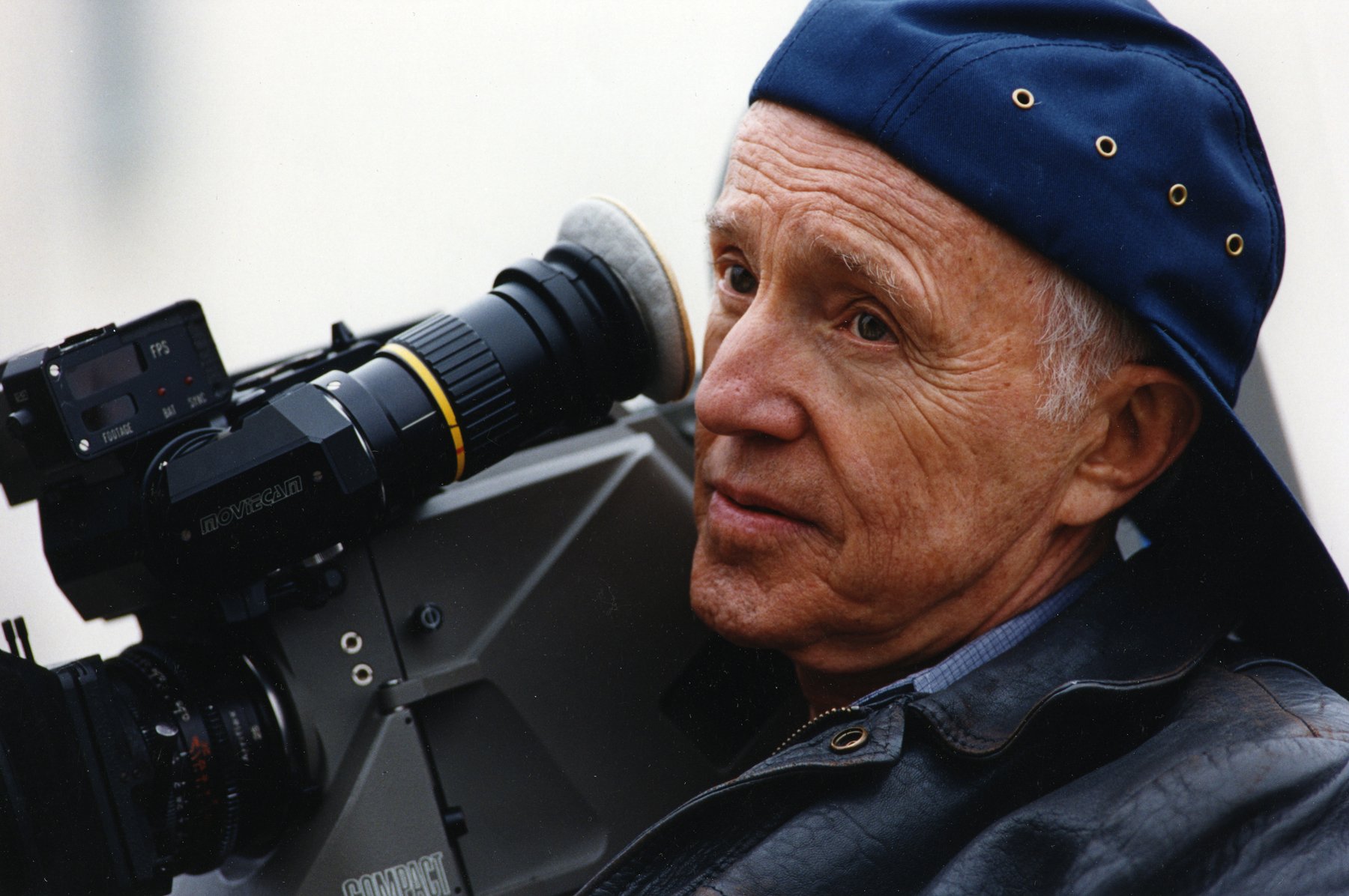
Haskell Wexler
American filmmaker and cinematographerWikipedia
27
MENTIONS
13
EPISODES
11
PODCASTS
Search complete. 27 mentions across 13 episodes found for "Haskell Wexler".
Nov 23, 2026

Justin GordonHOST
And as we find out in the book, Hollywood is an old boy's network.
Justin GordonHOST
Haskell Wexler, a cinematographer he met through racing, tries to get him work and can't because he isn't in the union.
Justin GordonHOST
He never forgets that feeling of being shut out.
Justin GordonHOST
And his own film teacher tells the class, the very first thing our film teacher told us was, get out of this business now.
22 MINS LATER
Justin GordonHOST
But it is a brutal experience.
Justin GordonHOST
And night after night, it wears George Lucas down.
Justin GordonHOST
And after a week of bad looking footage, he calls Haskell Wexler, who lights the rest of the film for free.
Justin GordonHOST
So he gets a favor for him.

Kim JacksonGUEST
Yeah, I think it's more about the people sitting around the table than it is the actual topic of the case.
Penny Molloy-HarperHOST
And I know you're up for two awards too, the Wexler, the Haskell Wexler Award for Best Cinematographer and the Laurent Rijo Maiden Hudson Valley Award.
Penny Molloy-HarperHOST
Relations for that.
Kim JacksonGUEST
Yeah, we were very honored to have been nominated.
Kim JacksonGUEST
You know, it's not...
Kim JacksonGUEST
We shot... on a soundstage and created three different locations, if you will, and three different moods in the black and white.
Kim JacksonGUEST
Like to have the film next to Haskell Wexler's name is ridiculously honorable.
Kim JacksonGUEST
I mean, so beside ourselves.

Jason SiloHOST
Let's cover some of the more interesting side aspects of them before I jump into a few of the scenes.
Jason SiloHOST
This film was directed by Andrew Davis, who connects to the podcast because his mentor as a young, budding cinematographer and director was Haskell Wexler.
Jason SiloHOST
And he actually was a camera assistant, Andrew Davis, that is, on Haskell Wexler's groundbreaking, still iconic 1969 film, Medium Cool.
Jason SiloHOST
starring Robert Forster, shot at partially Democratic National Convention in Chicago.
Jason SiloHOST
Haskell Wexler, you will recall, replaced the original cinematographer on George Lucas's American Graffiti, another recent episode of the podcast that did well, I believe, because of the name brand film in the title.
Jason SiloHOST
Andrew Davis, he's had a long career or had a long career.
Jason SiloHOST
I don't think he's made a movie since maybe 2020.

Sam MorrilHOST
old-ass weird arthouse movie that Bill Burr sent me a rec for called Medium Cool.
Sam MorrilHOST
Young Robert Forster, made by Haskell Wexler, who is, if you know the name, cinematographer for all these great movies.
Sam MorrilHOST
Dog guy? Yeah.
Sam MorrilHOST
He did Days of Heaven for Terrence Malick.

Shane O'SullivanGUEST
It's so cinematic and it speaks so, so much of those times.
Shane O'SullivanGUEST
And in similar ways, it's similar to Medium Cool, which is a film shot by Haskell Wexler at the Democratic Convention in Chicago in 1968, which really blurs the border between fiction and documentary.
Shane O'SullivanGUEST
but really immerses you in what was happening at the time in a way that news footage doesn't.
Shane O'SullivanGUEST
I think taking it from that film, I just extended that methodology further with this film and really pushed it further.
Jason SiloHOST
He realized he didn't have the language himself as a director to figure out how to do this in a way that would work.
Jason SiloHOST
And he had to reach out to Haskell Wexler who saved the day.
Jason SiloHOST
So who's responsible for American graffiti? Ultimately, it's George Lucas.
Jason SiloHOST
He's the director.
7 MINS LATER
Jason SiloHOST
It's a genius of the level of Walter Murch.
Jason SiloHOST
who makes that a reality.
Jason SiloHOST
It's a genius of the level of Haskell Wexler as a cinematographer who is absolutely the right person to capture the kind of documentary-like feel that George Lucas is after.
Jason SiloHOST
And if you hear what they're talking about there in terms of how they approached the music and how they approached the lack of a budget for traditional score...

Magic MHOST
And honestly, I know a lot of film nerds who might be really feeling this.
Magic MHOST
There's it felt like I was watching some sort of hybrid of like a Haskell Wexler film and Henry portrait of a serial killer.
Magic MHOST
I really and not just because of Michael Gaunt's obvious visually striking appearance to Henry in my mind.
Magic MHOST
I don't know.

RobHOST
too cool.
RobHOST
But it's directed by Haskell Wexler, who was an Academy Award winning cinematographer.
RobHOST
He shot movies that you would have absolutely known, like Who's Afraid of Virginia Woolf? And One Flew Over the Cuckoos.
RobHOST
So, yeah, he didn't direct One Flew Over the Movie's Nest.
RobHOST
So there's a lot of questions about that in this movie.
RobHOST
So I mentioned that there were some things that you may not like about it.
RobHOST
And it is because Haskell Wexler is a cinematographer, not necessarily a director.
RobHOST
It is shot very much in a cinema verite documentary style.

HaitchHOST
Totally.
HaitchHOST
So the opening shot was, uh, filmed by Haskell Wexler, who was the original DP.
HaitchHOST
And then Coppola fired him like two weeks into it and then hired Bill Butler, uh, who came in and reshot everything except for the union square opening piece,
JasonHOST
the union square stuff.
Jason SiloHOST
I don't know if this is true, but I'm preparing an episode on the George Lucas film, American Graffiti.
Jason SiloHOST
And they talk in the movie that Haskell Wexler employed this use of lights inside an automobile to illuminate the faces of the drivers and the passengers.
Jason SiloHOST
I don't know if that's the first time that was done, but I've always loved that as a movie trope as well.
Jason SiloHOST
Kind of driving with the illumination clearly from a light source that wouldn't otherwise be there.
3 more episodes mention Haskell Wexler.
Create an account to see the whole feed, search across every transcript, and follow the entities you care about.