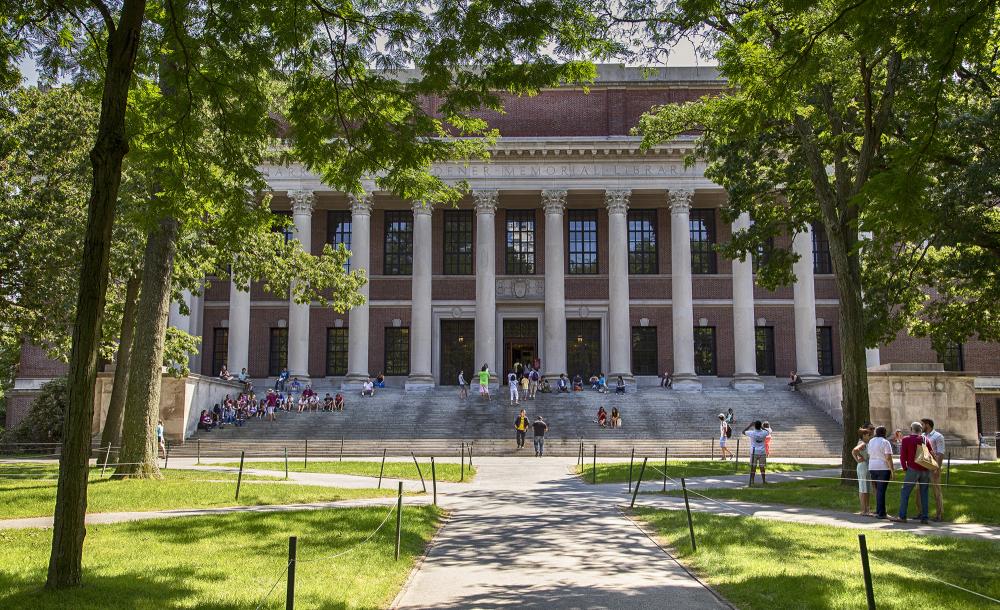
Harvard College
College in Cambridge, MassachusettsWikipedia
112
MENTIONS
70
EPISODES
55
PODCASTS
Search complete. 112 mentions across 70 episodes found for "Harvard College".
Oct 27, 2026

speaker_0HOST
Led by Generalissimo Chiang Kai-shek, the Chinese Nationalists have been rebuilding their strength on the island for the past nine years, waiting for the right opportunity to reconquer mainland China and destroy the Communists.
speaker_0HOST
This is Kendall Kull, author of the article Revisiting the Taiwan Strait Crisis, Strategic Lessons for Today, and is a recent graduate of Harvard College.
speaker_0HOST
It's really important
Kendall KullGUEST
to note the degree of seriousness with which both the communists and the nationalists treated the sense that the civil war was not over, which is that, of course, there was the specter of communist invasion of Taiwan in order to sort of have a decisive battle that would primarily end the civil war.
56 MINS LATER
speaker_0HOST
For both Beijing and Taipei, the second Taiwan Strait crisis is a lesson that reminds future generations that the Taiwan question has been and remains central to China's unfinished story.
Kendall KullGUEST
If there was any conflagration over Taiwan today, A well-operating American administration would have to think seriously about the extent to which the Americans have, under whatever their circumstances, the contingency or crisis emerges, a commitment to the island, what actual strategic value it poses, what would be the extent of sort of acceptable losses of American forces or American military and imperial in support of the island.
speaker_0HOST
Thanks again to Kendall Kull, the author of the article Revisiting the Taiwan Strait Crisis, Strategic Lessons for Today, and is a recent graduate of Harvard College.
speaker_0HOST
Also to Dr. John Franklin Copper, author of Taiwan, Nation, State or Province, and China Diplomacy, The Washington-Taipei-Beijing Triangle, and Historical Dictionary of Taiwan, Republic of China.

Bill Harris IIIGUEST
I didn't enjoy the four years there.
Bill Harris IIIGUEST
I always tell people, Harvard College is an oxymoron.
Bill Harris IIIGUEST
It wasn't a college experience.
Bill Harris IIIGUEST
I would say.

John BatchelorHOST
All right, Churchill comes back, and they visit, they go to Quebec, they go to Hyde Park.
John BatchelorHOST
But Churchill makes a speech, as you just emphasized, written by himself to Harvard College, Harvard University.
John BatchelorHOST
He knows it's going to be broadcast.
John BatchelorHOST
He knows people are going to pour over it.

Pooja VHOST
I genuinely loved the work I was doing, right? Which is why.
Pooja VHOST
Nobody was more surprised than I was when I got to college, when I went to Harvard College and I found myself really struggling.
Pooja VHOST
All of a sudden, my productivity and my performance like fell off of a cliff.
Pooja VHOST
I couldn't wake up for class on time.
Pooja VHOST
This is what I want to do after college.
Pooja VHOST
And I was very, very lucky.
Pooja VHOST
So Harvard undergrad, Harvard College has a program called Harvard Wood, which is incredibly helpful, hilariously named, but like very, very helpful program.
Pooja VHOST
There's a ton of Harvard alums in the entertainment industry on the creative side, on the business side.

speaker_2NARRATOR
chapter five chapter six of
speaker_0NARRATOR
jamestown and her neighbors on virginia's historic peninsula by jane e davis old williamsburg the capital of the virginia colony was transferred in sixteen ninety nine from jamestown to williamsburg seven miles away in a more salubrious situation middle plantation as it was called was at this time but thirty-six years old and life there was most primitive stools and benches and strong four posters constituted the furniture of the rude pioneer cabins and the horse trough served as the family wash basin but after it became the capital conditions improved rapidly substantial houses appeared and silver as well as pewter began to shine on polished mahogany sideboards even before this the colonists most of whom were not in sympathy with governor barclay when he thanked god there were no free schools in virginia and hoped there would be none for a hundred years had begun to plan seriously for some opportunity for higher education if only that they need not be at the expense of sending their sons to england when they wished to study for a profession to be sure harvard college had been founded but to go from virginia to massachusetts in those days was almost as much of an undertaking as to go to england so in sixteen ninety one commissary blair the same whose body now lies in the ancient graveyard at jamestown went across the water seeking a charter for a college he succeeded in obtaining an appropriation of two thousand pounds in money and twenty thousand acres of land with a tax of a penny a pound on all tobacco exported from maryland and virginia together with the fees and profits arising from the office of surveyor general the the commissary returned triumphant with his charter and his contributions and was made the first president of william and mary college sixteen ninety three which office he held for fifty years the college was for some time as english as its name the instructors being appointed by the bishop of london who retained for himself the office of chancellor it was not alone for the education of their children that the virginia colonists were solicitous they felt a responsibility for the indians among whom they were living and very early in the history of william and mary the income from the english landed estate of braverton was set aside for the use of the indians a special building by that name being put up for them the first commencement of the college was held in seventeen hundred and excited much interest the roads being filled with coaches and the river with sloops from the outlying plantations and even from new york pennsylvania and maryland while the indians in gala costume came in afoot and added to the picturesqueness of the scene the main building of the college was designed by sir christopher wren and was a substantial brick one of two stories with dormer windows in the roof it contained besides dormitories and classrooms a library and a chapel extending to the rear here the general assembly met until seventeen o four when the capitol was built at the opposite end of the straight mile-long duke of gloucester street this was also a plain two-story brick building but in the form of the letter h with a portico in front hard by was the raleigh tavern a wooden building one full story in height with an attic above lit by eight dormer windows in each wing there was an entrance door near the centre of each front and over one of these a leaden bust of sir walter raleigh its most famous apartment was the apollo room a large banqueting room with deep fireplaces at each end and carved wainscoting under the windows and over the mantel in this room on december fifth seventeen seventy six the phi beta kappa society was founded when spotswood became governor in seventeen fourteen the governor's palace midway between the college and the capitol on an estate of four hundred acres was added to this group of historic buildings in a public square in the centre of the town governor spotswood built also in obedience to an act of the burgesses the octagonal brick powder-horn with its quaint steep-pitched roof when first built it was surrounded by an outer wall and formed a complete magazine with powder-room armoury and blacksmith shop about this same time in seventeen fifteen bruton church was completed being built on plans furnished by the same energetic and versatile governor spotswood this church was the centre of the interesting group of buildings in old williamsburg cruciform in shape the long arm abutted on palace green and stretched along duke of gloucester street having a tower at the western end towards the college it was built like all other early public buildings of brick made in english moulds and over these especially at the eastern end the ivy soon threw a mantle of green the windows were made of small square panes of plain white glass and most of them are still unbroken in spite of the ravages of two wars the churchyard was enclosed by a low colonial brick wall the land being the gift of sir robert page ancestor of the former owners of rosewell in gloucester county flagstone walks led to the church doors and the aisles within were paved with the same material up these aisles from the tower entrance walked the stately burgesses when they met for prayer before proceeding to the business of state and here walked also each sunday and on fast days the court processions the governor and the council of state in their gorgeous robes and carrying emblazoned banners the governor's pew elevated large and square and canopied with rich crimson velvet occupied one of the corners made by the meeting of the transepts and nave and the high pulpit with its sounding-board was placed on the opposite corner the choir behind it as in english cathedrals and the chancel at the eastern end it was a gay little capital old williamsburg so gay that it was said to resemble the court of st james withal it was picturesque gentlemen rode dressed in bright-coloured velvets and ruffles the clergy in dignified black and the judges in scarlet while the mechanics appeared in red flannel shirts with leathern aprons over buckskin breeches the students of william and mary wore academic dress it was the age of the hoop skirt and on dress occasions such as a ball at governor spottswood's the ladies wore over the hoop skirt trailing gowns of heavy brocade while their hair was dressed very high and adorned with feathers ribbons and lace the colonial governors lived in great state driving to public functions in carriages drawn by six milk-white horses their families and those of the house of burgesses added much to the brilliancy of the social life in the middle of the eighteenth century theatre-going was added to the list of colonial entertainments the charming sally bringing from england a company of players in charge of lewis hallam who presented the merchant of venice to williamsburg society but life there was not a mere butterfly existence in attendance at william and mary were the makers of the nation jefferson author of the declaration of independence harrison braxton nelson and wythe four of its signers peyton randolph president of the first continental congress and many others prominent in revolutionary history washington received his commission as civil engineer at this college and was its first american chancellor it was in williamsburg in her mansion adjoining the six chimney lot that he wooed and won the widow at the capitol patrick henry was a prominent figure and his emphatic words if that be treason make the most of it resounded from its walls with washington and jefferson in legislative assembly in seventeen sixty nine he drew up the famous resolutions asserting that the people of virginia could be taxed only by their own representatives and declaring it to be both lawful and expedient for all the colonies to unite in protest against any violation of american rights henry was one of those protesting citizens who when the assembly was dissolved by lord baudetat and again when it was disbanded by lord dunmore retired to the apollo room of the raleigh tavern the last time passing those resolutions which resulted in the assembling of the first continental congress the apollo room of the raleigh probably witnessed more scenes of brilliant festivity and political excitement than any other single apartment in north america little williamsburg was the birthplace of the revolution in other parts of the colony the fires of revolution smouldered until fanned into flame by dunmore's stealing of the powder and his wanton act in the burning of norfolk then indeed the demand for liberty became imperative and a resolution was unanimously passed instructing the virginia delegates to ask congress to declare the united colonies free and independent states when the news was received in williamsburg the town went wild church bells were rung guns fired and the british flag was hauled down from the capitol the thirteen stripes being run up in its stead after this demonstration things seemed to have quieted down at the little capital the scene had shifted to the northern battlefields in seventeen seventy nine the college was reorganized by jefferson and the elective system introduced high tide had been reached in its affairs during the revolution it lost its most important sources of revenue and did not regain its former prestige until the end of the nineteenth century virginia did not become the battlefield until cornwallis began his retreat down the peninsula in june seventeen eighty one lafayette followed him closely and on july sixth an action took place at greenspring once governor barclay's country home where the americans were repulsed cornwallis then occupied yorktown and the surrender followed in october at this time bruton church and the christopher wren building at the college were used as hospitals during its occupancy by the french surgeon-general the house of the president of william and mary a fine specimen of eighteenth-century architecture was accidentally destroyed by fire but was restored by king louis the sixteenth from his private funds this house was used at one time as the headquarters of cornwallis washington later had his headquarters in the home of chancellor wythe on palace green after the revolution and the transference of the capital to richmond williamsburg lost its importance and the visitor to the little city up to the beginning of the twentieth century found it a dreamy charming restful spot quiet and aristocratic its court and palace greens dotted with buttercups among which cattle browsed the old churchyard overgrown and its stones crumbling away the site of the magnificent palace with its cupola illuminated on the king's birth-night was occupied by a free school of the american republic and the palace grounds had disappeared in place of the famous raleigh tavern rose a typical small-town dry goods store and though the duke of gloucester street still stretched from the college to the site of the capitol whose foundations were marked out by the colonial chapter of the a p v a it was grass-grown and the governor's handsome carriages and milk-white horses were missing chancellor wythe's house remained haunted by many ghosts also the homes of peyton and edmund randolph and of william wirt sir john randolph and john blair with their quaint stone steps colonial doorways and brass knockers with their dormer windows offices and old rose gardens bruton church was remodelled in eighteen forty so as to be fairly unrecognisable with its partition midway of the nave and the chancel against the partition the town clock which was put into the steeple at that time ceased for many years to mark the flight of time but was finally put in order so that it struck the hours the old church was again used as a hospital during the civil war after the battle of williamsburg William and Mary's main building was burned for the third time in 1862 by federal troops after 90% of the students had left for the war.
speaker_0NARRATOR
But it was rebuilt on the old walls and looked much as it did before.
speaker_0NARRATOR
Brafferton Hall was not long an Indian school, but continued to be used as one of the college buildings.

Vasthathiri PongsasudiGUEST
I have a master's in computer science from Stanford and have successfully launched a website with 4.5 million users.
Vasthathiri PongsasudiGUEST
As a resident advisor at Harvard College, I live and interact with over 400 undergraduates every day.
Vasthathiri PongsasudiGUEST
Augustine Mojidez is our CEO and a PhD candidate at the Harvard-MIT Division of Health Science and Technology.
Vasthathiri PongsasudiGUEST
He has a proven track record of leading entrepreneurial endeavors.

John AughenbaughHOST
Yeah, that's a college prep school.
John AughenbaughHOST
He got his bachelor's degree in philosophy from Harvard College.
John AughenbaughHOST
He graduated cum laude in 1941, and he was the editor of the Harvard Lampoon.
John AughenbaughHOST
Okay.

Anupam B. JenaGUEST
I was just on service four weeks ago.
Anupam B. JenaGUEST
So I'm always on service in the fall because I teach an undergraduate course at Harvard College on health care.
Anupam B. JenaGUEST
And I like to do it in the fall because that allows the students to come and visit the hospital in the morning.
Anupam B. JenaGUEST
So I still do it.

NicoHOST
Okay.
DaisyHOST
Some other things I confirmed, Radcliffe College really allowed, and Harvard College by association and classes, really did allow married women to bring children to the school and they would leave them on the first floor while they went up to the fourth or fifth floor classrooms to take classes.
DaisyHOST
There were kids just like in prams.
NicoHOST
Oh, what the

Woody ErdmanSOUNDBITE_SPEAKER
This well-known collegiate coach contributes his portion of today's Ali Sherman story.
speaker_5SOUNDBITE_SPEAKER
This is John Yavison, football coach of Harvard College.
speaker_5SOUNDBITE_SPEAKER
In the fall of 1944 at the Westchester State Teachers College, then the training site of the Philadelphia Eagles, I roomed next door to Al Sherman.
speaker_5SOUNDBITE_SPEAKER
This was the rookie year for Steve Van Buren, Vic Linscott, and others who went on to become outstanding Eagle performers.
60 more episodes mention Harvard College.
Create an account to see the whole feed, search across every transcript, and follow the entities you care about.