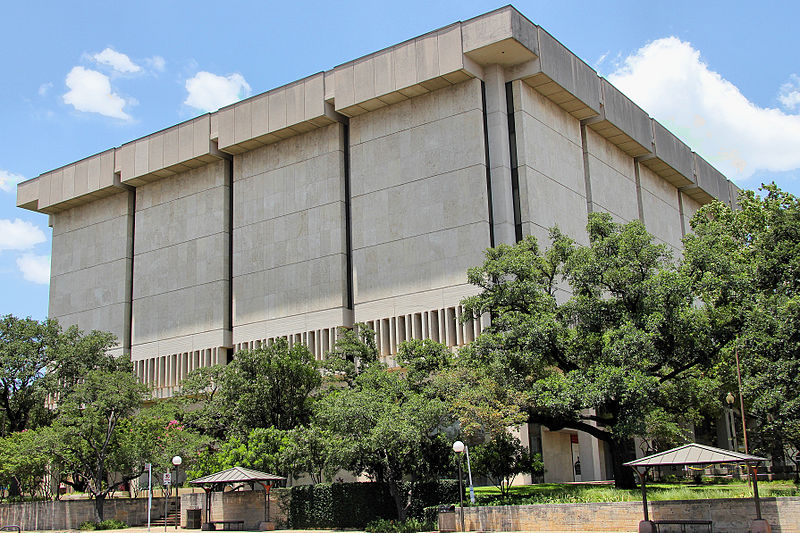
Harry Ransom Center
Archive in Austin, TexasWikipedia
17
MENTIONS
9
EPISODES
8
PODCASTS
Search complete. 17 mentions across 9 episodes found for "Harry Ransom Center".
Sep 26, 2026

Thomas SchatzGUEST
Excellent.
Pete KunzeHOST
So when you were doing Genius of the System in the 80s, you had access to a lot of paper, right? Including the Selznick archives at the Ransom Center at UT Austin.
Pete KunzeHOST
But conglomerate Hollywood, contemporary Hollywood brings its own challenges, right? NDAs.
Pete KunzeHOST
the fact that the memos of the studio system are now emails, and just the lack of publicly available archives, you know, thinking about how Tino Baglio obviously had the United Artists material and then all the Warner Brothers materials at USC, right? Those are not available in the current time or decades in the same way, right? So it's a convoluted way of saying, how do you navigate the obstacles of doing historical work when there's not a...

Thomas SchatzGUEST
Excellent.
Pete KunzeHOST
So when you were doing Genius of the System in the 80s, you had access to a lot of paper, right? Including the Selznick archives at the Ransom Center at UT Austin.
Pete KunzeHOST
But conglomerate Hollywood, contemporary Hollywood brings its own challenges, right? NDAs, the fact that the memos of the studio system are now emails, and just the lack of publicly available archives, you know, thinking about how Tino Ballio obviously had the United Artists material and then all the Warner Brothers materials at USC, right? Those are not available in the current time or decades in the same way, right? So it's a convoluted way of saying, how do you navigate the obstacles of doing historical work when there's not a...
Pete KunzeHOST
Material traces in the same way to kind of work with

Thomas SchatzGUEST
Yeah.
Pete KunzeHOST
You, including the, the Selznick archives at, uh, the Ransom Center at UT Austin.
Pete KunzeHOST
Um, but conglomerate Hollywood, contemporary Hollywood brings its own challenges, right? NDAs, the fact that the memos of the studio system are now emails, um, and just the lack of publicly available archives.
Pete KunzeHOST
You know, thinking about how Tino Balio obviously had the United Artists material, and then all of the Warner Brothers materials at USC, right? Those are not available in the current time or e- um, decades in the same way, right? So this is a, a convoluted way of saying how do you navigate the obstacles of doing historical work when there's not a, um, material traces in the same way to kind of work with?

Thomas SchatzGUEST
Excellent.
Pete KunzeHOST
So when you were doing Genius of the System in the 80s, you had access to a lot of paper, right? Including the Selznick archives at the Ransom Center at UT Austin.
Pete KunzeHOST
But conglomerate Hollywood, contemporary Hollywood brings its own challenges, right? NDAs, the fact that the memos of the studio system are now emails, right? And just the lack of publicly available archives, you know, thinking about how Tino Baglio obviously had the United Artists material and then all the Warner Brothers materials at USC, right? Those are not available in the current time or decades in the same way, right? So it's a convoluted way of saying, how do you navigate the obstacles of doing historical work when there's not a material traces in the same way to kind of work with?
Thomas SchatzGUEST
Yeah, that's a great question.

Adrian TennantHOST
Thank you for joining me.
Adrian TennantHOST
My guest today is Dr. Eric Colleary, the Klein Curator of Theater and Performing Arts at the Harry Ransom Center at the University of Texas at Austin.
Adrian TennantHOST
The Ransom Center is a humanities research library, archive, and museum spanning theater, dance, opera, circus, vaudeville, puppetry, and magic.
Adrian TennantHOST
Eric has been responsible for that collection since 2015, and he also teaches in the Performance as Public Practice program.
Eric CollearyGUEST
And of course, I grew up in that generation that watched David Copperfield's TV specials, which just sort of made me aware of the scale of spectacle that was possible.
Eric CollearyGUEST
So you could go from making coins appear to making the Statue of Liberty disappear, and that was just really exciting.
Adrian TennantHOST
Well, for listeners who don't know the Harry Ransom Center, Eric, can you describe what it is and how you became its curator of theater and performing arts?
Eric CollearyGUEST
Yeah.

Monica PenickGUEST
So most of the things have been lost to time.
Monica PenickGUEST
What we do have, actually here at the University of Texas where I teach, we have the Harry Ransom Center, which holds the Norman Balgettis collection.
Monica PenickGUEST
Okay.
Monica PenickGUEST
Within that collection, we have some drawings, but most wonderfully, we have some scale model cars that were used in the 1939 show.

Dean CarnegieHOST
If you thought episode 117 was good, wait until you hear what's in store today.
Dean CarnegieHOST
I have Dr. Eric Coleri from the Harry Ransom Center here to talk about his new book and exhibit.
Dean CarnegieHOST
This interview was very eye-opening.
Dean CarnegieHOST
I must say, I myself, I learned a lot and you will too.
Dean CarnegieHOST
And with that, let's not waste any time.
Dean CarnegieHOST
Let's get into today's feature.
Dean CarnegieHOST
Today on the Magic Detective Podcast, we have the Klein Curator of the Performing Arts at the Harry Ransom Center, part of the University of Texas at Austin, Dr. Eric Coleri.
Dean CarnegieHOST
He's here today to tell us about a new exhibit at the college called Houdini's Library and also about his book of the same name.

Miwa MesserHOST
You have the documentation.
Miwa MesserHOST
Like Wayne Barrett from the Village Voice, his archive is at the Harry Ransom Center.
Kai BirdGUEST
Right.
Miwa MesserHOST
I mean, I did have a moment, though, when you said you'd put in a FOIA request.
Charles GreenGUEST
They diminish over time, but there are repositories, great repositories of books, where they are stored, they are cherished, and they can be seen.
Charles GreenGUEST
I just want to put in a plug for the Harry Ransom Center in Austin, Texas.
Charles GreenGUEST
It's a place where I've done some research on Charles Devere, and they're an example, a wonderful example, of holding onto material and making it available to people.
Charles GreenGUEST
You go in there, you just ask them for whatever you're looking for, and they will find it to you.