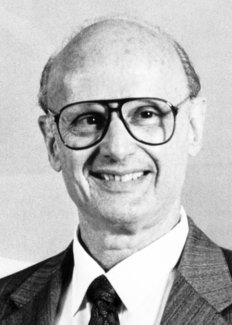
Harry Markowitz
American economistWikipedia
28
MENTIONS
17
EPISODES
16
PODCASTS
Search complete. 28 mentions across 17 episodes found for "Harry Markowitz".
Sep 13, 2026

Damien FahyHOST
So I'm trying to answer the idea of what is the optimum investment portfolio, so when we're looking at the asset allocation.
Damien FahyHOST
And one way of doing that is something called the efficient frontier, and it comes from Harry Markowitz, who published it in 1952 and then went on to win a Nobel Prize for his work.
Damien FahyHOST
Recently we mentioned it in I think it was a Money Vault, which got me thinking about the topic again.
Damien FahyHOST
And what made the research revolutionary was that up until the point that he published it, investing was largely about picking good individual investments.

Tony RobbinsNARRATOR
Third, you get amazing diversification.
Tony RobbinsNARRATOR
In the wise words of Nobel Prize laureate Harry Markowitz, quote, "Diversification is the only free lunch," end quote.
Tony RobbinsNARRATOR
Owning part of an asset management company gets you tremendous diversification.
Tony RobbinsNARRATOR
Why? Because a typical firm manages numerous funds.

Aswath DamodaranHOST
So let's talk about where finance has arrived over the last 70 years in terms of assessing risk.
Aswath DamodaranHOST
In fact, you can argue that modern finance as we know it was born that day when Harry Markowitz walked into a library as a PhD student and started thinking about what makes one company risky and another not.
Aswath DamodaranHOST
And he came to the realization that the risk of a company is not the risk of that company standing alone, but the risk that it adds to an investor's portfolio.
Aswath DamodaranHOST
It might by itself, you're saying, what's the big deal? It changed the way we think about risk.
Aswath DamodaranHOST
Until Harry Markowitz, the way we thought about risk in companies is we thought about all of the risk in the company and we tried to bring it into the analysis.
Aswath DamodaranHOST
And the Markowitz insight was it's only the risk you cannot diversify where that matters.
Aswath DamodaranHOST
So you introduce the notion of a diversified investment.
Aswath DamodaranHOST
This episode

David RosenbergGUEST
It's now in the bucket of riskless asset classes.
David RosenbergGUEST
I'm not going to throw Harry Markowitz's legendary work on modern portfolio theory into the waste paper basket just yet.
David RosenbergGUEST
But that's just my big concern is really where expectations are.
David RosenbergGUEST
And everybody is all in on the stock market.

Andrew AngGUEST
So usually the asset allocation procedure, it's just one method, usually some variant of mean variance.
Andrew AngGUEST
Thank you, Harry Markowitz from 1952, with some constraints.
Andrew AngGUEST
But there are dozens and dozens, thousands of these construction methods.
Andrew AngGUEST
And in the paper, we go through about two dozen.

Devin KennedyGUEST
When you start to look at something that seems kind of recent, you find all these deep roots.
Devin KennedyGUEST
I was first writing extensively in the dissertation about a financial theorist who was very active in the 1950s and 1960s named Harry Markowitz.
Devin KennedyGUEST
And I found out that A lot of his interests before he had published this really famous work on financial modeling was about industrial practice and trying to understand these deep industrial roots of financial engineering and financial technology.
Devin KennedyGUEST
That became kind of the ambitions of the book.
16 MINS LATER
Devin KennedyGUEST
Well, I think the first thing is that I think the vision of computing in Wall Street in the 1950s and early 60s is as a kind of aid to good reasoning, that computers are going to help improve decision making, that they will stabilize our sometimes volatile decision making.
Devin KennedyGUEST
They'll help us to process the complexities of the choices that we face.
Devin KennedyGUEST
And so like in early research in management science by folks like Harry Markowitz and a student of Herbert Simon named Jeffrey Clarkson, there's a sense that computers can help make decisions to create a more stable financial system by supporting the decision making of investors and people who are involved in managing the
Jessica LevyHOST
money, especially the money of other people.

Tyler GardnerHOST
All right, let's build the perfect portfolio.
Tyler GardnerHOST
Thinker number one, Harry Markowitz.
Tyler GardnerHOST
If this were a movie, and honestly, it should be, so someone call Scorsese, Harry Markowitz would be the origin story.
Tyler GardnerHOST
Markowitz is the father of modern portfolio theory, which he developed in 1952 in a paper so foundational that it's difficult to overstate its importance.
Tyler GardnerHOST
Before Markowitz, investing was largely intuitive.

Andrew HorowitzHOST
You know, it's funny.
Andrew HorowitzHOST
You and I probably talked about this, but when I first got involved in this notion of asset allocation, a la Harry Markowitz, a la William Sharp, right? A la Brinson B.
Andrew HorowitzHOST
Bauer Hood.
Andrew HorowitzHOST
You know, that kind of thing.

AlexHOST
Then you have, like, broader portfolio construction where you're doing, you know, regressions and correlations in this asset class, and we need to get on the efficiency frontier.
AlexHOST
And, you know, uh, Markowitz got a Nobel Prize for this stuff.
AlexHOST
And it, it becomes just a simple concept that I don't think is executed well [laughs] right? It's, it's an intuitive concept that I think people have taken to some interesting places.
AlexHOST
That's my spiel on diverse-
25 MINS LATER
AlexHOST
If you do that to the extreme and you're only looking at businesses from the ground up and not the broader portfolio, you're gonna run into problems.
AlexHOST
Okay.
AlexHOST
The other extreme, which I think, you know, some big institutions, wealth managers, asset allocators will do, is they look at it from the exact opposite, which is they're gonna take this giant portfolio of asset classes, large cap, small cap, value, quality, uh, bonds, European bonds, international, and then they try to do this, I'd say, pseudoscience, you know, efficiency frontier, which is, is the foundation of this, which is Harry Markowitz.
AlexHOST
I don't wanna say it's pseudoscience.

Amy ArnottHOST
Yeah.
Amy ArnottHOST
So in terms of investment theory, the book really focuses on the past seventy-five years or so of academic research on investing, and I'm wondering if you could talk about Harry Markowitz and why he was such a pivotal figure in the birth of modern portfolio theory.
Andy ClarkeGUEST
I think because he took these kind of common sense ideas, you know, don't put all your eggs in one basket, and translated them into a statistical framework that was much more useful.
Andy ClarkeGUEST
So he created this framework that allowed you to test how the combination of different assets would affect a portfolio's volatility and its return.
Andy ClarkeGUEST
And in his book, he talks about how he recognized that General Motors was riskier than a government bond.
Andy ClarkeGUEST
And to account for that risk, he needed to assign a higher discount rate to its, um, cash flows when you're trying to figure out its intrinsic value.
Andy ClarkeGUEST
But, you know, that process still leads you to a single estimate, a point estimate of what the, uh, security is worth, whereas the Markowitz framework, um, models risk as a possibility of outcomes.
Amy ArnottHOST
What are some limitations of mean-variance optimization as an approach to portfolio construction?
7 more episodes mention Harry Markowitz.
Create an account to see the whole feed, search across every transcript, and follow the entities you care about.