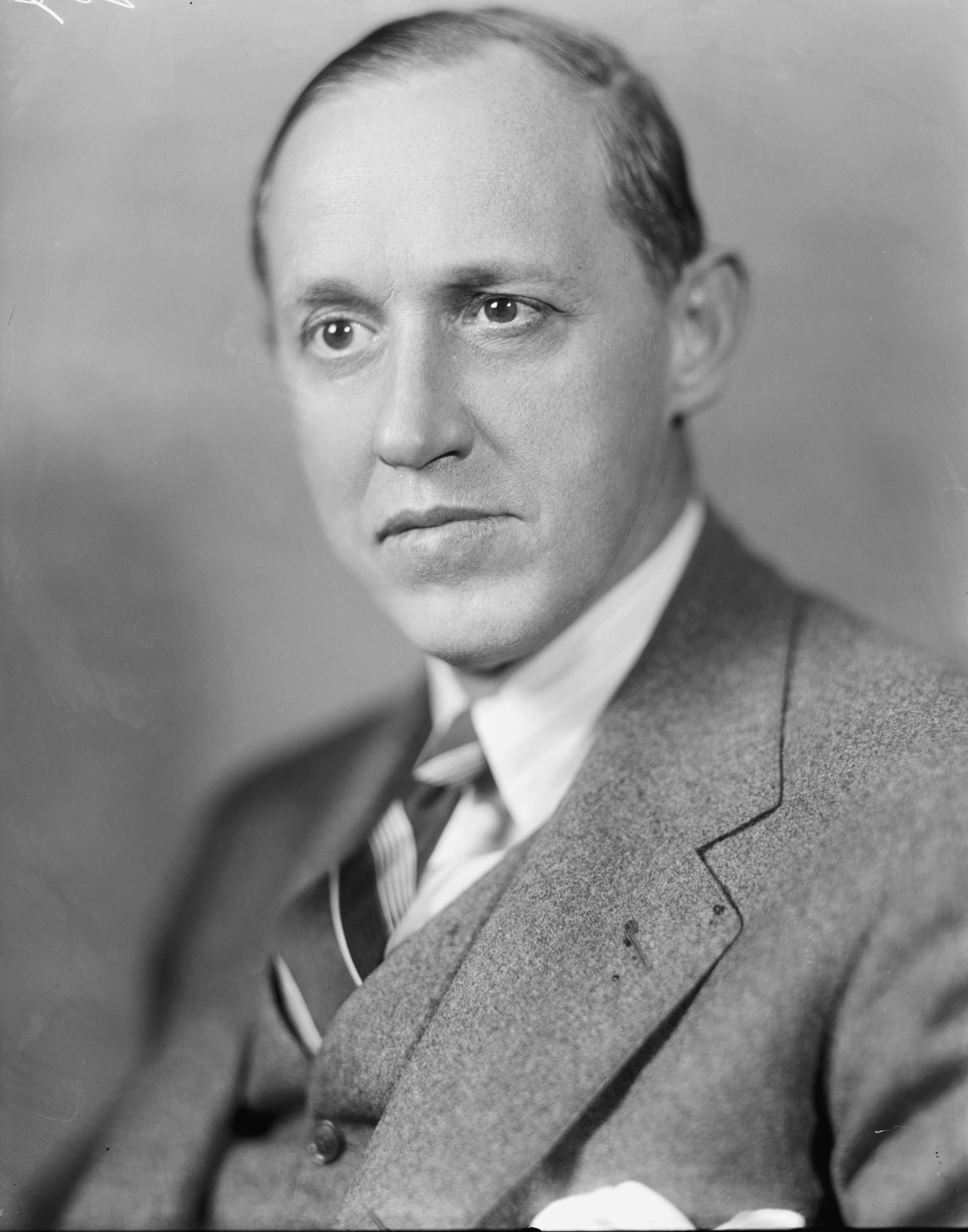
Harry Hopkins
Former United States Secretary of CommerceWikipedia
40
MENTIONS
15
EPISODES
14
PODCASTS
Search complete. 40 mentions across 15 episodes found for "Harry Hopkins".
Oct 27, 2026

Sean TrendeHOST
But they're split between the parties, and both parties have substantially conservative wings.
Sean TrendeHOST
FDR shows up in 1930, and there's a great quote to Harry Hopkins that I think I put in both of my books, which is, By the end of my term, we're going to have four years or eight years.
Sean TrendeHOST
And by the end of it, I don't know if there's going to be a Democratic Party, but there's definitely going to be a conservative one.
Jay CostHOST
Yeah, for sure.

Michael VlahosGUEST
And they were at some very high levels, and they were essentially working for the Soviet Union.
Michael VlahosGUEST
Well, Harry Hopkins is a suspect.
Michael VlahosGUEST
Oh, yeah.
John BatchelorHOST
Yeah.
John BatchelorHOST
Harry Hopkins was FDR's legs.
John BatchelorHOST
He was an alternative personality to the president.
Michael VlahosGUEST
But the main advisor, I can't remember his name now, but who worked for the Secretary of the Treasury, Morgenthau, was sending everything back to Moscow.

Seth ParidonHOST
Seriously.
Seth ParidonHOST
There's Leahy, there's Grace Tully, Harry Hopkins, and the lady before Grace Tully.
Seth ParidonHOST
Grace Tully.
Seth ParidonHOST
She passed away.

James TraubNARRATOR
More than that, they loved him.
James TraubNARRATOR
In the midst of a trip through the South, reporter Martha Gellhorn told FDR aide Harry Hopkins how the American people felt about the president.
Martha GellhornSOUNDBITE_SPEAKER
He is at once God and their intimate friend.
Martha GellhornSOUNDBITE_SPEAKER
He knows them all by name, knows their little town and mill, their little lives and their problems.

Al MurrayHOST
...
Al MurrayHOST
Harry Hopkins, who's FDR's-
James HollandHOST
I love FDR and everything, but...
Al MurrayHOST
[laughs] No, you go tell him.
James HollandHOST
I'm gonna tell him.
James HollandHOST
FDR, oi, stop it.
Al MurrayHOST
[laughs] But, um, his aide, Harry Hopkins, leads, um, goes to see the Soviets to try and, uh, coordinate, uh, strategic exports, and lot, there's plenty of objection in Congress to-
James HollandHOST
That's back in February 1941.

Greg JacksonHOST
And then what? Is a current subordinate really going to replace George in D.C.
Greg JacksonHOST
and give him orders? That doesn't make sense to a number of top brass, nor to Republican politicians, who upon even catching wind of this idea, read it as a Democratic ploy to push aside the famously nonpartisan general so Harry Hopkins can get his hands on lucrative military contracts.
Greg JacksonHOST
Thus, even though many consider George C. Marshall to be the Ulysses S.
Greg JacksonHOST
Grant of his generation, they have to find someone else.

Marc van der WoudeGUEST
and not think, perhaps always think in the structures of the treaties.
Marc van der WoudeGUEST
One of the books I read lately was a biography on Harry Hopkins by a Dutch author called Geert Maak.
Marc van der WoudeGUEST
And it's interesting to see how this advisor to President Roosevelt basically short-circuited bureaucracy and administrations to make sure that the New Deal would work, and also to make sure that, for example, the US would be re-armed in a record amount of time.
Marc van der WoudeGUEST
I think he started somewhere in the early 40s when he turned salary in Europe, and end of, beginning of 42, the US is the biggest arms supplier, the arsenal of democracy.
Marc van der WoudeGUEST
So we have to think outside the box.
Marc van der WoudeGUEST
It sounds strange for a lawyer, but if you get lawyers on board, it gets complex and slow.
Marc van der WoudeGUEST
So, short circuit the system, that's what I learned from the book on Harry Hopkins.
Javier EspinozaHOST
Very interesting.

ColleenHOST
So on June 6, 1945, Soviet officers working for the minister of defense informed the British press that Hitler's body had been found and the cause of death was poison.
ColleenHOST
The same day, however, Stalin told the U.S. Secretary of Commerce, Harry Hopkins, who, side note, was responsible for the New Deal under FDR.
ColleenHOST
Tells him that Hitler's remains had not been found and he was likely still alive.
ColleenHOST
He said the same thing to Jimmy Burns, who was Truman's secretary of state.

Philos MiscellanyGUEST
You know, you have to understand also, and this is speculation, you know, the man's parents were driven out of Prussia, uh, one generation prior, um, for some reason that we don't know.
Philos MiscellanyGUEST
[laughs] And that, uh, he was, and somewhere in the lineage, there was an 1848-er type communist mindset, and that, um, you know, he was a Democrat, and a lot of the people he was hanging around, Harry Hopkins, very left-leaning people.
Philos MiscellanyGUEST
Um, and I think there is a, a general trend of, uh, resentment against Germany.
Philos MiscellanyGUEST
I mean, in the book, it really describes it more in the '30s and '40s, but, you know, it's very strange that he writes about in 1890 going to Prussia and, uh, disliking what he sees with Prussian people.
9 MINS LATER
Philos MiscellanyGUEST
He also, in the mid and late 1930s, is building munitions factories.
Philos MiscellanyGUEST
And as we learned in your earlier podcast and streams, these were producing non-American ammunition.
Philos MiscellanyGUEST
And even more interesting, in 1938 and 1939, he's urging Harry Hopkins to take the secretaryship of war.
Philos MiscellanyGUEST
And Harry Hopkins did the lend-lease arrangement.

Philos MiscellanyGUEST
You know, you have to understand also, and this is speculation, you know, the man's parents were driven out of Prussia, uh, one generation prior, um, for some reason that we don't know.
Philos MiscellanyGUEST
[laughs] And that, uh, he was in-- somewhere in the lineage, there was an 1848-er type communist mindset, and that, um- You know, he was a Democrat and a lot of people he was hanging around, Harry Hopkins, very left-leaning people.
Philos MiscellanyGUEST
And I think there is a general trend of resentment against Germany.
Philos MiscellanyGUEST
I mean, in the book, it really describes it more in the 30s and 40s.
7 MINS LATER
Philos MiscellanyGUEST
He, um, also in the mid and late 1930s is building munitions factories.
Philos MiscellanyGUEST
And as we learned in your earlier podcast and streams, uh, these were producing non-American ammunition.
Philos MiscellanyGUEST
And even more interesting, in 1938 and 1939, he's urging Harry Hopkins to take the secretaryship of war, and Harry Hopkins did the lend lease arrangement.
Philos MiscellanyGUEST
So that's sort of the, uh, administrative element here behind Harry Hopkins and the rearmament and the munitions.
5 more episodes mention Harry Hopkins.
Create an account to see the whole feed, search across every transcript, and follow the entities you care about.