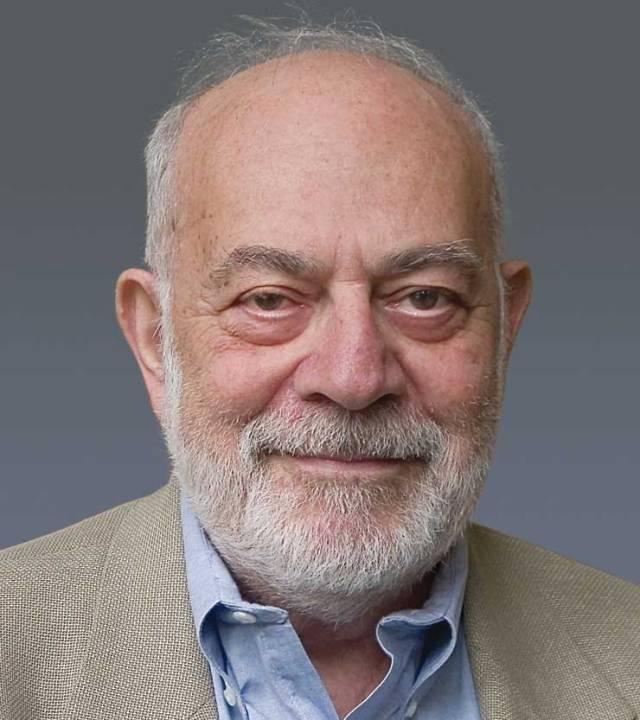
Harry Frankfurt
American philosopherWikipedia
10
MENTIONS
7
EPISODES
7
PODCASTS
Search complete. 10 mentions across 7 episodes found for "Harry Frankfurt".
Oct 16, 2026

En HongHOST
It's very pertinent.
Mathias BockHOST
Something else that I've recently read, which I thought was pretty good, we should also link it, it's called On Bullshit by Harry Frankfurt, especially the dissection between the bullshitter and the liar.
Mathias BockHOST
[laughs]
En HongHOST
Man, I need to learn how to bullshit.
En HongHOST
And that's the AI thing.
En HongHOST
It's so much easier to bullshit because you can have AI write you really plausible-sounding bullshit.
Mathias BockHOST
And by Harry Frankfurt's definition, most certainly that's all bullshit, right? [laughs]
En HongHOST
'Cause there's no grounding in truth.

Jason T. EberlGUEST
We wanna assist agency." And they see, and I tend to agree with them on this, that the biggest problem is the, the weakness of will, right? You know what the good is, but you don't have the virtuous capacity to actually do the good.
Jason T. EberlGUEST
Harry Frankfurt, well-known philosopher, had this, uh... developed this very influential theory of, of higher order desires.
Jason T. EberlGUEST
And so one of his examples, um, and I'll s- stick with the, this example, is the unwilling alcoholic.
Jason T. EberlGUEST
So the person who, because they're an alcoholic, whenever they're confronted, right, there's some wine in the back of the room, right, they have the strong first order desire to drink, right? Uh, it's a compulsion, "I want that drink." But they also have a first order desire not to drink, 'cause they know how it's affecting their health or affecting their relationships or whatever, right? And so they have these competing first order desires, "I wanna drink, I don't wanna drink," right? The angel and the devil on their shoulders.

Mark SchroederGUEST
And it makes sense sometimes to see it one way and sometimes to see it in the other way.
Mark SchroederGUEST
Actually, the contrast between these two addicts is used by Harry Frankfurt to illustrate the difference between the actions that are, in a sense, free, or I think as contemporary Flusher's action would say, things that you're attributively responsible for because they reflect on you, and actions that don't reflect on you.
Mark SchroederGUEST
And of course, Frankfurt's view about it was that the difference between the addict whose actions reflect on them and the addict whose actions don't reflect on them is a matter of whether they want to want to take the drug or don't want to take the drug.
Mark SchroederGUEST
And I think that's not the difference between the two cases.
11 MINS LATER
Mark SchroederGUEST
And it might involve lots of complex agency.
Mark SchroederGUEST
They might have to dig through the trash to find their needles and put their dealer's contact info in their phone and engage in complex reasoning in order to do this thing.
Mark SchroederGUEST
which Harry Frankfurt would say is not free.
Mark SchroederGUEST
It's not truly their action.

Darius Parvizi-WayneGUEST
And this isn't just in Murdoch and in Heidegger.
Darius Parvizi-WayneGUEST
Someone like Harry Frankfurt's very interesting here, where he wants to say-
John VervaekeGUEST
Yes, yes.
John VervaekeGUEST
Yeah

Darius Parvizi-WayneGUEST
And this isn't just in Murdoch and in Heidegger.
Darius Parvizi-WayneGUEST
Someone like Harry Frankfurt is very interesting here, where he wants to say, in the beginning of The Reasons of Love, he says, actually, the more fundamental question is not what is the moral life, it's we need to pay attention to actually what we care about.
Darius Parvizi-WayneGUEST
We can only really get to the ethical context by first understanding what matters to us.
Darius Parvizi-WayneGUEST
And so I want to just start by thinking about how do you view that relationship between love and care or love and relevance? And this is interesting in the case of Murdoch.

Lucas BeanHOST
There's a psychological reason for that.
Lucas BeanHOST
In 1986, philosopher Harry Frankfurt at Princeton University published research on a category of dishonesty that is worse than lying.
Lucas BeanHOST
A liar at least cares about the truth enough to hide it.
Lucas BeanHOST
MAGA doesn't even do that.

Seamus PowerGUEST
But I'm hearing or maybe reading not enough arguments from colleagues and other people who are writing about this, about the world's poorest people.
Seamus PowerGUEST
There is a really great influential book, I think it was 2015, Harry Frankfurt, a small little book called On Inequality.
Seamus PowerGUEST
He was a professor of philosophy in Princeton.
Seamus PowerGUEST
And basically, he makes this argument that I found very convincing is that perhaps we're over focusing on making the rich less rich.
23 MINS LATER
Seamus PowerGUEST
So I end the book with this kind of articulation, as you've said, this idea of alleviation of poverty.
Seamus PowerGUEST
From all my reading on psychology, economics and poverty and all these different disciplines, I think it's so ignored, this role of global poverty and its alleviations.
Seamus PowerGUEST
I think for me, like Harry Frankfurt, when I first read this little philosophy book, I think it's a moral imperative of our time to help alleviate global poverty i mean maybe one of the ways i can you know i can see from growing up in ireland as i write in the book i was born in 1985 i have this memory uh my initial years of ireland being a poor country right um and then it was with eu funding uh through the nine uh late 1990s and 2000s i think the country, it's kind of the stimulus package where people were working and universities were getting more money, education became free.
Seamus PowerGUEST
You get this kind of injection of financing based on the EU and it kind of led to these more capitalistic enterprises and increased the loss of people in Ireland and now it's one of the wealthiest countries in the world.