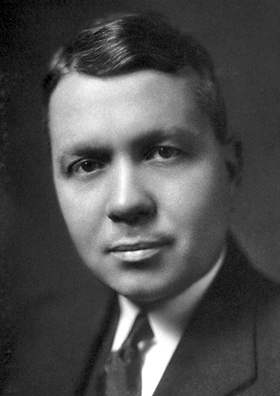
Harold Urey
American physical chemistWikipedia
7
MENTIONS
6
EPISODES
6
PODCASTS
Search complete. 7 mentions across 6 episodes found for "Harold Urey".
Oct 2, 2026

Jonathan JareckiHOST
studied so much?
Cameron BorgGUEST
Well, it was the first heavy isotope to be found by Harold Urey in 1931.
Cameron BorgGUEST
The same Urey from the Urey-Miller synthesis, the primordial soup.
Jonathan JareckiHOST
Oh, yeah.

JeanNARRATOR
Could it work this time, too? Frightened for your life.
JeanNARRATOR
It wasn't a viral tweet, but the Nobel Prize-winning chemist and Manhattan Project contributor Harold Urey knew how to capture the public imagination when he wrote about nuclear weapons in early 1946.
JeanNARRATOR
I write this to frighten you, Urey began an essay in Collier's that he co-wrote with a publicist.
JeanNARRATOR
I'm a frightened man myself.
JeanNARRATOR
And that, until then, civilians should take control of the U.S. program from the military, which they worried would focus excessively on weapons, insist on secrecy, potentially undermine democracy.
JeanNARRATOR
Urey wrote that leaving the military in control was similar in intent to the transfer of power from the German Reichstag to Hitler.
JeanNARRATOR
Within weeks of nuclear bombings, hundreds of physicists, chemists, and engineers began forming organizations at their Manhattan Project labs and lobbying for these priorities, the historian Jessica Wang has described.
JeanNARRATOR
They later formed a national committee that included labor unions, professional associations, and religious groups, whose members summed to the millions.

JeanNARRATOR
Could it work this time too? Frightened for your life.
JeanNARRATOR
It wasn't a viral tweet, but the Nobel Prize winning chemist and Manhattan Project contributor, Harold Urey, knew how to capture the public imagination when he wrote about nuclear weapons in early 1946.
JeanNARRATOR
I rate this to frighten you, Urey began an essay in Collier's that he co-wrote with a publicist.
JeanNARRATOR
I'm a frightened man myself.

Randall CarlsonGUEST
Um, there was a number back in the, in the early days, it was, um, One MIT physicist, I think his name is Nafi Kiksov was his name, I believe, in 1981 said, quote, it's far easier to explain why the moon shouldn't be there than to explain its existence.
Randall CarlsonGUEST
And Harold C. Urey, who did a lot of work on impact geology, he was a physicist, Nobel Prize winning physicist.
Randall CarlsonGUEST
He said, quote, all explanations for the origin of the moon are improbable.
Darren GrimesHOST
nobody's ever talking about that and then

speaker_3NARRATOR
Thunderstorms on the early Earth may have played a role in the origin of life itself.
speaker_3NARRATOR
In 1953, Stanley Miller and Harold Urey conducted a famous experiment in which they simulated conditions thought to exist on the early Earth by passing electrical sparks, simulating lightning, through a mixture of gases thought to represent the early atmosphere.
speaker_3NARRATOR
The experiment produced amino acids, which are the building blocks of proteins and therefore the building blocks of all known life.
speaker_3NARRATOR
The results suggested that lightning could have helped create the complex organic molecules needed for life to begin on a planet that was, at that point, nothing more than rock and water and air.

Gary TaubesGUEST
We believe that considering the fat tissue as an organ system with its typical structure and unique metabolic functions would be ad- advantageous for all fat metabolism-related problems, except in the US, where obesity is caused by ignorance and self-indulgence.
Gary TaubesGUEST
Um, 1930, Schoenheimer is a German Jewish refugee who came to the US in 1933, went to work for Harold Urey's laboratory in Columbia.
Gary TaubesGUEST
He was a famous-- Schoenheimer's already a well-known biochemist.
Gary TaubesGUEST
Urey had discovered the deuterium for which he would win the Nobel Prize.