Harland and Wolff
Shipbuilding companyWikipedia
20
MENTIONS
9
EPISODES
9
PODCASTS
Search complete. 20 mentions across 9 episodes found for "Harland and Wolff".
Sep 25, 2026

speaker_2NARRATOR
White Star resurrected the name a few years later and christened one of their new ships completed in 1903 with it.
speaker_2NARRATOR
This was part of the Big Four, a class of four ships built for White Star at this time by the Harland and Wolff shipyards in Belfast, Ireland, the other three being the Celtic, the Cedric, and the Adriatic.
speaker_2NARRATOR
When it was launched in 1903, the Baltic was the largest ship in the world.
speaker_2NARRATOR
It did not sail until 1904 and, when it did, Smith was captain of it.

Rich PolleyHOST
You can see it from everywhere.
Rich PolleyHOST
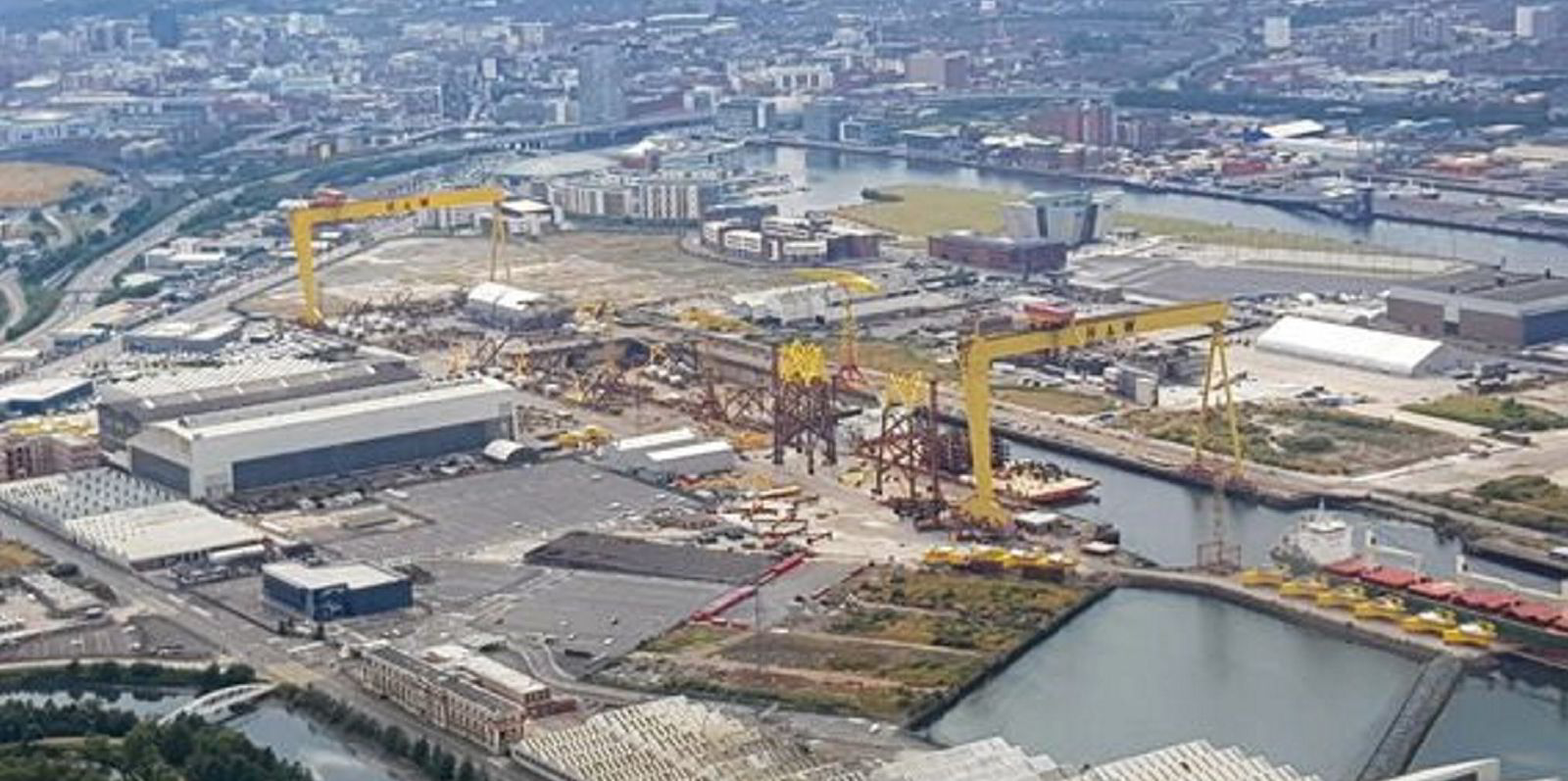
So a lot of people, when they come and do tourism, they kind of see the Harland and Wolff Cranes and the Titanic Museum, which is an interestingly architected building.
Rich PolleyHOST
And they're like iconic Belfast skyline landmarks.
Rich PolleyHOST
There's nothing else high rise in Belfast.

Kat ThorneGUEST
Novantia took over.
Kat ThorneGUEST
I'd only been with Harland & Wolff for a few months, so I can't talk too much about the history of it.
Kat ThorneGUEST
But yeah, essentially, I think one of the differences that I've seen is I think Harland & Wolff were... were very keen on obviously regenerating the yards, getting business.
Kat ThorneGUEST
They were going after a number of different sectors, I would say.
Kat ThorneGUEST
Really with Navantia coming on board, they know who they are.
Kat ThorneGUEST
They are naval shipbuilders and they are modern naval shipbuilders.
Kat ThorneGUEST
So I think one of the differences we're seeing here is really that focus and also really bringing the four yards together behind one mission.
Kat ThorneGUEST
Under Harland & Wolff, they were still kind of four fairly individual yards with sort of a central function.

Simon BrewHOST
Cameron, meanwhile, wanted this to be authentic and to give a flavor of the prep work.
Simon BrewHOST
The filmmakers got access to the private archives of the company Harland & Wolff, who built the boat, and so saw the blueprints that then became a reference point for rebuilding the ship.
Simon BrewHOST
Because Cameron and his team, and he got Peter Lamont, designed loads of Bond films.
Simon BrewHOST
Peter Lamont was on the verge of retirement, was offered this and just said, "I'll never get a chance to do anything like this.
Simon BrewHOST
And then there was Leonardo DiCaprio also on the list as well.
Simon BrewHOST
So, uh, I mean, in terms of DiCaprio, it was a pair of films, The Basketball Diaries and What's Eating Gilbert Grape, that turned Cameron's head in his direction, and DiCaprio was invited to the Lightstorm office.
Simon BrewHOST
Now, Lightstorm Entertainment is Cameron's company, and Cameron noticed when DiCaprio came in, it's just like, "Oh, lots of people are turning their heads when he's in the room," and, "Oh, hang on." It's just like, "Uh, w- when I'm doing the meeting, there appear to be a lot more people here than usual," and he noticed the effect that DiCaprio was having.
Simon BrewHOST
So, the, the chemistry test later, and it looked like it was DiCaprio and Kate Winslet.

Duncan BarrettGUEST
So they had, they had more lifeboats than they were required to have.
Duncan BarrettGUEST
They, they were anticipating these rules about lifeboats might change in the near future, so the designers of Titanic, Harland and Wolff, had actually, uh, built a system that would enable them to take more lifeboats if they wanted to.
Duncan BarrettGUEST
And one of the figures who, uh, ends up being blamed to a certain extent for, for what happened to Titanic is Bruce Ismay, who's the managing director of White Star, and there is a point apparently where he was asked basically, you know, "Shall we put some extra lifeboats on the ship?" And he basically, uh, nixed it and said, "No, we don't" you know, "No one's telling us we have to have extra lifeboats." Uh, he didn't like the way they looked.
Duncan BarrettGUEST
He thought they kind of spoiled the sleek look of the ship.

Darren MarlarHOST
Within three hours, it had sunk to the bottom of the ocean, killing 1,500 of the ship's 2,224 passengers and crew.
Darren MarlarHOST
Titanic was one of the three Olympic-class ocean liners built at the Harland and Wolff shipyards in Belfast, the other two being the RMS Britannic and the RMS Olympic.
Darren MarlarHOST
The Olympic was launched a year before the Titanic but seemed to share its more famous sister ship's poor luck.
Darren MarlarHOST
Within months of its launch in 1911, it had two serious collisions, the second with Royal Navy cruiser HMS Hawk off the coast of the Isle of Wight, causing serious structural damage to the Olympic's keel and steel beams.
Darren MarlarHOST
There was a nationwide coal strike during the launch of the Titanic, leading to thousands of firemen, boiler-stokers, and greasers short of work.
Darren MarlarHOST
Yet despite this, the Titanic struggled to find a crew, with many men refusing to work on the ship at any price.
Darren MarlarHOST
Rumors were circulating amongst the workers at Harland and Wolff that the ships had been swapped as part of an insurance scam and the Titanic was to be sunk.
Darren MarlarHOST
Did foreknowledge of the sinking of the Titanic frighten man off from wanting to work on the ship? Despite the immense fanfare and hype that surrounded the Titanic launch, it was only just over half full when it left Southampton on its doomed voyage.

Tim HoustonGUEST
So we pioneered linen.
Tim HoustonGUEST
Another one, a big one I'm sure comes to your mind, is Belfast pioneering shipbuilding with Harland & Wolfe.
Tim HoustonGUEST
You know, in the late 1800s, 1900s, at launch, Titanic was one of the largest moving objects that human beings had ever made.
Tim HoustonGUEST
It's incredibly pioneering in an engineering sense.

Darren MarlarHOST
Within three hours, it had sunk to the bottom of the ocean, killing 1,500 of the ship's 2,224 passengers and crew.
Darren MarlarHOST
Titanic was one of the three Olympic-class ocean liners built at the Harland and Wolff shipyards in Belfast, the other two being the RMS Britannic and the RMS Olympic.
Darren MarlarHOST
The Olympic was launched a year before the Titanic but seemed to share its more famous sister ship's poor luck.
Darren MarlarHOST
Within months of its launch in 1911, it had two serious collisions, the second with Royal Navy cruiser HMS Hawk off the coast of the Isle of Wight, causing serious structural damage to the Olympic's keel and steel beams.
Darren MarlarHOST
There was a nationwide coal strike during the launch of the Titanic, leading to thousands of firemen, boiler-stokers, and greasers short of work.
Darren MarlarHOST
Yet despite this, the Titanic struggled to find a crew, with many men refusing to work on the ship at any price.
Darren MarlarHOST
Rumors were circulating amongst the workers at Harland and Wolff that the ships had been swapped as part of an insurance scam and the Titanic was to be sunk.
Darren MarlarHOST
Did foreknowledge of the sinking of the Titanic frighten man off from wanting to work on the ship? Despite the immense fanfare and hype that surrounded the Titanic launch, it was only just over half full when it left Southampton on its doomed voyage.