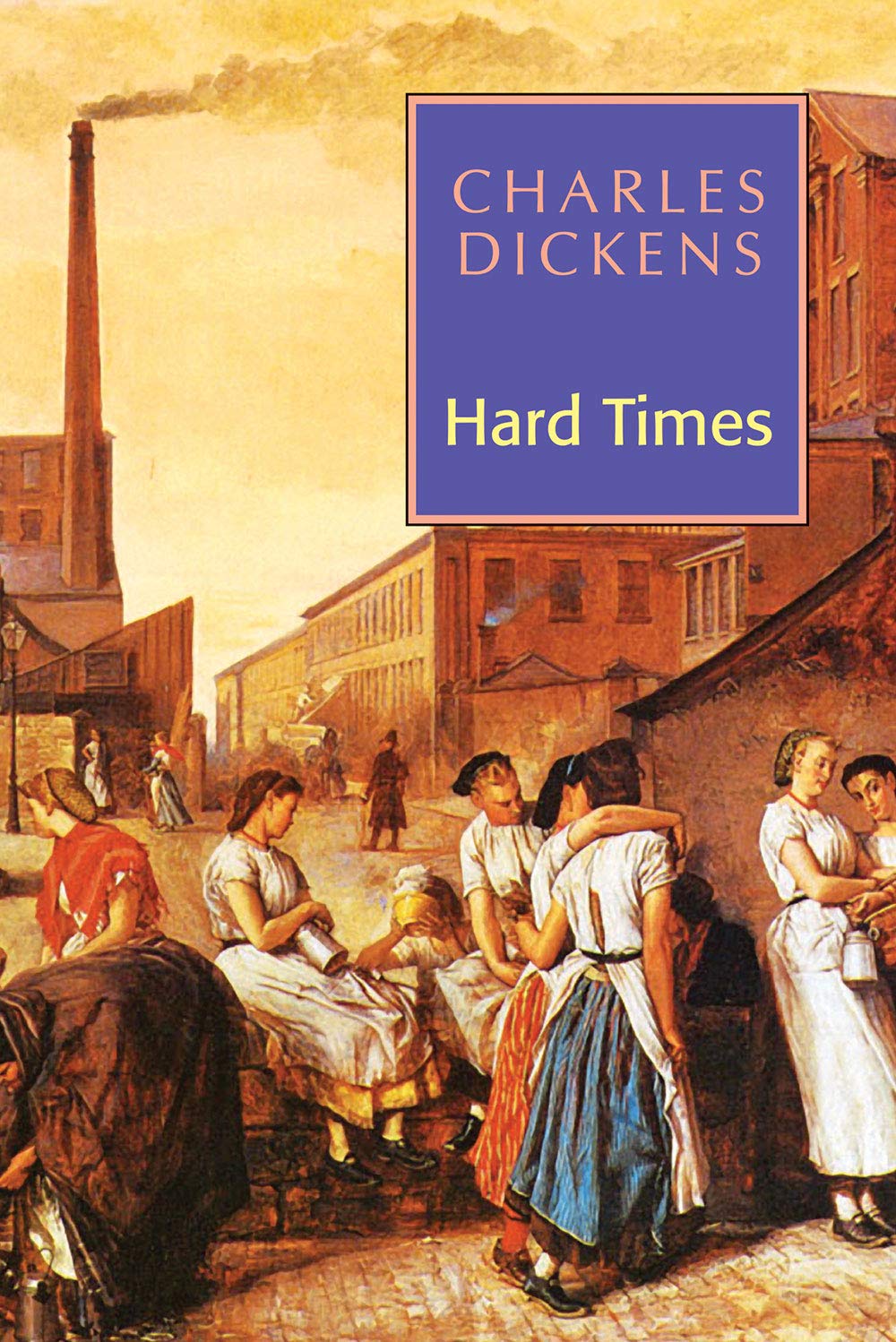
Hard Times
Novel by Charles DickensWikipedia
24
MENTIONS
5
EPISODES
5
PODCASTS
Search complete. 24 mentions across 5 episodes found for "Hard Times".
Oct 8, 2026

speaker_3NARRATOR
There is in Dickens.
speaker_3NARRATOR
The whole of Hard Times is the expression of just such a realization.
speaker_3NARRATOR
It is not true to say that Dickens was a socialist, but it is not absurd to say so, and it would be simply absurd to say it of any of the great individualist novelists of the Victorian time.
speaker_3NARRATOR
Dickens saw far enough ahead to know that the time was coming when the people would be imploring the state to save them from mere freedom as from some frightful foreign oppressor.
8 MINS LATER
speaker_3NARRATOR
He belongs to Queen Victoria as much as Addison belongs to Queen Anne.
speaker_3NARRATOR
And it is not only Queen Anne who is dead, but Dickens in a dark prophetic kind of way belongs to the developments.
speaker_3NARRATOR
He belongs to the times since his death when hard times grew harder and when Veneering became not only a member of parliament but a cabinet minister.
speaker_3NARRATOR
The times when the very soul and spirit of Fledgeby carried war into Africa.

James ConleyGUEST
And that real ascent also applies to all knowledge.
James ConleyGUEST
It's like, uh, the great example at the beginning of Charles Dickens' Hard Times when the Dr. Gride- Gradgrind is quizzing the students, and one of the students stands up and he wants to know, "What is the definition of a horse?" And, um, Bitzer, I think, is the name of the student, gives this scientific definition, a quadruped with so many incisors, da, da, da, da, da.
James ConleyGUEST
And then he asks little Sissy Jupe, who was the son of a, of a horse trainer, and she didn't know anything about the definition of the horse, but she's ridden horses her whole life and trained them, and she knows a horse much better than this Bitzer.
James ConleyGUEST
And I think that, that, that is a great example of kind of the dilemma we're in now, and that's the fault of rationalism, that too much of our knowledge is rational.

Alain de BottonNARRATOR
but not all will be won over eighteen fifty four london the british economy is now the largest in the world thanks to its enormous industries of cotton shipbuilding steel and coal vast cities have chewed up the countryside of the midlands and northern england merchants and the newly rich capitalist class have triumphed But many are furious.
Alain de BottonNARRATOR
Charles Dickens, one of Victorian England's most passionate critics of unrestrained capitalism, publishes a novel, Hard Times.
Alain de BottonNARRATOR
Set in the fictional town of Coketown, a version of Manchester, it takes aim at heartless capitalists like Mr Gradgrind, who abuse their workers, exploit young children in mines and chimneys, and use their relentless capitalist logic to blind them to their desecration of nature and human life.
Alain de BottonNARRATOR
Here is Dickens' writing on Coke Town.

Pete QuiñonesHOST
The consumerist change was, of course, to be expected by some and welcomed by many.
Pete QuiñonesHOST
Mr. Gradgrind of Dickens' Hard Times, a strict, fanatically disciplined modern man, mercilessly attempted to eradicate human weakness, is a despicable figure and as such perfectly illustrates a negative perception of a classical capitalist by the humanist critics of a modern society.
Pete QuiñonesHOST
Mr. Gradgrind is deaf to temptations, unresponsive to warm emotions and simple pleasures, motivated purely by new rationality and by nothing else.
Pete QuiñonesHOST
His callousness seems almost inhuman.

David BrooksGUEST
Then I wanted to do character formation, so I wrote a book called The Road to Character.
David BrooksGUEST
And then I went through a hard time, and I wanted to do that, so I wrote a book about The Second Mountain: how do you survive hard times? So with each book, I'm trying to go a little deeper into the human soul, the human core, whatever you wanna call it.
David BrooksGUEST
And as I'm trying to do that, I think America has a great need of it and a great hunger for it.
David BrooksGUEST
And I find that in my students in particular, and there are 20, the, they know they are morally inarticulate.
37 MINS LATER
David BrooksGUEST
We'll take the convenience, but you will not turn us into machines." And so ages of technological advance have been ages of great humanistic, uh, s- counterreaction.
David BrooksGUEST
And so what happens in, for example, in Victorian England, is that you get the machines, and then you get Charles Dickens, and Dickens is painting a portrait of people who are destroyed by machines.
David BrooksGUEST
He's got a guy in one of his book, I think his book, novel, "Hard Times," a guy called Gradgrind, who's like the image of hear him, what a tech bro would be for us.
David BrooksGUEST
He says, "I just want education to be about facts.