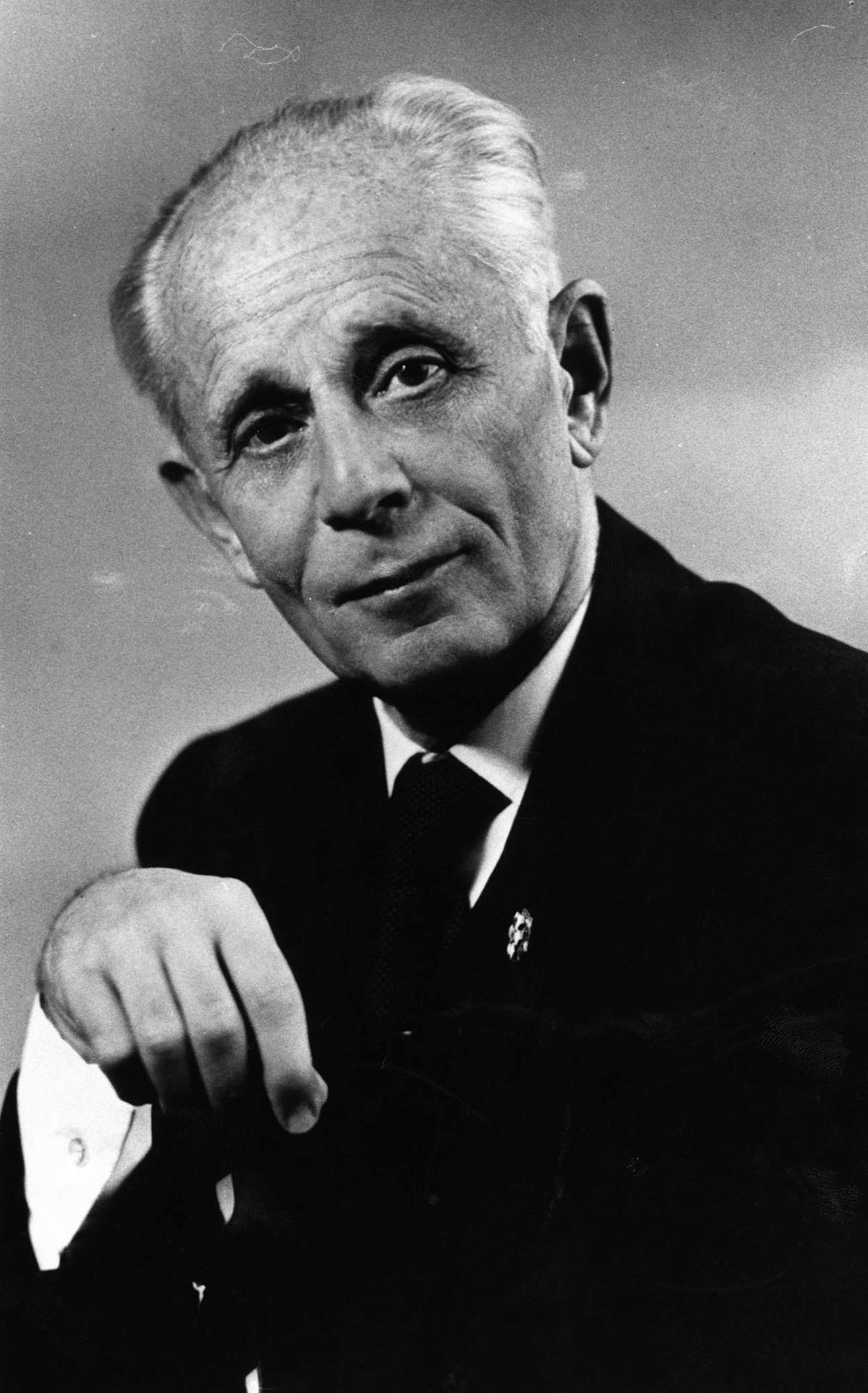
Hans Selye
Hungarian-Canadian endocrinologistWikipedia
18
MENTIONS
17
EPISODES
17
PODCASTS
Search complete. 18 mentions across 17 episodes found for "Hans Selye".
Sep 27, 2026

speaker_6HOST
It processes them through the same core circuitry, activating what's known as the hypothalamic pituitary adrenal axis, or HPA axis.
speaker_6HOST
This concept was originally formalized through the work of Hans Selye, who showed that the body responds to all stressors with a remarkably similar hormonal cascade.
speaker_6HOST
Once that system is activated, cortisol becomes the dominant hormone in the room.
speaker_6HOST
Cortisol is not bad.

Tommy WoodGUEST
So you mentioned this right at the beginning, and I would completely agree.
Tommy WoodGUEST
I think that the stress response, which is very general, even as Hans Selye first described it, general adaptation syndrome is what he called it.
Tommy WoodGUEST
And It's basically your body realizing there's something that you need to adapt to in your environment, right? That's what stress is.
Tommy WoodGUEST
And that adaptation could be building physical function, right? In terms of a training stress, or it could be removing yourself from the environment because there's a bear right there, right? But...

Tommy WoodGUEST
Your body is diverting resources to allow you to respond to this change in the environment.
Tommy WoodGUEST
And it's, it's why, um, historically, like, the, sort of like, the, the kind of the father of the modern stress response, right, is Hans Selye.
Rangan ChatterjeeHOST
Yeah.
Tommy WoodGUEST
Right? And he called it general adaptation syndrome initially, and I quite like that because it's like this is your body signaling that adaptation is required.

Sinan SchwartingHOST
I mean, I'm almost surprised by all of them to some extent, with the exception of obviously, you know, Crystal Palace and...
Sinan SchwartingHOST
Who was it that beat Selye?
Kaan BayazitHOST
By Leverkusen.
Sinan SchwartingHOST
Yeah, Leverkusen, you know.

Thomas HemingwayHOST
We are alive, and I'm so grateful for that.
Thomas HemingwayHOST
And so we get to make decisions each and every day with respect to all of these things, right? Hans Selye said famously, it's not the stress that kills us, but it's the body's response to it, right? And so we have actually a lot more control than we think.
Thomas HemingwayHOST
And this goes along with one of my other favorite signals, which is the L, right? Right before the end of the word signals, L is love and connection.
Thomas HemingwayHOST
Connection is my favorite vitamin.

Michael RuscioHOST
But most people, I would argue, who have chronic symptoms, chronic inflammation, have a blunted production of cortisol.
Michael RuscioHOST
This is the Hans Selye stress model.
Michael RuscioHOST
When the stressor is in the early phases, cortisol goes high.
Michael RuscioHOST
Then as the stressor continues, the cortisol levels become aberrant.

Tom BilyeuSOUNDBITE_SPEAKER
Something that was moments before, something that seemed impossible, something that was breaking your will to continue to fight with a change in attitude becomes something completely different.
Tom BilyeuSOUNDBITE_SPEAKER
And as Hans Selye said, adopting the right attitude can turn a negative stress into a positive one.
Tom BilyeuSOUNDBITE_SPEAKER
And that game of mental jujitsu is what...
Tom BilyeuSOUNDBITE_SPEAKER
Support comes from Wise,

Anthony BalduzziHOST
The word for stress, healthy stress, is eustress, eustress.
Anthony BalduzziHOST
It was coined by a physiologist named Hans Selye, and I think it's a word that we need to bring back, eustress.
Anthony BalduzziHOST
Eustress is the name of the game.
Anthony BalduzziHOST
You want to be consciously applying eustress.

Steve ProsciuttiHOST
So the honest summary of that study is not that breathing hard is good for your immune system, it is that you can voluntarily produce a massive stress hormone response, and that a massive stress hormone response is acutely anti-inflammatory, which is the same reason we hand people prednisone.
Steve ProsciuttiHOST
This is exactly the distinction Hans Selye drew and almost nobody carries forward, and it is the frame Jay Feldman has built a lot of his hormesis work on.
Steve ProsciuttiHOST
Every stressor has stressor effects, which are the damage and the energy cost, and specific effects, which are the particular benefits unique to that stressor.
Steve ProsciuttiHOST
The right question about any practice is the ratio between them.

Brad KearnsGUEST
I mean, we have so many fight or flight prompting or triggering events to use another popular buzzword of today.
Brad KearnsGUEST
And I think what a lot of people don't understand about the Hans Selye, the father of modern stress research, called it the general adaptation syndrome.
Brad KearnsGUEST
And this is the idea that our body reacts exactly the same.
Brad KearnsGUEST
with the stress response regardless of the nature of the stressor or really it should be termed the stimulus.
7 more episodes mention Hans Selye.
Create an account to see the whole feed, search across every transcript, and follow the entities you care about.