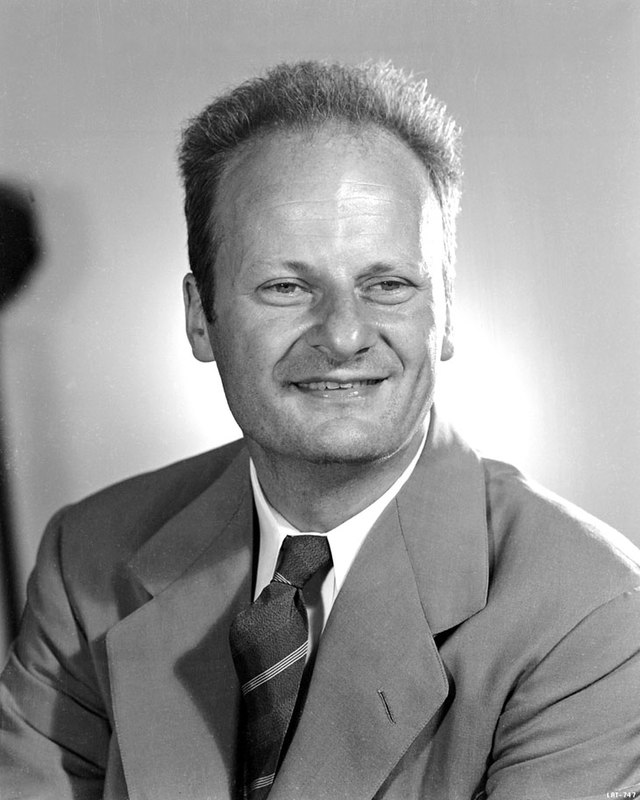
Hans Bethe
German-American physicistWikipedia
35
MENTIONS
16
EPISODES
16
PODCASTS
Search complete. 35 mentions across 16 episodes found for "Hans Bethe".
Oct 20, 2026

speaker_0NARRATOR
They didn’t wave it off.
speaker_0NARRATOR
Hans Bethe and others worked the numbers and concluded the air couldn’t sustain a runaway reaction.
speaker_0NARRATOR
The worry never fully left the room, though.
speaker_0NARRATOR
Minutes before the Trinity test in July nineteen forty-five, people were still joking about it, and Enrico Fermi reportedly took bets, understood as a joke, on whether the blast would destroy just New Mexico or the whole world.

Matt O'DowdHOST
They didn't take long.
Matt O'DowdHOST
In the same year that the Lamb shift was first observed, German physicist Hans Bethe successfully explained it in terms of a fluctuating vacuum energy.
Matt O'DowdHOST
Virtual particle-antiparticle pairs in the space between the orbitals and the nucleus align themselves with the electric field.
Matt O'DowdHOST
This partially shields the orbiting electrons from the positive charge of the nucleus.

HackerNoon AINARRATOR
His reasoning was simple in that if nitrogen makes up most of the atmosphere, and if fission heat were enough to start nitrogen nuclei fusing, that a reaction could sustain itself and fire wouldn't stop at the edge of the test site.
HackerNoon AINARRATOR
Hans Bethe worked through it.
HackerNoon AINARRATOR
Teller, along with Emil Konopinski and a Los Alamos technician named Cloyd Marvin, worked through it again.
HackerNoon AINARRATOR
The physics they created turned out to be almost totally decisive rather than being merely comforting.
HackerNoon AINARRATOR
That matters.
HackerNoon AINARRATOR
And it deserves saying that the science worked rather than simply brushing that away.
HackerNoon AINARRATOR
Bethe was right.
HackerNoon AINARRATOR
Konopinski, Marvin, and Teller were right.

Lester NareHOST
Mm-hmm.
Krishna ChoudharyHOST
And pretty soon, even in the 1930s, using visible light, people had figured out something was up, right? It took Willis Lamb to actually measure that thing, and there's a very famous, um, there's a very famous interview by Hans Bethe.
Krishna ChoudharyHOST
I think it's either by Hans...
Krishna ChoudharyHOST
No, uh, yeah.
Krishna ChoudharyHOST
It's a very famous interview by Hans Bethe who said, "Everyone knew that it was there, but until Lamb measured it, we were just kind of like, it was a coffee conversation."
Lester NareHOST
Right.
Lester NareHOST
Right.

Brooke DeVardNARRATOR
They argued about it in offices and over dinner, and they handed the arithmetic to younger men to check again.
Brooke DeVardNARRATOR
Hans Bethe, the most careful calculator among them, believed from the start that the danger was close to impossible, and each new set of figures came back saying the same thing.
Brooke DeVardNARRATOR
Close to impossible was as far as anyone could take it.
Brooke DeVardNARRATOR
The best minds of the age had done the sums and trusted them, yet none of them could offer a proof that would settle the matter for good, and the only real test of the idea was the bomb itself.
6 MINS LATER
Brooke DeVardNARRATOR
And every man there understood that a guess would not do.
Brooke DeVardNARRATOR
Somebody would have to sit down and work it out properly, starting from the beginning.
Brooke DeVardNARRATOR
Hans Bethe pulled a pad of paper towards him and began.
Brooke DeVardNARRATOR
Beth worked the way he always did, slowly and in order, writing each step down before he trusted the next.

CornHOST
Start with the prediction failure on the pulse itself because it's astonishing.
Herman PoppleberryHOST
Hans Bethe had done the classified theoretical work on high-altitude EMP in 1957.
Herman PoppleberryHOST
And by the accounting that came out later, his estimate was off by a factor of more than a thousand.
CornHOST
A thousand.

Brendan NorthNARRATOR
The physicists Stephen Wolfram and Russell Haslacher introduced me in the early nineteen eighties to chaos theory and nonlinear systems.
Brendan NorthNARRATOR
In the nineteen nineties, I learned about complex systems from conversations with Danny Hillis, the biologist Stuart Kaufman, the Nobel laureate physicist Murray Gell-Mann, and others.
Brendan NorthNARRATOR
Most recently, Haslacher and the electrical engineer and device physicist Mark Reed have been giving me insight into the incredible possibilities of molecular electronics.
Brendan NorthNARRATOR
In my own work as co-designer of three microprocessor architectures, SPARC, PicoJava, and MAJC, and as the designer of several implementations thereof, I've been afforded a deep and firsthand acquaintance with Moore's Law.
7 MINS LATER
Brendan NorthNARRATOR
More than half of the world's soybeans and a third of its corn now contain genes spliced in from other forms of life.
Brendan NorthNARRATOR
While there are many important issues here, my own major concern with genetic engineering is narrower, that it gives the power, whether militarily, accidentally, or in a deliberate terrorist act, to create a white plague.
Brendan NorthNARRATOR
The many wonders of nanotechnology were first imagined by the Nobel laureate physicist Richard Feynman in a speech he gave in nineteen fifty-nine, subsequently published under the title There's Plenty of Room at the Bottom.
Brendan NorthNARRATOR
The book that made a big impression on me in the mid-eighties was Eric Drexler's Engines of Creation, in which he described beautifully how manipulation of matter at the atomic level could create a utopian future of abundance, where just about everything could be made cheaply, and almost any imaginable disease or physical problem could be solved using nanotechnology and artificial intelligences.

Brendan NorthNARRATOR
The physicists Stephen Wolfram and Russell Haslacher introduced me, in the early 1980s, to chaos theory and nonlinear systems.
Brendan NorthNARRATOR
In the 1990s, I learned about complex systems from conversations with Danny Hillis, the biologist Stuart Kaufman, the Nobel laureate physicist Murray Gell-Mann, and others.
Brendan NorthNARRATOR
Most recently, Haslacher and the electrical engineer and device physicist Mark Reed have been giving me insight into the incredible possibilities of molecular electronics.
Brendan NorthNARRATOR
In my own work, as co-designer of three microprocessor architectures, SPARC, PicoJava, and MAJC, and as the designer of several implementations thereof, I've been afforded a deep and firsthand acquaintance with Moore's Law.
7 MINS LATER
Brendan NorthNARRATOR
More than half of the world's soybeans and a third of its corn now contain genes spliced in from other forms of life.
Brendan NorthNARRATOR
While there are many important issues here, my own major concern with genetic engineering is narrower, that it gives the power, whether militarily, accidentally, or in a deliberate terrorist act, to create a white plague.
Brendan NorthNARRATOR
The many wonders of nanotechnology were first imagined by the Nobel laureate physicist Richard Feynman in a speech he gave in 1959, subsequently published under the title, There's Plenty of Room at the Bottom.
Brendan NorthNARRATOR
The book that made a big impression on me, in the mid-80s, was Eric Drexler's Engines of Creation, in which he described beautifully how manipulation of matter at the atomic level could create a utopian future of abundance, where just about everything could be made cheaply, and almost any imaginable disease or physical problem could be solved using nanotechnology and artificial intelligences.

WillHOST
The math showed a safety factor of one point six.
WillHOST
Hans Bethe confirmed it.
WillHOST
Trinity went ahead on July sixteenth, nineteen forty-five.
WillHOST
Not recklessness, quantitative risk assessment under extreme uncertainty.

Brendan NorthNARRATOR
Verifying compliance will also require that scientists and engineers adopt a strong code of ethical conduct resembling the Hippocratic Oath, and that they have the courage to whistleblow as necessary, even at high personal cost.
Brendan NorthNARRATOR
This would answer the call fifty years after Hiroshima by the Nobel laureate Hans Bethe, one of the most senior of the surviving members of the Manhattan Project, that all scientists cease and desist from work creating, developing, improving, and manufacturing nuclear weapons and other weapons of potential mass destruction.
Brendan NorthNARRATOR
In the twenty-first century, this requires vigilance and personal responsibility by those who would work on both NBC and GNR technologies to avoid implementing weapons of mass destruction and knowledge-enabled mass destruction.
Brendan NorthNARRATOR
Thoreau also said that we will be rich in proportion to the number of things which we can afford to let alone.
6 more episodes mention Hans Bethe.
Create an account to see the whole feed, search across every transcript, and follow the entities you care about.