Hans Berger
German psychiatristWikipedia
6
MENTIONS
5
EPISODES
4
PODCASTS
Search complete. 6 mentions across 5 episodes found for "Hans Berger".
Oct 7, 2026

speaker_0NARRATOR
Von Economo's insight was at least seventy years ahead of its time, and his careful clinical observations, drawn from one of the most tragic epidemics of the twentieth century, laid the foundation for our modern understanding of how the brain switches between wakefulness and rest.
speaker_0NARRATOR
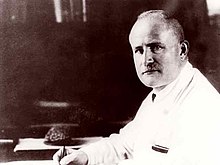
The invention of the electroencephalogram, or EEG, in nineteen twenty-nine by the German psychiatrist Hans Berger gave scientists the first tool to objectively measure brain activity during wakefulness and rest, transforming the study of drowsiness from a field that relied on subjective reports and behavioral observations into one grounded in measurable electrical signals.
speaker_0NARRATOR
Berger discovered that the brain produces different patterns of electrical waves during alert wakefulness, relaxation, and rest, providing the first physical evidence that rest is an active brain process involving organized patterns of neural activity rather than a passive shutting down of the brain's circuits.
speaker_0NARRATOR
Berger's initial findings were met with skepticism by the scientific community, and it took several years and independent replications by other researchers before the EEG was accepted as a legitimate window into the brain's internal state.

Ken BarrettHOST
... at the end of this one.
Ken BarrettHOST
But also the one on Hans Berger, the guy who discovered the EEG in the 1920s that came into clinical use in the '30s.
Ken BarrettHOST
Um, you're right that the EEG machine, this machine for recording these brainwaves, became what you call a visual shorthand for the convergence between brain and machine.
Ken BarrettHOST
And can you unpack that a bit?
speaker_4NARRATOR
Von Economo's insight was at least seventy years ahead of its time, and his careful clinical observations, drawn from one of the most tragic epidemics of the twentieth century, laid the foundation for our modern understanding of how the brain switches between wakefulness and rest.
speaker_4NARRATOR
The invention of the electroencephalogram, or EEG, in nineteen twenty-nine by the German psychiatrist Hans Berger gave scientists the first tool to objectively measure brain activity during wakefulness and rest, transforming the study of drowsiness from a field that relied on subjective reports and behavioral observations into one grounded in measurable electrical signals.
speaker_4NARRATOR
Berger discovered that the brain produces different patterns of electrical waves during alert wakefulness, relaxation, and rest, providing the first physical evidence that rest is an active brain process involving organized patterns of neural activity rather than a passive shutting down of the brain's circuits.
speaker_4NARRATOR
Berger's initial findings were met with skepticism by the scientific community, and it took several years and independent replications by other researchers before the EEG was accepted as a legitimate window into the brain's internal state.

Bradley VoytekGUEST
So there's EEG, which is almost 100 years old, invented in 1928.
Bradley VoytekGUEST
Nine-ish by Hans Berger, who was a physician that was trying to prove that psychic powers were real.
Bradley VoytekGUEST
True story.
Bradley VoytekGUEST
History of science is fascinating.

Jack KruseGUEST
And I kind of tied two of them together.
Jack KruseGUEST
So when you understand Becker's work, and I'm not going to expect any of, your readers to know this stuff, but some of the other things in the boxes were tied to alpha waves on EEGs and a guy named Hans Berger.
Jack KruseGUEST
There was stuff about the Schumann resonance in there.
Jack KruseGUEST
And basically, what did that all mean? They were linking these pathways back to the supercosmatic nucleus in the 50s and 60s.
6 MINS LATER
Jack KruseGUEST
So other things would have to be done on those people.
Jack KruseGUEST
But where the story I think gets the most interesting is this link between technology and space, especially with the Pensacola pilots.
Jack KruseGUEST
So When you see this in the boxes, especially around Becker and Hans Berger's work, there is a lot of references to the USSR space program.
Jack KruseGUEST
And I had no freaking idea.