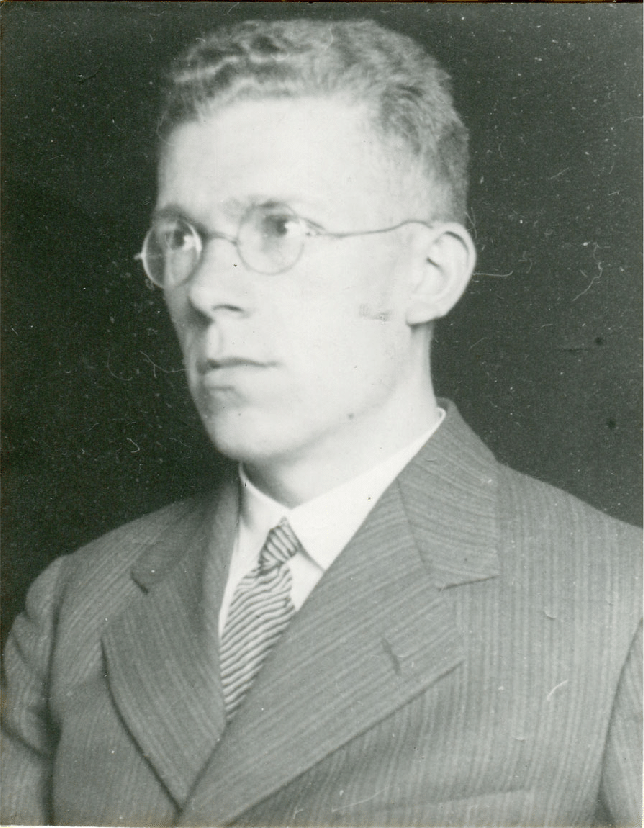
Hans Asperger
Austrian physicianWikipedia
12
MENTIONS
8
EPISODES
7
PODCASTS
Search complete. 12 mentions across 8 episodes found for "Hans Asperger".
Oct 6, 2026

John MitchinsonHOST
Wonderful.
John MitchinsonHOST
Who won the, the Walter Scott Historical, uh, Prize this year for her, I think, brilliant and underread and underappreciated novel, The Matchbox Girl, which was about a girl who was one of the pupils of Dr. Asperger during the, the, i- in Vienna-
Andy MillerHOST
Mm
John MitchinsonHOST
... during the war.

Flat Earth BarbieGUEST
Um, you know, uh, there's this guy, the guy that, uh, basically first documented autism.
Flat Earth BarbieGUEST
His name was H- Hans Asperger, and basically he wrote this book called Autistic Psychopathy.
Flat Earth BarbieGUEST
So basically, he came up with this idea that autism is on a spectrum kind of with psychopathy, and basically, you, I think what happens is that the psychopaths, they don't have empathy, right? And the autists, they do have empathy, and they, they're naive and gullible.
Flat Earth BarbieGUEST
Psychopaths are not naive and gullible.
BillHOST
Yeah.
Flat Earth BarbieGUEST
And, you know, but they only have use for the high-functioning types of both of those.
Flat Earth BarbieGUEST
And this is what Hans Asperger was doing, was, um, you know, basically kind of, uh, studying people after injecting them, of course, and then-
BillHOST
Oh, shit

Ailsa RussellGUEST
And I think, yeah, so it's been a really important shift in how people think about autism, how they include autistic voices in the thinking, and how important that is actually.
Ailsa RussellGUEST
And I guess that's grown because I think the conceptualization of autism has shifted to understand that there are people, and that really comes from the work of Lorna Wing, who learned from the translations of Hans Asperger's, that there were people who didn't have intellectual disability and who were verbally articulate, who could describe their experiences that were very in keeping, that were about being autistic, but we could learn from those people and include those experiences in the conceptualization.
Rachel HandleyHOST
And benefit from the strengths and the positive aspects that they bring.
Rachel HandleyHOST
And you've talked then about these main aspects that characterize autism.

SarahHOST
And I like what you said about low and high functioning as well.
SarahHOST
And I guess that's also why we don't use Asperger's anymore, because that heavily relies on that very polarizing, linear understanding of autism specifically, and what autistic people are useful and what are not.
SarahHOST
And I don't think a lot of people remember that Dr. Asperger, he had ties to I think it was like Nazi Germany, right? And it was about finding useful autistic people to use for the cause.
SarahHOST
And so that's also why we don't use Asperger's anymore because it has dark connotations and it also heavily relies on kind of that linear understanding of autism.
SarahHOST
Let's get more into kind of like the autistic presentation in women because I think that's why a lot of people are listening today.
SarahHOST
So present-day research actually indicates now that the ratio of autistic men to girls is now more like 3 to 1 than the previous figure of 4 to 1.
Luca Cassandra CarverSOUNDBITE_SPEAKER
It was very much like people like who had like very high support autism needed constant caregivers and like a lot of like low support autism or like level one or level two autism, as we think of it, like really wasn't thought of in that way.
Luca Cassandra CarverSOUNDBITE_SPEAKER
I know like Asperger's syndrome was definitely a thing, but like, you know, like Hans Asperger was like a Nazi.
Luca Cassandra CarverSOUNDBITE_SPEAKER
So that whole diagnosis is very messy because it very much like favored like white boys who were really interested in train schedules.
Luca Cassandra CarverSOUNDBITE_SPEAKER
And not like girls who were just like, like autistically obsessed with horses.

Kate KahleSOUNDBITE_SPEAKER
Here's why I don't prefer the term Asperger syndrome.
Kate KahleSOUNDBITE_SPEAKER
Hans Asperger was a medical doctor and early researcher on autistic kids, who he called autistic psychopaths.
Kate KahleSOUNDBITE_SPEAKER
He believed in eugenics, and he sent kids that he worked with to the Third Reich's child euthanasia and sterilization programs.
Kate KahleSOUNDBITE_SPEAKER
While not the Nazis' main targets, autistic people were considered a threat to the Third Reich goal of a genetically pure society.

Steve SilbermanGUEST
And the other was clinicians and researchers.
Steve SilbermanGUEST
Because I knew that even people who had been in the field for 40 or 50 years did not know the details of, for instance, how Hans Asperger ran this clinic in the midst of a country that was being taken over by the Nazis.
Steve SilbermanGUEST
And without getting into contemporary politics too much, let's just say that I had no idea that the Nazi passages existed.
Steve SilbermanGUEST
in my book would become so relevant virtually overnight again.

Lucca Cassandra CarverGUEST
It was very much, like, people, like, who had, like, very high support autism, needed constant caregivers, and, like, a lot of, like, low support autism or, like, level one or level two autism, as we think of it, like, really wasn't thought of in that way.
Lucca Cassandra CarverGUEST
I know, like, Asperger's syndrome was definitely a thing, but, like, you know, like, Hans Asperger was, like, a Nazi, so...
Lucca Cassandra CarverGUEST
And that whole diagnosis is very messy because it very much like favored like white boys who were really interested in train schedules and not like girls who were just like, like autistically obsessed with horses.
Lucca Cassandra CarverGUEST
But I know for me, it was like, there was always something up with me.