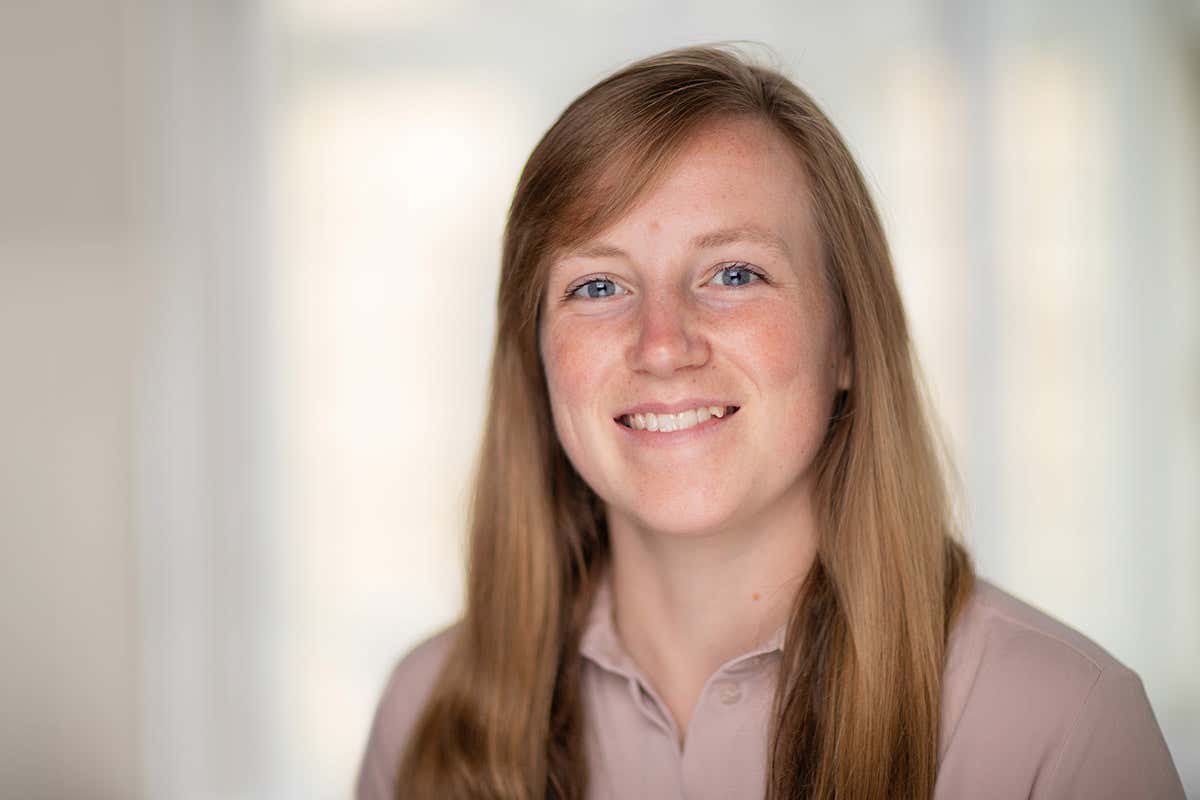
Hannah Ritchie
ScientistWikipedia
10
MENTIONS
8
EPISODES
8
PODCASTS
Search complete. 10 mentions across 8 episodes found for "Hannah Ritchie".
Oct 20, 2026

Peter ResGUEST
That's maybe not a dietary change, but we could multiply our impact by showing our concerns and show the things that we changed because of these reasons.
Danny LennonHOST
One of the points that this reminds me of is on a previous conversation I talked with Hannah Ritchie, who published a lot of data around this.
Danny LennonHOST
And one of the things that was surprising maybe to many people is one point she made was that certain things, for example, like buying produce locally as opposed to one that may be imported.
Danny LennonHOST
People may rank that as a much more important thing from an environmental perspective than it necessarily is in all situations.

Daniel PalkenGUEST
So in this project, we partnered with the Institute for Progress, who's been a grantee in other contexts and kind of shares our values on, on having better, more open information and sees the, sees the worth in that.
Daniel PalkenGUEST
And also with Hannah Ritchie, who is this, a brilliant data scientist, uh, data scientist-
Andy RevkinHOST
She's been on this show.
Daniel PalkenGUEST
Yep, known to this audience, known to many audiences for her books-
Daniel PalkenGUEST
Sometimes the plots are out of date.
Daniel PalkenGUEST
They're, they're only for very narrow cross-sections of the, the data they have.
Daniel PalkenGUEST
And especially with the advent of new AI tools that make it easier to plot things, and having kind of seen what people like Hannah Ritchie had done at the website Our World in Data, we thought it's really a travesty that US policymakers, practitioners, industry actors don't have access to the, you know, a, a, a kind of a ready click.
Daniel PalkenGUEST
If they're not the sort of people who like to dive into a bunch of zip files and Excel sheets, they don't really have access to this absolute treasure trove of data.

Arvind NarayananGUEST
You know, in this conversation, I've generally had a bit more optimistic take on things than we're used to hearing, especially on AI safety.
Arvind NarayananGUEST
So maybe in keeping with that, I really like Hannah Ritchie's book, Not the End of the World.
Arvind NarayananGUEST
She has a newer book, but this one's from twenty twenty-four, and I still like it very much.
Arvind NarayananGUEST
The subtitle is something like How We Can Be the First Generation to Build a Sustainable Planet.

Shruti RajagopalanHOST
This is not the great unsolvable problem we have.
Pranay KotasthaneHOST
So I'll just end this with a line from Hannah Ritchie's book Clearing There.
Pranay KotasthaneHOST
She says this that the physicist David Deutsch explains his three laws of human condition.
Pranay KotasthaneHOST
Law one, problems are inevitable.
28 MINS LATER
Shruti RajagopalanHOST
So that's my recommendation.
Pranay KotasthaneHOST
Awesome.
Pranay KotasthaneHOST
My recommendation is Hannah Ritchie's two books.
Pranay KotasthaneHOST
One is Not the End of the World and the second one is Clearing the Air, which I mentioned earlier.

speaker_0NARRATOR
At best, the picture is mixed.
speaker_0NARRATOR
Hannah Ritchie on the website, um, Our World in Data, has surveyed analysis of conventional and organic farming as regards their impact on carbon emissions, water pollution, biodiversity, and land use.
speaker_0NARRATOR
A note first on what organic agriculture means.
speaker_0NARRATOR
Ritchie describes it as, quotes, "The farming of crops of livestock without the use of synthetic inputs.

Caroline SandersonHOST
I mean, I mainly champion nonfiction.
Caroline SandersonHOST
So I interviewed an amazing data scientist called Hannah Ritchie.
Caroline SandersonHOST
whose book is essentially about all the things that are happening.
Caroline SandersonHOST
And she always says, you know, two things can be true at the same time.

Nat KeohaneGUEST
In terms of absolute numbers, it's, it's arguably bigger than it ever has been, right? 'Cause the energy system is bigger.
Nat KeohaneGUEST
So if you go back to the 20th century, you know, back in the '50s and '60s, Hannah Ritchie had a great Substack on this recently.
Nat KeohaneGUEST
Um, you look back at the '50s, e- electricity, of course, the grid was newer, growing at 5, 6, 7, 8%.
Nat KeohaneGUEST
The '60s still at about 5%, the '70s maybe around 3%, um, uh, if I got my numbers right.

Nat KeohaneGUEST
In terms of absolute numbers, it's, it's arguably bigger than it ever has been, right? 'Cause the energy system is bigger.
Nat KeohaneGUEST
So if you go back to the 20th century, you know, back in the '50s and '60s, Hannah Ritchie had a great Substack on this recently.
Nat KeohaneGUEST
Um, you look back at the '50s, e-e-electricity, of course, the grid was newer, growing at 5, 6, 7, 8%.
Nat KeohaneGUEST
The '60s still at about 5%, the '70s maybe around 3%, um, uh, if I got my numbers right.