Hanbali school
101
MENTIONS
33
EPISODES
22
PODCASTS
Search complete. 101 mentions across 33 episodes found for "Hanbali school".
Sep 28, 2026

speaker_1GUEST
It's wajib.
speaker_1GUEST
Whether you're Hanafi, Jafari, Maliki, Hanbali, this is wajib.
speaker_1GUEST
It's not something, oh, this is not my wajib.
speaker_1GUEST
No, this is wajib.

Zohair Abdul-RahmanHOST
That's it.
Zohair Abdul-RahmanHOST
Now, Ibn Taymiyyah and others have really, and the Hanbali school as well, have restricted the potentiality or the possibility of ijmaa to really the generation of the companions, some extended to the Salaf.
Zohair Abdul-RahmanHOST
So this is something that is basically finished now.
Zohair Abdul-RahmanHOST
It's not like we can reach an ijmaa now.
Zohair Abdul-RahmanHOST
They said, realistically speaking, how will you know about ijmaa? Islam has spread so far from Andalus to India.
Zohair Abdul-RahmanHOST
So how can a person actually really know that everyone has agreed to this? So other than the generation of the companions, and some extended it to the Salaf, Ijma'ah is not really something that you can declare.
Zohair Abdul-RahmanHOST
That is the position of the Temi and others in the Hanbali school as well.
Zohair Abdul-RahmanHOST
But it's something to be mindful of there.

speaker_0HOST
He says, nor any purpose, motive, need, or obligating factor.
speaker_0HOST
So the negation is, negating this here as Imam Ibn Ubalban captures precisely, not due to any cause, purpose, motive, need, or obligating factor, this is the more timid position of the Hanbali school.
speaker_0HOST
They negate it completely.
speaker_0HOST
And to understand illa here and its technical usage, the illa, cause, if you will, is what they consider an external cause that necessitates an action or something through which the doer seeks a benefit repels a harm or completes a deficiency such that the action becomes obligatory for the doer because of it.
5 MINS LATER
speaker_0HOST
That's basically what we're looking at here.
speaker_0HOST
The Mu'tazila claim that Allah's actions arise from rationally necessary causes and that He is obligated to act in the manner human reason judges to be best.
speaker_0HOST
What is the best? And so the Hanbali school among the other Sunni schools rejects this entirely.
speaker_0HOST
The Hanbalis reject it entirely.
speaker_0HOST
And then depending on which you adopt or how you manage those apparent contradictions, there's further definition or understanding that scholars will utilize to try and understand this miraculous event during this night journey.
speaker_0HOST
Within the Hanbali school, the predominant position is transmitted by the great Imams indicated by Imam Ahmad is that the Prophet did see his Lord with his blessed eyes while awake on that night.
speaker_0HOST
And this was the position held by the companions who specialized in tafsir, possessing deep knowledge, particularly Ibn Abbas, along with Anas, Ikrimah al-Hasan al-Basri, Muhammad ibn Ka'b, and others.
speaker_0HOST
And there's numerous textual evidence or textual basis for this affirmation.
speaker_0HOST
Ibn Abbas is saying no, and there's more than one narration from Ibn Abbas that he saw Allah subhanahu wa ta'ala, and then this one, From Aisha, no, if you're claiming that, you're lying.
speaker_0HOST
So there seems to be a contradiction.
speaker_0HOST
But the scholars, not just in the Hanbali school, but other scholars, the great imams, explain that they're not actually in conflict with one another when you properly understand.
speaker_0HOST
And there's a reconciliation process by which we approach these hadith.
speaker_0HOST
Again, Surah Al-Imran.
speaker_0HOST
So this verse became foundational within the Hanbali theological framework.
speaker_0HOST
It established that the Quran has two categories of verses as clearly stated.
speaker_0HOST
That which is clear and that which is ambiguous or unclear.
speaker_0HOST
It's iqraat, it's ithbat.
speaker_0HOST
Here we're just affirming and we're confirming that the mutashabih, that which is ambiguous, are from Allah subhanahu wa ta'ala.
speaker_0HOST
Again, his conclusion is not isolated, but it's shared across the great scholars of the Hanbali school.
speaker_0HOST
So Imam Al-Qadi Abu Yal is not the only one.
speaker_0HOST
We're going to look at how the Hanbalis approached the attributes, in particular that of Al-Nuzul as well as the attribute of Saqq.
speaker_0HOST
And so we'll try and extract a set of comprehensive principles from this that will define the Hanbali methodology in understanding Allah's attributes.
speaker_0HOST
And then after that, we will briefly survey several early sects that deviated in this regard, clarifying where their approaches diverged from sound creed.
speaker_0HOST
And then we will hopefully touch upon rulings on designating names and attributes to Allah subhanahu wa ta'ala.
19 MINS LATER
speaker_0HOST
Instead, we simply affirm the wording as it is, and then we traverse over that word, and we basically just pass over it.
speaker_0HOST
Let's take a look at some other great imams.
speaker_0HOST
This is gonna give us just a synopsis, if you will, of how this looks across the various different phases of the Hanbali development, right? So we looked at Imam Ahmad and Al-Qadhi Abu Ya'la was quoting another citation from Imam Ahmad.
speaker_0HOST
Imam Ahmad passed away in 241, I believe, if I'm not mistaken, 241.

speaker_8NARRATOR
The confession of the Muslim's faith is briefly made in these words, there is no deity but God, Muhammad is God's apostle, which imply a belief and observance of everything that Muhammad taught to be the word or will of God.
speaker_8NARRATOR
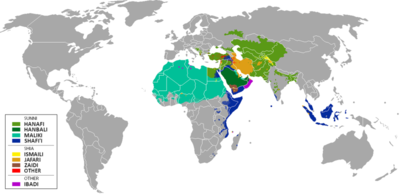
in the opinion of those who are commonly called orthodox and termed sunnis the mohammedan code is founded upon the koran the traditions of the prophet the concordance of his principal early disciples and the decisions which have been framed from analogy or comparison The Sunnis consist of four sects, Hanafis, Shafiris, Malikis, and Hanbalis, so-called after the names of their respective founders.
speaker_8NARRATOR
The other sects, who are called Shiais, an appellation particularly given to the Persian sect, but also used to designate generally all who are not Sunnis, are regarded in nearly the same light as those who do not profess al-Islam, the Muhammadan faith, that is, as destined to eternal punishment.
speaker_8NARRATOR
The Muhammadan faith embraces the following points.
speaker_0UNKNOWN
It's wajib.
speaker_0UNKNOWN
Whether you're a Hanafi, Jafari, Maliki, Hanbali, this is wajib.
speaker_0UNKNOWN
It's not something, oh, this is not my way.
speaker_0UNKNOWN
No, this is wajib.

Bilal AssadHOST
Let's move to the next one.
Bilal AssadHOST
However, because of this specific context, mainstream jurists, all the major schools of thought, Shafi'i, Maliki, Hanbali, um, uh, Hanafi, and other schools of thought, are in consensus and agreement that the restriction of a woman's leadership applied only in two cases.
Bilal AssadHOST
Number one, the supreme head of state, the Khalifa, which, which has a name, it's called Al-Imam Al-Uzma.
Bilal AssadHOST
Remember that, Al-Imamatul Uzma.
12 MINS LATER
Bilal AssadHOST
But number one, other than the two, that the woman shouldn't be the head of state and the great imam of a congregational prayer of mixed gender, the schools of thought split into four categories.
Bilal AssadHOST
Number one, and I'm just gonna be more precise, okay, for those of you who wanna learn more.
Bilal AssadHOST
The Shafi'i, Maliki, and Hanbali schools.
Bilal AssadHOST
Their view was this.

Belal AssaadHOST
Let's move to the next one.
Belal AssaadHOST
However, because of this specific context, mainstream jurists, all the major schools of thought, Shafi'i, Maliki, Hanbali, uh, uh, Hanafi, and other schools of thought, are in consensus and agreement that the restriction of a woman's leadership applied only in two cases.
Belal AssaadHOST
Number one, the supreme head of state, the Khalifa, which, which has a name, it's called Al-Imam Al-Uzma.
Belal AssaadHOST
Remember that, Al-Imamatul Uzma.
12 MINS LATER
Belal AssaadHOST
But number one, other than the two, that the woman shouldn't be the head of state and the great imam of a congregational prayer of mixed gender, the schools of thought split into four categories.
Belal AssaadHOST
Number one, and I'm just gonna be more precise, okay, for those of you who wanna learn more.
Belal AssaadHOST
The Shafi'i, Maliki, and Hanbali schools, their view was this.
Belal AssaadHOST
The text of the hadith of the Prophet Sallallahu Alaihi Wasallam means a woman can be a leader or authority in any administrative office, but not preferred to be in high-level political ministry, such as a minister of absolute delegation, and she cannot be a judge.
23 more episodes mention Hanbali school.
Create an account to see the whole feed, search across every transcript, and follow the entities you care about.