hallucination
IllnessWikipedia
44
MENTIONS
8
EPISODES
8
PODCASTS
Search complete. 44 mentions across 8 episodes found for "hallucination".
Nov 2, 2026

RebeccaHOST
And most patients got these mushrooms from a market and consumed them at home.
RebeccaHOST
25% of poisonings were of the neuropsychiatric type, which included visual hallucinations, also known as Lilliputian hallucinations.
RebeccaHOST
And these were reported in 70% of people.
RebeccaHOST
Fatigue, dizziness, auditory hallucinations, sensory abnormalities, ataxia and headaches were also reported in this group.
RebeccaHOST
And these often occurred within 12 to 24 hours of consuming the mushrooms.
RebeccaHOST
And this is a longer delay of onset compared to other types of hallucinogenic mushrooms.
RebeccaHOST
11% of individuals experienced GI symptoms, which included nausea, vomiting, diarrhea, and abdominal pain, and these normally occurred within one to six hours of eating the mushrooms.
RebeccaHOST
64% of individuals presented with a mixed picture of symptoms, so both GI symptoms and these sorts of hallucinations.

Dustin JacksonGUEST
It was...
Dustin JacksonGUEST
Hallucinations were real.
Dustin JacksonGUEST
Like, I couldn't trust what I was seeing.
Dustin JacksonGUEST
Like, I couldn't trust looking outside the boat and know what I was seeing was real.

Mike KontosNARRATOR
You're listening to Minding the Brain with Dr. Kim Hellemans and Dr. Jim Davies.
Mike KontosNARRATOR
Episode 23, Hallucinations.
Kim HellemansHOST
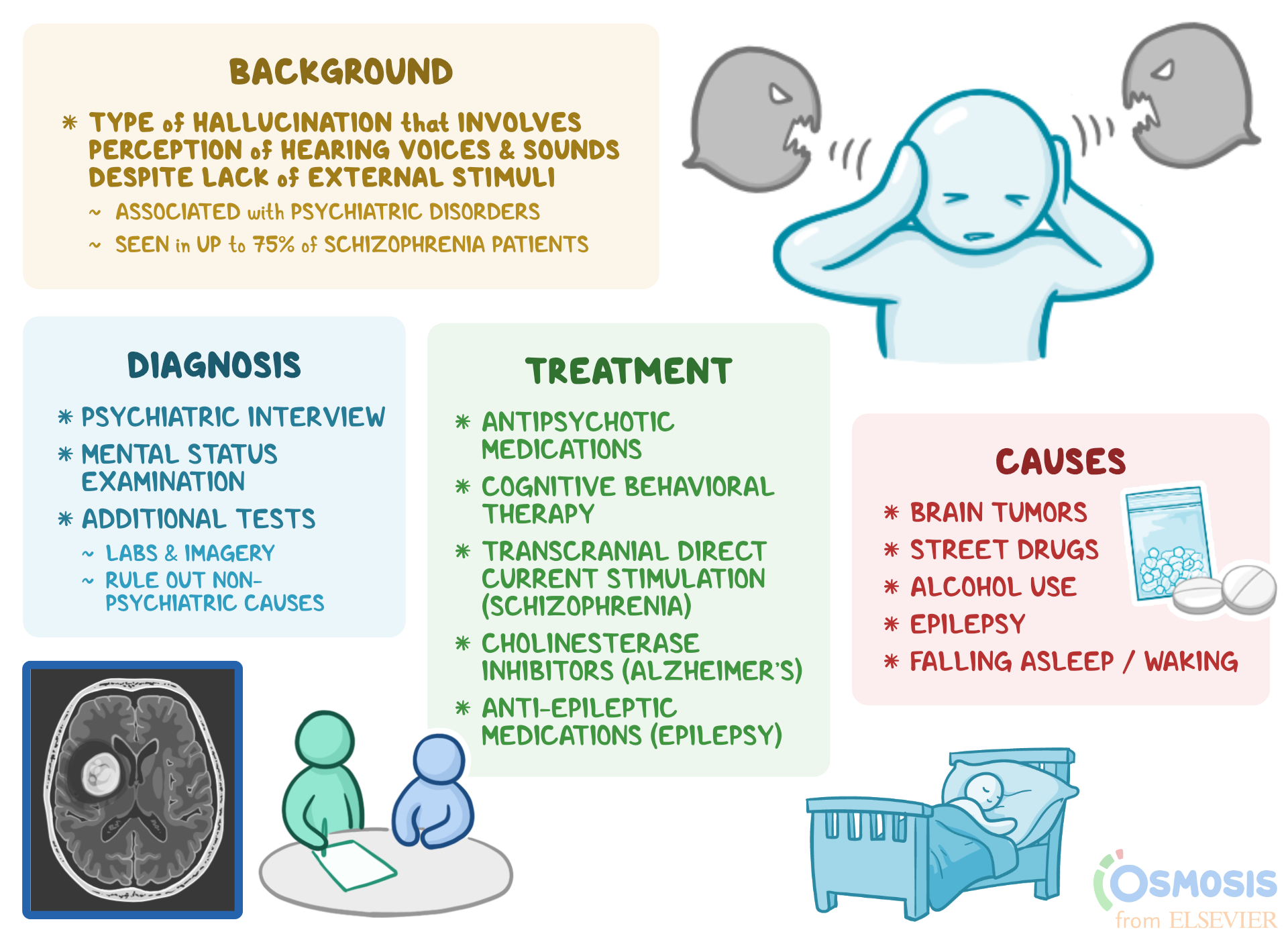
So when people think about hallucinations, they typically think of people who might have been taking hallucinogenic drugs or possibly having conditions such as schizophrenia, of which hallucinations are one of the diagnostic symptoms of certain forms of schizophrenia.
Kim HellemansHOST
But today on Minding the Brain, we're going to talk about hallucinations in other contexts, because as we're going to discover, hallucinations can occur outside of either drug taking or conditions like schizophrenia.

Addison AndersonNARRATOR
While serotonin's role in the brain is complex and poorly understood, it likely plays an important part in integrating information from the eyes, nose, ears, and other sensory organs.
Addison AndersonNARRATOR
So one theory is that LSD and psilocybin cause hallucinations by disrupting the signaling involved in sensory integration.
Addison AndersonNARRATOR
Hallucinations associated with schizophrenia may share a similar mechanism with those caused by LSD and psilocybin.
Addison AndersonNARRATOR
Patients with schizophrenia often have elevated levels of serotonin in the brain, and antipsychotic drugs relieve symptoms of schizophrenia by blocking the same serotonin receptors LSD and psilocybin bind to.
Addison AndersonNARRATOR
And, in some cases, these drugs can even relieve the hallucinations of patients with Charles Bonnet syndrome.
Addison AndersonNARRATOR
And by studying hallucinations, we stand to learn a great deal about how our brains construct the world we see, hear, smell, and touch.
Addison AndersonNARRATOR
As we learn more, we'll likely come to appreciate just how subjective and individual each person's island universe of perception really is.
Addison AndersonNARRATOR
Want to keep exploring this subject? We recommend Oliver Sacks' Hallucinations.

Jonathan MitchellHOST
It's one of my favorite audio pieces ever.
Jonathan MitchellHOST
And the second piece we're going to play is a brilliant piece about hearing loss from Ross Sutherland called Hallucinations.
Jonathan MitchellHOST
Both these pieces are great examples of the kind of original, adventurous audio storytelling that Falling Tree has been championing for years.
Jonathan MitchellHOST
We've put a link in the show notes to the Falling Tree podcast, so please check it out.
23 MINS LATER
speaker_10ADVERTISER
Wait, I'm not done.
speaker_10ADVERTISER
Stop cutting me off.
Jonathan MitchellHOST
And now from Ross Sutherland and Falling Tree, here's Hallucinations.
Ross SutherlandNARRATOR
A couple of months ago, I started to experience auditory hallucinations.

RalphHOST
Lock a healthy person away from visual input long enough, and they may start seeing things that are not there.
RalphHOST
In two thousand and four, researchers published a neurology study called Visual Hallucinations in the Psychologically Normal Blindfolded Subject.
RalphHOST
Healthy people were completely blindfolded for days, and many began seeing things like faces, objects, landscapes, entire scenes, things they knew weren't real, but they could still see.
RalphHOST
Now, five days in a blindfold is extreme.

Gloria LowryNARRATOR
So common is this particular result in persons under prolonged emotion that someone has said that, quote, when stocks go down in New York, diabetes goes up, end quote.
Gloria LowryNARRATOR
Turning now to other psychological aspects, we have to note the presence of hallucination in disaster.
Gloria LowryNARRATOR
Hallucination may be roughly defined as false sense impression.
Gloria LowryNARRATOR
For example, the patient sees an object which has no real existence, or hears an imaginary voice.
Gloria LowryNARRATOR
Hallucinations are termed visual, auditory, tactile, etc., according to the sense to which the false impression appears to belong.
Gloria LowryNARRATOR
Hallucination is induced by the unusual suggesting the expected.
Gloria LowryNARRATOR
It is sense perception colored by association.
Gloria LowryNARRATOR
It is the power of a dominant idea that, unbidden, enters the field of consciousness and takes possession of even the senses themselves.