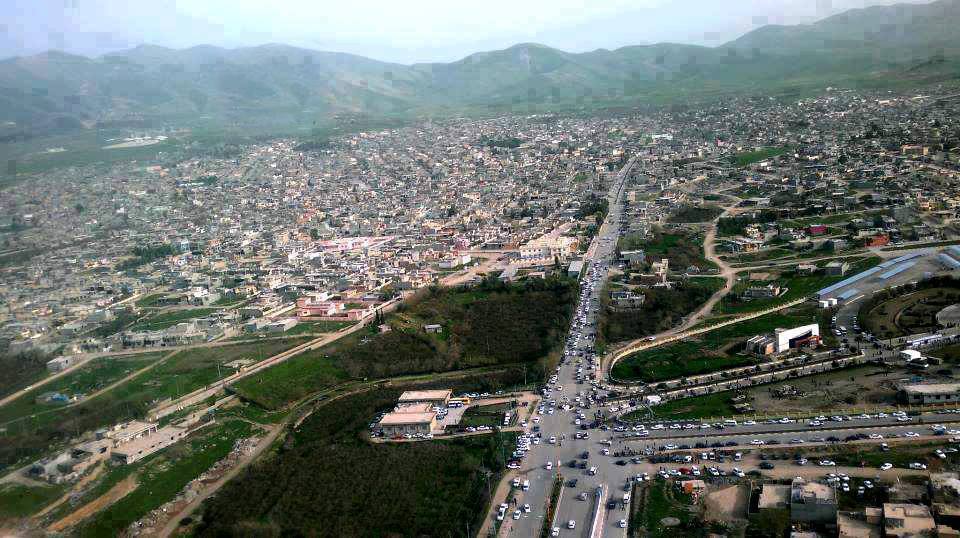
Halabja
City in IraqWikipedia
15
MENTIONS
8
EPISODES
8
PODCASTS
Search complete. 15 mentions across 8 episodes found for "Halabja".
Oct 27, 2026

Ernest C. AudinoGUEST
So there was no question I was going to concentrate in Islam in the Middle East, right? So that was my chosen concentration.
Ernest C. AudinoGUEST
One of my professors, however... had snuck into Iraq in 1988 after the gassing of Halabja when Chemical Ali earned his nickname.
Ernest C. AudinoGUEST
That's right, yeah, 5,000 Kurds died, 10,000, 15,000, 20,000 were maimed.
Ernest C. AudinoGUEST
My safe house ultimately was about a half an hour from Halabja.
Ernest C. AudinoGUEST
Well, anyway, this professor's experience became a motivator for me to focus my concentration on Kurdish history.
Ernest C. AudinoGUEST
So I did that.

speaker_0HOST
The only thing to be complimented, I think, of Franco in Morocco, I think, used chemical weapons on a large scale as well.
speaker_0HOST
He used chemical weapons against his own people, in Halabja, the Kurds and others, responsible for the deaths of tens of thousands of his own people.
speaker_0HOST
So you are not looking past that.
speaker_0HOST
But you're in the room with this person who obviously has an incredible...
speaker_0HOST
What was it like? And maybe if people can read the book and watch the film, what really surprised you? Like, holy crap, how did not just all of us, but maybe me in particular, as an Islam specialist, have wrong? And in particular, I remember from your book, if you can explain to people his view of 9-11, actually, maybe not that he didn't take some glee in it, but he thought 9-11 might actually help his case with the United States.
John NixonGUEST
Yeah.
John NixonGUEST
You know, I mean, much is made of the brutality and the things that happened and the use of chemical weapons and Halabja and the decision to invade Iran.
John NixonGUEST
And all I would say to you is that some of these issues are very, very, very complex.

Suzan QuitazGUEST
Before I answer this question, I will tell you, in 1988, on March 16, the Iraqi government, they start using chemical weapons against Kurdish cities and towns.
Suzan QuitazGUEST
In Halabja alone, within 16 minutes, more than 5,000 people died.
Suzan QuitazGUEST
And the surviving victims, they were picked up And they were all dumped in mass graves.
Suzan QuitazGUEST
Why? I will tell you why.

Suzan QuitazGUEST
Before I answer this question, I will tell you, in 1988, on March 16, the Iraqi government, they start using chemical weapons against Kurdish cities and towns.
Suzan QuitazGUEST
In Halabja alone, within 16 minutes, more than 5,000 people died.
Suzan QuitazGUEST
And the surviving victims, they were picked up And they were all dumped in mass graves.
Suzan QuitazGUEST
Why? I will tell you why.

Stanly JohnyGUEST
He had used chemical weapons against the Iranians.
Stanly JohnyGUEST
He had used chemical weapons against the Kurds in Halabja.
Stanly JohnyGUEST
So Saddam had also sent out this message to the Kurds as well as the Shias that, I mean, if you challenge my authority, I can do anything.
Stanly JohnyGUEST
I can even gas you.

speaker_31NARRATOR
They say chemical bombs were dropped on two villages yesterday and 50 civilians were killed.
speaker_31NARRATOR
Our correspondent, John Simpson, has visited the Kurdish town of Halabja.
speaker_31NARRATOR
Viewers may find some of the scenes in his report disturbing.
speaker_32SOUNDBITE_SPEAKER
We went in low to Halabja in an Iranian air force helicopter, hugging the hillside in order to keep away from Iraqi planes and artillery fire.
John SimpsonSOUNDBITE_SPEAKER
I saw the bombs coming down with the gas in it and getting closer and closer to me.
John SimpsonSOUNDBITE_SPEAKER
Um, I, I was, uh, terrified by it, terrified.
John SimpsonSOUNDBITE_SPEAKER
And, uh, th- I was at Halabja, uh, three days, I think it was three days after Saddam Hussein had killed 5,000 people in the city.
speaker_32SOUNDBITE_SPEAKER
The Iranians maintain that three separate types of gas were used: cyanide-

JoeHOST
That phrasing just didn't come out of thin air.
JoeHOST
I mean, it was born from the reality of a regime that actually used chemical weapons, uh, mustard gas, nerve agents, on its own Kurdish population in Halabja, resulting in thousands of horrific civilian deaths, alongside a massive state apparatus of systematic torture.
SunnyHOST
So when we line up all the facts...
SunnyHOST
And look, let's be real.

speaker_0NARRATOR
Abroad, it barely made the papers.
speaker_0NARRATOR
Halabja was different.
speaker_0NARRATOR
It was a Kurdish town of several tens of thousands of people in the hills of northeast Iraq, a few miles from the Iranian border.
speaker_0NARRATOR
In March nineteen eighty-eight, Iranian troops and Iraqi Kurdish fighters allied with Iran took it in a sudden attack, and the Iraqi soldiers in the town pulled out.
speaker_0NARRATOR
The people of Halabja were Iraqi citizens.
speaker_0NARRATOR
On the sixteenth of March, Iraqi planes came over the town and dropped their bombs.
speaker_0NARRATOR
Some held mustard gas.
speaker_0NARRATOR
People who ran into the streets fell where they stood.