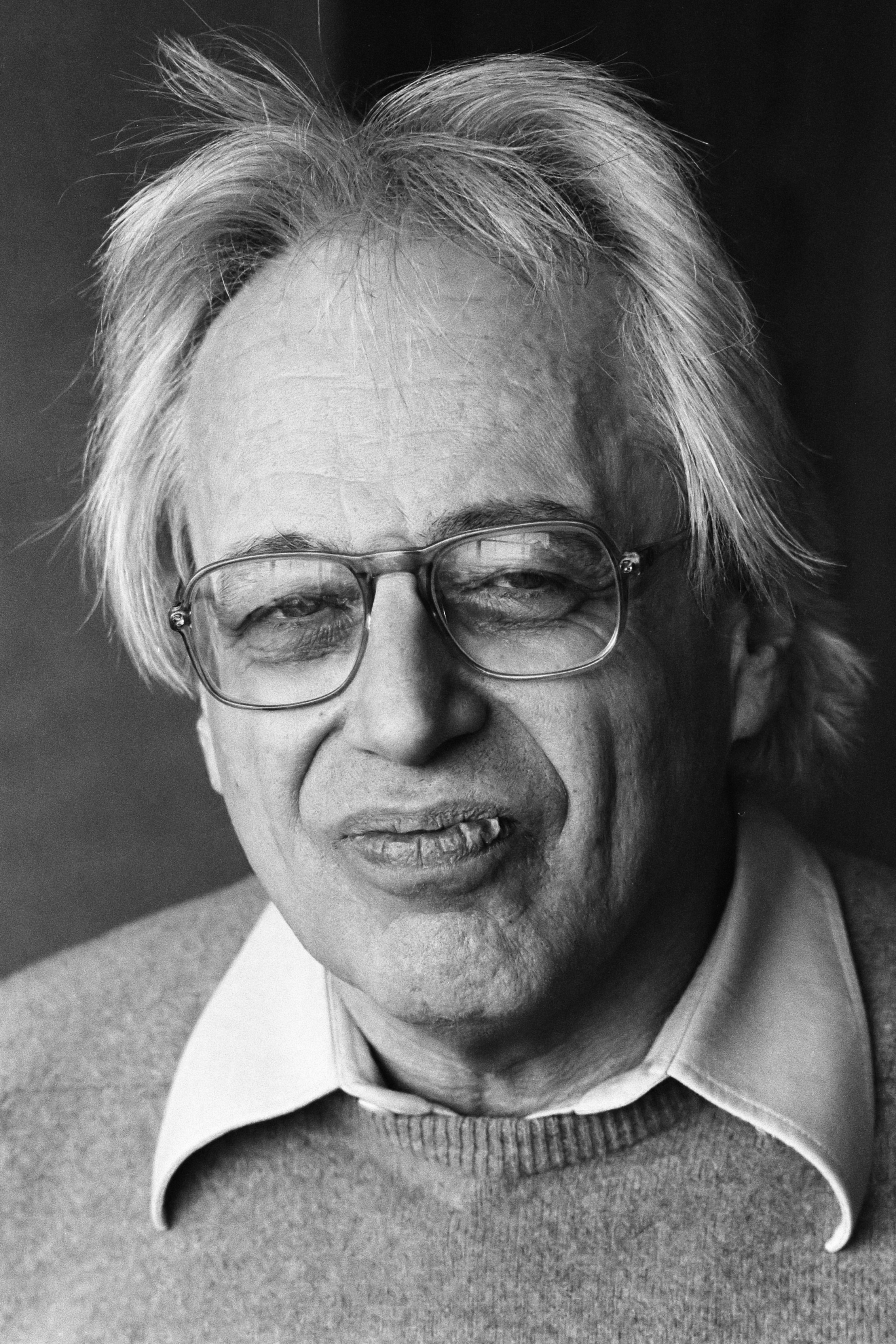
György Ligeti
Hungarian composerWikipedia
57
MENTIONS
15
EPISODES
13
PODCASTS
Search complete. 57 mentions across 15 episodes found for "György Ligeti".
Oct 25, 2026

Midge CostinGUEST
Yeah, exactly.
Ayesha KhanHOST
Christine, can we start about the blank screen on 2001? Because I noticed even before the MGM kind of title comes up, there is this rather uncomfortable Ligeti piece, which kind of builds up on an absolutely blank screen.
Ayesha KhanHOST
Can you talk a bit about that? Sure.
Ayesha KhanHOST
It's an interesting
Christine GengaroGUEST
And when he gets to 2001, he's still ostensibly working with Alex North, but we'll get into that later, I'm sure.
Christine GengaroGUEST
But what he ends up with is a score full of preexistent music.
Christine GengaroGUEST
And one of the things that he does is he sort of latches onto Ligeti's music as a sonic signature for the other, this frightening, unknown thing.
Christine GengaroGUEST
And I think by starting the film with this in the dark, before anything happens, before you see anything on screen, it almost puts you into this, oh my gosh, what's going to happen kind of feeling.

Reid BartelmeHOST
There are things that I found confusing and I probably should have like gone in with a greater understanding of Oscar Wilde's history or something but I there were many things to admire and the dancers were great and Adam Elms is just Adam Elms is just the bee's knees anyways moving right along Um, okay, here's another New York City ballet program they did, Continuum.
Reid BartelmeHOST
Speaking of Christopher Wheldon, um, another dance with much to admire, this is when Christopher was in his Ligeti, Ligeti, Ligeti phase after Polyphonia, and he made this dance at San Francisco Ballet.
Reid BartelmeHOST
And I got to talk to Christopher in the lobby afterwards, and he was talking about parts of it that he loves.
Reid BartelmeHOST
And I was like, that is, now that is, I love to talk to a choreographer who can feel a sense of love for their dance or a part of their dance.

Jordan HoffmanHOST
this is gonna sound corny as hell but like it's embarrassing even to admit but like i kind of got into beethoven through copper
Michael ChaikenGUEST
orange i'm like i'm with you i'm with you you know electronic music And modern composers like Ligeti.
Michael ChaikenGUEST
The first time I'd ever heard of Ligeti, it was 2001.
Michael ChaikenGUEST
That leads you through a whole other, you know, down a whole other track.
Michael ChaikenGUEST
You know, I just love the idea that this set could get into the hands of a young person who hasn't seen these films before, might be coming to them for the first time.

David LaneHOST
But these composers would rather it be 100% to 0% that you are just someone who plays the music.
David LaneHOST
But then you have some other composers, such as Penderecki, Cage, Ligeti, where what you get are suggested patterns, sometimes detailed, sometimes very vague.
David LaneHOST
And then you have the freedom to do whatever it is you want to do with that pattern in a certain amount of time.
David LaneHOST
This is almost equal partnership.

Nicolas NamoradzeGUEST
I think they start looking back on their own life and perhaps this looking back is extended back into music history.
Nicolas NamoradzeGUEST
And you see this with, with many composers, even through the, the 20th and 21st centuries, Ligeti being a very interesting example of a composer really rediscovering earlier principles such as, you know, tonality or, or consonance, um, in their later years.
Nicolas NamoradzeGUEST
So I think Beethoven is one of the most interesting early examples of this, and I think in the fugue he found lots of potential, not only for complexity, but also for drama and the way in which the inherent transformation in a fugue, the way in which it re-digests material that is presented at the beginning, really had a, a kind of spark, I think, for Beethoven.
Nicolas NamoradzeGUEST
He saw in it the potential to communicate a kind of journey of transformation where we are the same person in some sense, we are dealing with the same material at the end of the journey, but the journey has changed us profoundly.

Tim GreivingGUEST
But I do think, uh, whether it was a Spielberg suggestion or Williams' own idea, there are all these little nods to Kubrick, Kubrick's use of music.
Tim GreivingGUEST
The, the kind of Khachaturian music at the beginning of AI, which is very reflective of 2001, um, the choral music, which feels like L- Ligeti's music in 2001.
Tim GreivingGUEST
Um, there's, there's these little nods that are, are obviously intentional.
Tim GreivingGUEST
And then of course the most famous, um, anecdote about there being some reference to Der Rosenkavalier that Kubrick made, that they, they knew it needed to go there somewhere.
8 MINS LATER
Tim GreivingGUEST
Uh, but yeah, I think, um, musically, even, even the opening, even though it's, it, it's an obvious sort of allusion to something that Kubrick might have, uh, put in one of his films, it, it still feels like it has John Williams' fingerprints on it.
Maurizio CaschettoHOST
I remember back in the day, one reviewer here in Italy actually spent a, a- at least one paragraph of the review demolishing John Williams' [laughs] approach to the film.
Maurizio CaschettoHOST
Like, he, he, he really hated the fact when he, he nodded to Khachaturian or, or Ligeti, a- and he w- it was seen from this critic like kind of a sacrilege.
Maurizio CaschettoHOST
You know, here comes the obvious John Williams ripping off Ligeti and Khachaturian and Strauss and whatever, when instead the things are much more nuanced.

Michael KirstyGUEST
So throughout the season there are many ways where we're exploring this theme through early music, we have some baroque music, we have a world premiere.
Michael KirstyGUEST
Uh, we have also programs that kind of trace a musical idea from one composer to the next, and we s- kind of see how this idea unfolds and evolves throughout the concert season.
Andrea CunliffeCORRESPONDENT
So you're starting in October.
Michael KirstyGUEST
Our first concert will feature the Poesis String Quartet.
Michael KirstyGUEST
They were the grand prize winners at the 2025 Banff International String Quartet Competition.
Michael KirstyGUEST
This competition is one of the most prestigious competitions on the planet, and the fact that we are able to present the Poesis here in the Capital Region is, is just a wonderful, wonderful thing that we are so excited about.
Michael KirstyGUEST
They are bringing an amazing program, Beethoven, Prokofiev, and then a contemporary work by composer Skye McLeay called Many, Many Cadences, as well as a work by Michi Wiancko, uh, the violist and member of the Kronos String Quartet, Path of Many Water.
Andrea CunliffeCORRESPONDENT
That period of time that they're in town they're gonna be doing some outreach programs?

Jim CunninghamHOST
So great.
Jim CunninghamHOST
A very creative programming to have the two Beethoven sonatas, György Ligeti and Louis Couperin, Schumann and Brahms too, uh, and then the three pieces that were written for you.
Jim CunninghamHOST
I love it.
David KaplanGUEST
Thank you.
8 MINS LATER
David KaplanGUEST
I have, and it's, um, it's p- loosely based on the Quasi una fantasia disc that we talked about earlier.
David KaplanGUEST
So, the two Beethoven sonatas, Quasi una fantasia.
David KaplanGUEST
Short pieces by Louis Couperin, Ligeti, Schumann, Brahms.
David KaplanGUEST
And the three commissions by Anthony John, uh, Andrea Casarubios, and Christopher Cerrone.

John BirgeHOST
On today's date in 1992, one of the strangest, and some would say most strikingly original, violin concertos of the late twentieth century had its premiere in Cologne.
John BirgeHOST
It was written by the Transylvanian-born Hungarian composer George Ligeti.
John BirgeHOST
Ligeti became famous in the West when some of his music appeared in the 1968 Stanley Kubrick film 2001.
John BirgeHOST
Kubrick used Ligeti's music to evoke the eerie and empty vastness of outer space.
John BirgeHOST
And in fact, Ligeti was fascinated by the sounds that traditional orchestral instruments make when pressed to the extreme limits of their range, their own sonic outer limits.
John BirgeHOST
There's some of that in Ligeti's 1992 Violin Concerto, plus a dash of the traditionally melancholic Hungarian strain familiar from the music of Ligeti's famous compatriot Béla Bartók.
John BirgeHOST
Finally, tossed in for good measure, is Ligeti's puckish fondness for thumbing his nose at life, the universe, and traditional concert hall décor.
John BirgeHOST
[orchestral music] As if to counterbalance his melancholic strain, or maybe just express it in a more surprising way, there's a good deal of the clown in Ligeti, who includes a chorus of ocarinas in the score of his Violin Concerto.
Hattie ButterworthPANELIST
And-
Martin CullingfordHOST
Now we come to the Concerto category, and this is a recording of concertos by Ligeti, Violin Concerto, uh, the, the Concert Romanesque, and the Piano Concerto.
Martin CullingfordHOST
The soloists here are Isabelle Faust, Jean-Frederic Neuberger, and the orchestra Le Siècle and François-Xavier Roth, and that's on Harmonia Mundi.
Martin CullingfordHOST
Gavin, why do you think this grabbed our critics' attention?
Gavin DixonPANELIST
But these, these performances still stand out for the personality of the soloists, for the standard of the orchestral playing.
Gavin DixonPANELIST
Um, and yeah, François-Xav-Xavier Roth is bringing a, let's say, a period sensibility.
Gavin DixonPANELIST
Doesn't, obviously doesn't make a lot of sense in Ligeti, but when even the, um, uh, the articulation of the ocarinas is cleaner than you've heard in previous recordings, you know you're listening to something special.
Hattie ButterworthPANELIST
There's something about that pure tone that he's able to get that actually works really well for Ligeti.
5 more episodes mention György Ligeti.
Create an account to see the whole feed, search across every transcript, and follow the entities you care about.