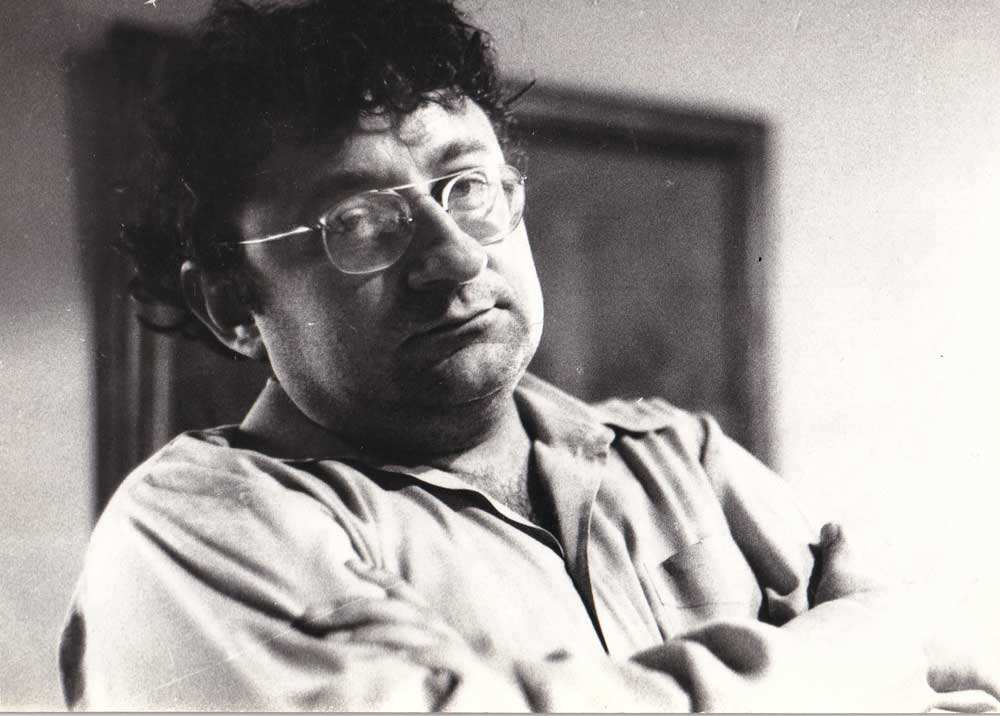
Guy Debord
French philosopher and filmmakerWikipedia
43
MENTIONS
13
EPISODES
12
PODCASTS
Search complete. 43 mentions across 13 episodes found for "Guy Debord".
Sep 27, 2026

Jeremy GilbertHOST
And we are going to be reading the first three chapters of the classic of situationist theory, even though the author would have literally, literally would have punched you if you had use that particular phrase.
Jeremy GilbertHOST
The book is The Society of the Spectacle by Guy Debord.
Jeremy GilbertHOST
First published in, I think, 67 in France under the French title La Société du Spectacle.
Jeremy GilbertHOST
English edition started to come out very early from 1970.
Nadia IdleHOST
But I also thought to myself, reading some of the phrases, is this hyperbole? with some of the things that came up, you know, the way he's phrased some of the concepts.
Nadia IdleHOST
And I also thought to myself, could this have been written by AI in a way? So as we go through, we'll see that there are a lot of kind of choice phrases, which I think will make sense to a critique of capitalism.
Nadia IdleHOST
today but also in some way some of the things some of the pieces some of the aphorisms that I read I thought I actually have no idea what this what Guy Debord is trying to get across like is this hyperbole um That's a kind of critique in a way.
Nadia IdleHOST
I mean, I think it's a very valuable piece to read.

BirdGUEST
So this is the system's neatest trick, the whole outline here.
BirdGUEST
There was a concept, Pete, from the Situationists, I guess like Guy Debord, a bunch of French postmodernists, basically, came out of the Marxist tradition.
BirdGUEST
They had an idea that was called recuperation.
BirdGUEST
And this was probably in the 30s or 40s, maybe even the 50s.
BirdGUEST
It also happens to take any aspect of rebellion out of them.
BirdGUEST
This was...
BirdGUEST
I think it was Guy Debord who came up with the idea itself.
BirdGUEST
And yes, I have it here, but it's in French.

BirdGUEST
So this is the system's neatest trick, the whole outline here.
BirdGUEST
There was a concept, Pete, from the Situationists, I guess like Guy Debord, a bunch of French postmodernists, basically, came out of the Marxist tradition.
BirdGUEST
They had an idea that was called recuperation.
BirdGUEST
And this was probably in the 30s or 40s, maybe even the 50s.
BirdGUEST
It also happens to take any aspect of rebellion out of them.
BirdGUEST
This was...
BirdGUEST
I think it was Guy Debord who came up with the idea itself.
BirdGUEST
And yes, I have it here, but it's in French.

Douglas LainHOST
Um, but, uh, But it was an interesting conversation because I kept saying, you know, it's not only the fascists who wanted to want to get to the root of society and change it and wouldn't even.
Douglas LainHOST
And what would Guy Debord say about this essay you've written that was so pessimistic and asking us to.
Douglas LainHOST
accept defeat and depression and the the the you know and a reality where we could only make very small incremental changes um to maybe protect
John HurtSOUNDBITE_SPEAKER
the
Douglas LainHOST
Jameson was an advocate for Utopian thinking would you say
Matt McManusGUEST
he was an advocate for utopian thinking so long as it wasn't so disconnected from? Material reality that it became speculative an idealist, right? I mean Jameson was always a Marxist and made that very clear but he was certainly not a doctrinaire Marxist or a Kind of reductionist historical materialist.
Matt McManusGUEST
He made his debts to people like Hegel and Sartre Berlaponte And for that matter, Guy Debord, very, very clear throughout the course of his work.
Matt McManusGUEST
And I think that's what really gave it its richness and its power, even if I don't agree with him about everything, right? And again, what he's mildly favorable about when he comes to evaluating 50s and 60s sci-fi, written by people like Ursula K.

Josh CaseyHOST
I would try to make them as less, the least patronizing as possible, and then just be like, I fucking hate this shit, so you do what you want.
Josh CaseyHOST
Anyway, so the title is Guy Debord, or Debord probably.
Josh CaseyHOST
We have been reduced to spectators in a society of endless spectacle.
Josh CaseyHOST
And he basically takes this guy from mid-century, this mid-century French philosopher, takes his idea about how the end goal of capitalism is essentially to keep you constantly in the machine, whether you are actively producing capital or not.

Penny ArcadeVOICE_ACTOR
Thinking is sexy, people, especially when we do it together.
Penny ArcadeVOICE_ACTOR
In 1968, Guy Debord, the situationist, warned us that the government, the financial institutions, and technology had merged with advertising and media to create a powerful illusion of reality that was going to suck us all in.
Penny ArcadeVOICE_ACTOR
He called this mass hypnosis the integrated spectacle.
Penny ArcadeVOICE_ACTOR
What is the integrated spectacle? It is the mass media manipulation that is being broadcast directly into our brain pan 24-7.

JakeHOST
Society of the spectacle, whatever the fuck, who gives a shit.
JakeHOST
Guy Debord, dead French guy.
JakeHOST
Point that I'm trying to make is, is it's like I, I, I've already resigned myself to the fact that it's over.
JakeHOST
I refuse for it to be over and boring.

Dave WhiteHOST
You can see it in the latter half of the movie.
Brian WhiteHOST
And then he founded an art movement, an art collective called Panic Movement, which sounds like a sort of revival of Guy Debord and the Situationist International.
Brian WhiteHOST
Or
Dave WhiteHOST
it sounds like a hardcore band from the late 90s and early
Keir MilburnHOST
Now we must introduce the main characters before the play begins.
Keir MilburnHOST
Um, the main, main character, definitely had main character syndrome, is Guy Debord, who is, like, the chief sort of theorist of, of the Situationist International.
Keir MilburnHOST
Probably you'd say he's their, their leader, although you'd definitely be expelled from the Situationist International if you said that.
Keir MilburnHOST
So Guy Debord, he's really a ...
Keir MilburnHOST
I suppose he's a political theorist and then he makes films as of a, as of a main activity is making films.
Keir MilburnHOST
He's also, like, a chronic alcoholic who drunk himself to death.
Keir MilburnHOST
And we'll, we'll go, we'll talk a little bit more about, like, his, his history and the ideas that he produced.
Keir MilburnHOST
He wrote the, definitely the main text of the Situationists, which is The Society of the Spectacle, which is published in 1967, I think.

Elliot VredenburgGUEST
So let's look at another answer to the question of what could exist.
Elliot VredenburgGUEST
This is Guy Debord's map of Paris.
Elliot VredenburgGUEST
It's based on what he called psychogeography, which is essentially how he felt while he walked around.
Elliot VredenburgGUEST
So the result is not a map of streets, but of zones that he's broken apart and reattached based on mood and based on memory.
3 more episodes mention Guy Debord.
Create an account to see the whole feed, search across every transcript, and follow the entities you care about.