Gut–brain axis
74
MENTIONS
32
EPISODES
31
PODCASTS
Search complete. 74 mentions across 32 episodes found for "Gut–brain axis".
Sep 21, 2026

SaraHOST
So what if some of the foods that you eat every single day are affecting more than just your waistline and your blood sugars? They also could be affecting your brain and your mental health.
SaraHOST
In today's episode, Erin Chalene and I are going to talk about the fascinating connection between nutrition, the gut-brain axis, inflammation, anxiety, depression, and even long-term brain health.
SaraHOST
We're also going to give you simple, sustainable things that you can start doing today to nourish your brain.
SaraHOST
We're getting started right now.

Rob SilvermanHOST
She is a naturopathic physician, scientist, head of science and education at SFI Health.
Rob SilvermanHOST
Her work focuses on the microbiome, the gut-brain axis, and translating emerging science into practical clinical strategies.
Rob SilvermanHOST
We're going to talk about those for sure.
Rob SilvermanHOST
Today, we're exploring one of the most important and underappreciated members of the human microbiome, Bifidobacterium.
Rob SilvermanHOST
So bifidobacterium is interesting in that it influences digestion.
Rob SilvermanHOST
immune development, gut barrier function, microbial ecology, metabolite production, which is specifically what you just talked about.
Rob SilvermanHOST
And we're going to segue in at some point in a little while, the gut-brain axis signaling, because the gut and the brain communicate, they're bidirectional, etc., etc.
Rob SilvermanHOST
So that said, let's talk a little bit about bifidobacterium as the threat of resilience across the lifespan.

Tina Lond-CaulkGUEST
So we know that there is this direct correlation.
Tina Lond-CaulkGUEST
Then we have this gut-brain connection, which we're hearing more and more about.
Tina Lond-CaulkGUEST
So we know that these gut microbes that live symbiotically within our gut, but actually all over our body and our skin as well, we must think of those as our kind of pets, if you will.
Tina Lond-CaulkGUEST
Now, if we feed and nourish them properly, they can really set ourselves up for feeling happier and healthier.

Trisha PasrichaGUEST
Yeah, I love this question.
Trisha PasrichaGUEST
So I studied the gut-brain connection.
Trisha PasrichaGUEST
And I think the side of that conversation people are often very familiar with is how our brains influence our gut.
Trisha PasrichaGUEST
Like we often talk about, we know this, when you're stressed, it can wreak havoc on your bowels, right? Like why do we all, right before our turn at karaoke, have to go to the bathroom? It's because that acute stress.
Trisha PasrichaGUEST
I think it's many diseases originating that we don't even classically think of as a gut health problem.
Chelsea ClintonHOST
So not just 125 years, but thousands of years.
Chelsea ClintonHOST
And if people who've studied medicine have understood there's a gut-brain connection, even if they haven't understood the contours or the mechanisms of that connection.
Chelsea ClintonHOST
Trisha, I was so struck when you were sharing that when you speak to Parkinson's patients or when other people who are in your field of research do, 80% can remember having discomfort or tremors in their and their gut before kind of discomfort and tremors, you know, across their whole body.

Dana MahoneyHOST
How are these microscopic bacteria crossing that massive biological divide?
Graham MorganHOST
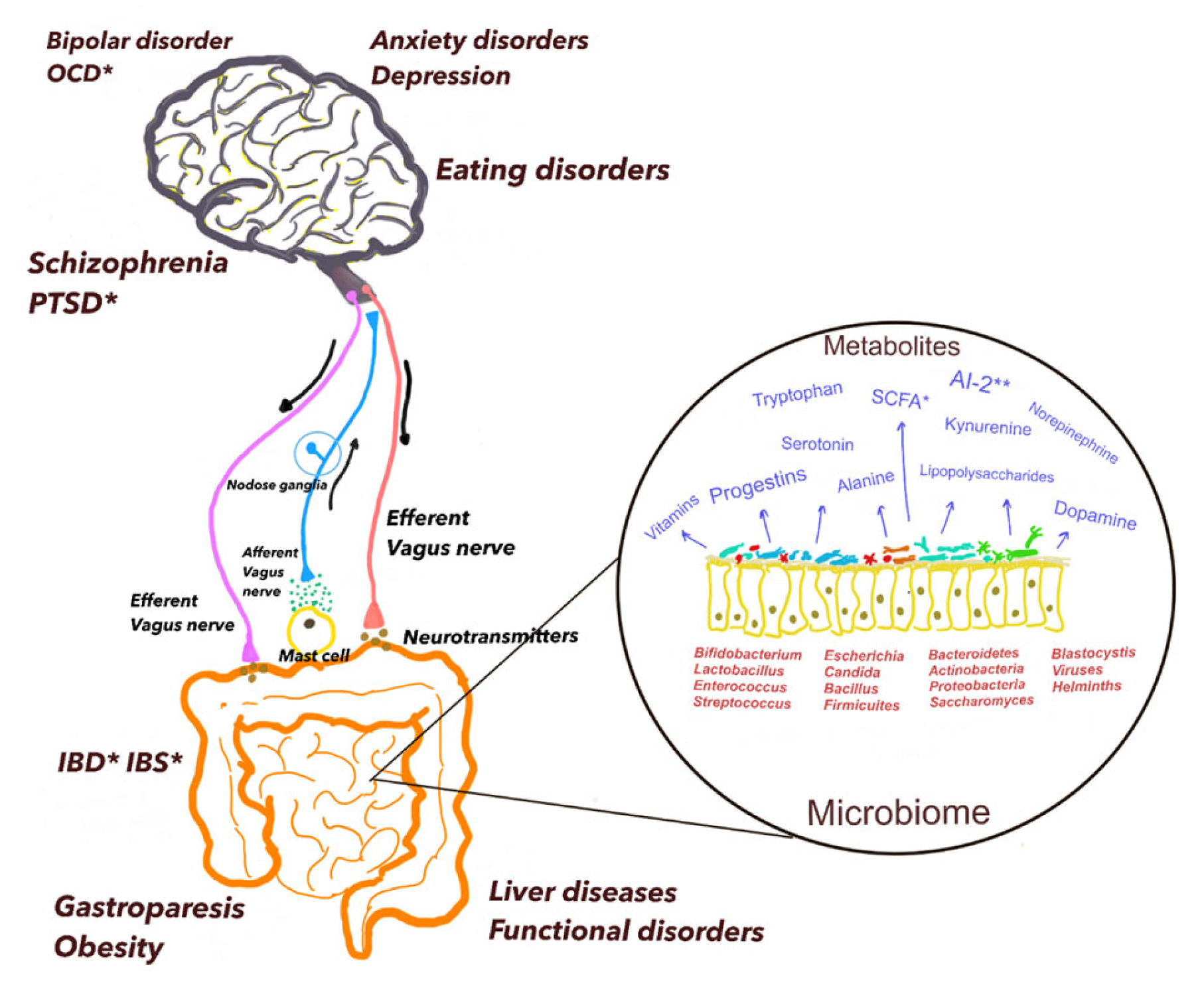
To answer that, we have to look at one of the most exciting, rapidly evolving fields in modern medicine, the gut-brain axis.
Dana MahoneyHOST
OK, the biological link between the stomach and the mind.
Dana MahoneyHOST
How does it actually work?
Graham MorganHOST
When a patient with severe IBS is trapped in a chronic state of dysbiosis, they lack the good bacteria needed to produce sufficient GABA and butyrate.
Graham MorganHOST
Furthermore, the oxidative stress is causing mast cells to dump inflammatory signals.
Dana MahoneyHOST
So their gut-brain axis is sending constant, unrelenting stress signals up the vagus nerve to the brain.
Graham MorganHOST
Right.

Josh HelmanHOST
Dr.
Josh HelmanHOST
Miles Nichols is an amazing expert when it comes to bacteria, microbiology, and the gut-brain connection.
Josh HelmanHOST
He actually ran his own summit on bacteria in the brain.
Josh HelmanHOST
And without further ado, Dr.

Chris MoldaGUEST
you know Yeah, you know, it's interesting.
Chris MoldaGUEST
It's like when you do a lot of microbiome and gut training and learning about gut disease and how it affects the brain and the mood and neurotransmitters and serotonin and dopamine and all that stuff, you kind of go through the training and it all makes sense, the gut-brain connection.
Chris MoldaGUEST
But I think one of the most interesting things is that when you look at all these conditions and you look at the cascading injury that happens in people, the number one reason why this happens is... microbiome injury meaning antibiotics pesticides inflammation it really just kills that the good guys it really kills the good guys but that's that's like number one number one b is stress it's it's the emotional part and and it's like you can't you really can't say one's more important than the other you can say look both of these like antibiotics are just as bad as stress You know what I mean in terms of your gut health.
Chris MoldaGUEST
Pesticides are just as bad as stress to your gut health.

Michael HylandHOST
And I have with me Martha Carlin, who is the founder of BioRequest and BioCollective.
Michael HylandHOST
And we are going to be talking about a lot of things involving the gut-brain axis and the microbiome and those connections with Parkinson's disease.
Michael HylandHOST
44 years old.
Michael HylandHOST
So after the intro, we're going to be talking about that in depth.
Michael HylandHOST
And when when the gentleman reached out about connecting.
Michael HylandHOST
I had to reread the email a couple of different times, but I did get the gist of the fact that this would be a great conversation.
Michael HylandHOST
I've done some coverage of gut-brain axis and the microbiome on the podcast in the past, but I'd love to speak with somebody like you who's involved in this up to the eyeball, so to speak, and beyond.
Michael HylandHOST
So tell me a little bit about...

Faye BateHOST
But anyway, next I would like to talk to you about the gut health and the brain.
Faye BateHOST
The gut-brain axis is a really, really interesting conversation, but I'm not sure it's always explained, um, very well.
Faye BateHOST
Could you do a brief maybe overview of what the, the gut, brain, what that relationship looks like?
Emily LeemingGUEST
Yes.

Frankie Jackson-SpenceHOST
We kind of have to unlearn everything we grew up with in magazines, don't we? Okay, so we've talked about exercise, but I think we should move on to diet and nutrition because that is your true love, isn't it? Yes.
Frankie Jackson-SpenceHOST
I feel like the gut-brain axis has become a bit of a buzzword.
Frankie Jackson-SpenceHOST
Can you explain what this is and is it backed by real evidence or is it still in its infancy?
Kimberley WilsonGUEST
A bit of both.
Kimberley WilsonGUEST
Yeah.
Kimberley WilsonGUEST
A little bit of both.
Kimberley WilsonGUEST
So the gut-brain axis describes that direct and indirect relationship between the brain and your gastrointestinal tract.
Kimberley WilsonGUEST
rounding out in the colon.
22 more episodes mention Gut–brain axis.
Create an account to see the whole feed, search across every transcript, and follow the entities you care about.