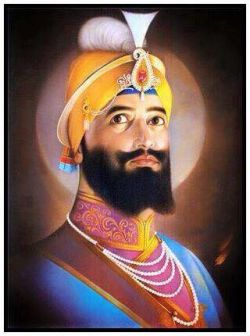
Guru Gobind Singh
GuruWikipedia
48
MENTIONS
14
EPISODES
12
PODCASTS
Search complete. 48 mentions across 14 episodes found for "Guru Gobind Singh".
Oct 1, 2026

speaker_1HOST
The Sikhs did the same.
speaker_1HOST
But if you go to the Sikhs and give your water to the Sikhs who do not believe in Gurmukh, then who will be the one to give you easy permission? There is a reason why Guru Gobind Singh Ji has said that it is better to serve the Khaalsa than to serve someone else.
speaker_1HOST
Because serving the Khaalsa is serving the Guru.
speaker_1HOST
Now what is the story here? That we should go to Bihar, to Nepal, and to those who have everything else, we should go and give them this water.
8 MINS LATER
speaker_1HOST
So when we see that Patwant Singh can take his stand, then we also have to take our stand against every terrorist group that has made a stand for service.
speaker_1HOST
Now, if we talk about this, the first thing is that no one has been able to find a way to learn this.
speaker_1HOST
Neither does Guru Sobha have this name, which is mentioned in Guru Gobind Singh Ji's time.
speaker_1HOST
Nor does it have the name of Bansawali.

speaker_1HOST
The principles of truth, they are the path of truth, the North Star, where you're headed, that is truth.
speaker_1HOST
Eh cheeja us paase kyunki Guru Gobind Singh Ji Maharaj ne keh aa si na inhan di kalama te bharosa nahi karna.
speaker_1HOST
Aur Aurangzeb said, "Maharaj, you leave Anandpur Sahib.
speaker_1HOST
We will not attack you." Guru Gobind Singh Ji said what? "Don't believe their false vows." They sent an empty cart, khaali gadda bhejya.
speaker_1HOST
And what did Aurangzeb do? He attacked the cart anyway.
speaker_1HOST
He attacked the cart anyways, and then Guru Gobind Singh Ji said, "Aa vekho inhan di jhooti huiyan kasma." So they all lifted, they attacked the cart.
speaker_1HOST
They said they thought that maybe they find money in it, maybe they found food in it, maybe they found Guru Gobind Singh Ji in it.
speaker_1HOST
When they lifted it, it was just broken pots and pans and bones and dirt and other things.

Alok PandeyHOST
And he gets the name there.
Alok PandeyHOST
What is the name that Shri Krishna gets during this Govardhan Leela is Govind.
Alok PandeyHOST
That's how he gets the name of Govind.
Alok PandeyHOST
Who is Govind? Govind is one who protects the cows.
Alok PandeyHOST
And who are the cows? Cows are the cows of plenty that give to the whole earth.
Alok PandeyHOST
Cows is also light, Go.
Alok PandeyHOST
So he is the guardian of the light.
Alok PandeyHOST
Gopal.

BrewHOST
Specifically for members of the Sikh faith, a religion from the Punjab region of India, refraining from cutting one's hair is a visual cue for those around them of their commitment to their culture and faith.
BrewHOST
Called Kesh, one of the founders of the Sikh faith, Guru Gobind Singh, gave his followers kesh, uncut hair, and the turban as a uniform of their religion.
BrewHOST
Sikh men usually wear their hair in a topknot or a bun under their turban.
BrewHOST
Sikh women are also called to wear turbans for kesh, but many Sikhs practice different level of commitments to their faith, and may cut their hair or choose not to wear a turban.
speaker_1HOST
He tied them up.
speaker_1HOST
Then we went and saw that Guru Nanak, who had collected these Pandas himself, Okay, then what would you say about what Guru Gobind Singh Ji had collected? Guru Hargobind Sahib Ji, Guru Arjan Dev Ji had collected this much, Maharaj used to call Maharaj Amir.
speaker_1HOST
Baba Nanak had so much land that Guru Angad saw it as his inheritance.
speaker_1HOST
Then what would you say about that? At that time, there was no land of ordinary people that Guru Nanak had built.

Simranjeet SinghGUEST
And in the Sikh tradition, this title is reserved for Guru Nanak and his nine successors.
Simranjeet SinghGUEST
The ten Sikh gurus are credited with fostering and cultivating the Sikh community from its establishment in the fifteenth century to the death of Guru Gobind Singh, the tenth Sikh Guru, in 1708.
Simranjeet SinghGUEST
Before his death, Guru Gobind Singh passed on the title of guruship to two authorities for Sikhs to follow, the Guru Granth Sahib and the Guru Khalsa Panth, the community of formally initiated Sikhs.
Simranjeet SinghGUEST
The Guru Granth Sahib is a collection of hymns and poetry compiled by the Sikh gurus themselves.
Simranjeet SinghGUEST
The Sikh scripture is unique in that it doesn't contain narratives.
Andrew M. HenryHOST
You can find gurdwaras all over the world serving as centers for Sikh congregational worship and a variety of life cycle rituals, such as baby naming, marriage, and funeral ceremonies.
Simranjeet SinghGUEST
The initiation ceremony is one of the most important rituals in the Sikh tradition because undergoing this ritual means becoming Amritdhari.
Simranjeet SinghGUEST
Now, what does that mean? Well, remember that Guru Gobind Singh, before his death, instituted two authorities to help shepherd the community going forward, the Guru Granth Sahib, the collection of scriptures, and the Guru Khalsa Panth, the community of initiated Sikhs who have committed their lives to living the ideals of Sikhi.

Kirpal Singh PanesarGUEST
Right.
Kirpal Singh PanesarGUEST
We also have Gurbani from the writing of Guru Gobind Singh Ji, which is Dasam Granth.
Kirpal Singh PanesarGUEST
And we have other spiritual scripts as well, such as Bhai Gurdas Ji's Vars.
Kirpal Singh PanesarGUEST
When we sing this, you know, we say if we're just playing a melody, a Raag, based on a Raag, based on a Taal, we call that a Gath.
Kirpal Singh PanesarGUEST
And, you know, up until then, I'd only ever played the Dilraba.
Kirpal Singh PanesarGUEST
The Dilraba itself, you know, I'll tell you a bit about it now that I've mentioned it.
Kirpal Singh PanesarGUEST
So this is an instrument said to be invented by Guru Gobind Singh Ji, the 10th Sikh Guru.
Kirpal Singh PanesarGUEST
It was derived from another instrument, which is called the Taos, which is probably like the double bass version of the Dilruba.
speaker_1HOST
So what do Muslims do now? They saved themselves.
speaker_1HOST
So Guru Nanak's Sikhs are going from Guru Hargobind to Guru Gobind Singh, so the Gurus are going to Guru Nanak's Sikhs.
speaker_1HOST
that Muslims are not guilty and that Sikhs hate Muslims.
speaker_1HOST
Now, for them to say that this is not a definition of sex phobia, if England does not believe in the definition of sex phobia, then we can say that there is a court in Kacharia.
46 MINS LATER
speaker_1HOST
So this is also something to think about, that how much money we have to spend here.
speaker_1HOST
One day we may have to go and ask for more money, or we may not be able to do it.
speaker_1HOST
Okay, so if we see that Guru Gobind Singh Ji and four other Sahibs, they have given up their lives for the sake of the nation and religion.
speaker_1HOST
Yes, they could have said that we have given up our lives for the sake of Guru Gobind Singh Ji, we will never give up our lives for you.

John GreenHOST
They arise as members of the Khalsa and are then given new names.
John GreenHOST
Men become Singh or Lion, and women become Kaur or Princess.
John GreenHOST
The new names mark the initiates as the sons and daughters of Guru Gobind Singh, who created the Khalsa in 1699, and his wife Sahib Kaur.
John GreenHOST
And the process of taking amrit shows us another common way that we ritualize actions, by linking them to a significant figure, or god, or sacred narrative.
John GreenHOST
It's similar to graduation, which is itself a kind of ritual, right? Like you go through a set of steps led by people with authority, in this case your principals and teachers, who are wearing ceremonial clothes.

Satpal SinghGUEST
So while that's been done in commentaries where every verse has been explained first with a question and it's done as in then the Sangat asked Guruji what is the
Amar SinghHOST
It's like Bhagat Mala, Bhai Mani Singh's talking and it's like, and it's a Q&A with, oh, it's argued to be a Q&A with Guru Gobind Singh.
Satpal SinghGUEST
And by the way, this Q&A thing is a very well established conversational style, Barney style.
Satpal SinghGUEST
It
Satpal SinghGUEST
let's look at.
Satpal SinghGUEST
Sidh Gosht is a version of a Q&A with Guru Nanak where the questions are actually written.
Satpal SinghGUEST
You have, for example, things like the Tanka Nama by Nandlal having a Q&A with Guru Gobind Singh Ji.
Satpal SinghGUEST
And the question is written down in the Bani and then it is answered.
4 more episodes mention Guru Gobind Singh.
Create an account to see the whole feed, search across every transcript, and follow the entities you care about.