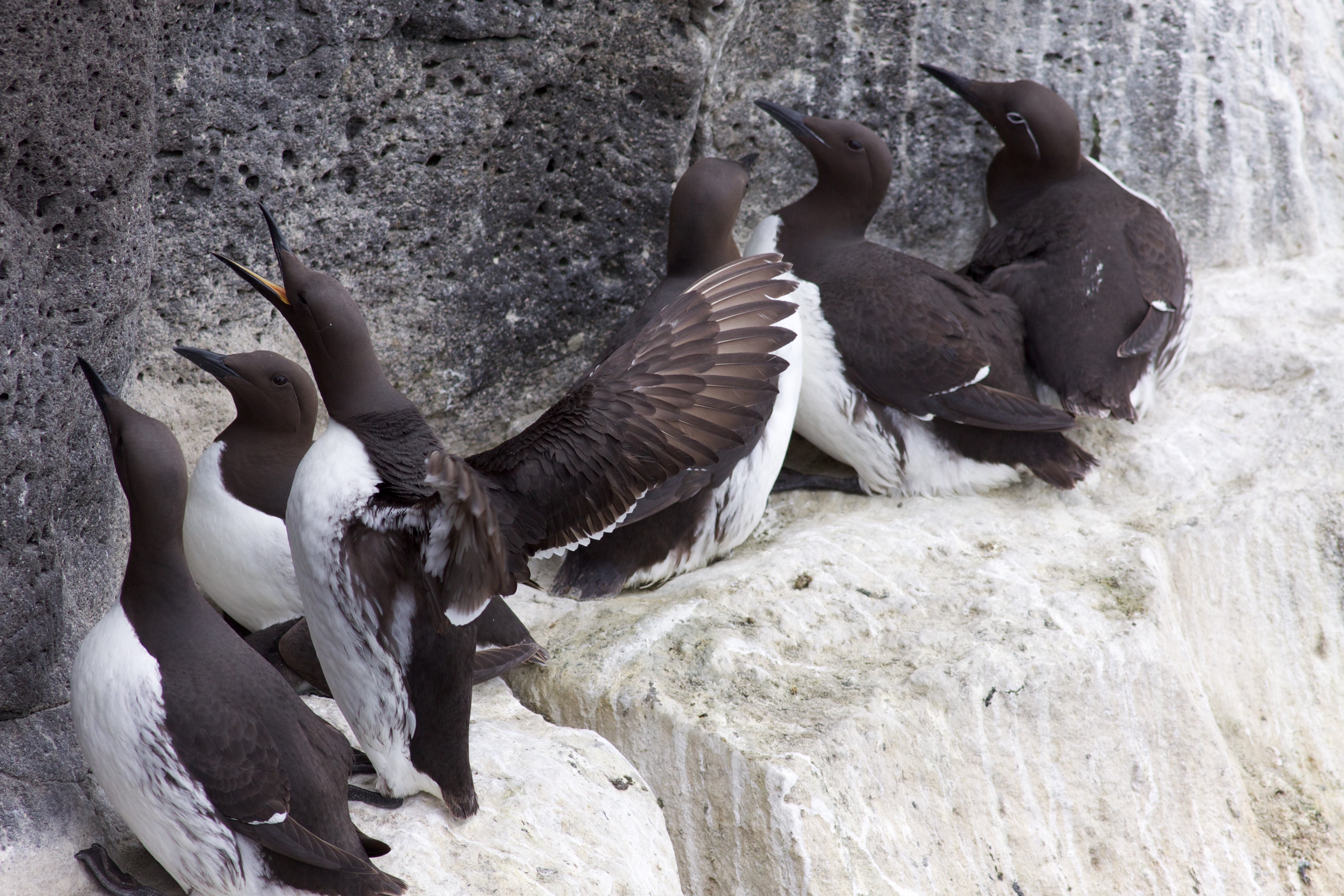
Guillemot
6
MENTIONS
3
EPISODES
3
PODCASTS
Search complete. 6 mentions across 3 episodes found for "Guillemot".
Sep 26, 2026

WilkinHOST
Fornier, having gathered up her portable spectrum reader, called us a few meters north, holding a battered clipboard overlaid in with animal movement maps.
WilkinHOST
Look, there's an empty sector now where the Guillemot nest should be.
WilkinHOST
Tracks from the seals lead straight to the shaft.
WilkinHOST
It's like everything found its way here, then vanished.

speaker_2NARRATOR
After severe gales, I have found numbers strewn dead along the tide-mark, feather-bedraggled and stiff-limbed.
speaker_2NARRATOR
Guillemots found alive and placed in an aviary invariably die.
speaker_2NARRATOR
All that I have tried to coax back into life and health have survived but a few hours, or a day or two at the outside.
speaker_2NARRATOR
Even birds taken at sea under more favourable conditions cannot be made to feed, and cramming seems of little use.
speaker_2NARRATOR
Little Auk.
speaker_2NARRATOR
The Little Auk, too, has often been a sufferer from adverse winds.
speaker_2NARRATOR
The same conditions of weather apply to these as to the Guillemots, but whereas the Guillemots are seldom found dead or dying beyond the reach of the high-water mark, this little rock bird, as if endeavouring to get beyond the fury of the elements, even makes inland to fall eventually from exhaustion, sometimes in the oddest of places, in someone's garden, in a village churchyard, or in the roadway.
speaker_2NARRATOR
Unlike its larger relatives, the Little Auk is a frequenter of the deeper waters, and seldom approaches the shore unless driven towards it by stress of weather, and it seems to me that it is during the period of migration that local casualties are most to be noted.

speaker_1NARRATOR
Then came the birds.
speaker_1NARRATOR
Guillemots and fulmers landed on the rocks to rest.
speaker_1NARRATOR
They brought seeds from feeding grounds hundreds of kilometers away, tucked in feathers and in droppings.
speaker_1NARRATOR
In the autumn of 1970, the first nests appeared, two belonging to black guillemots, one to a fulmer.