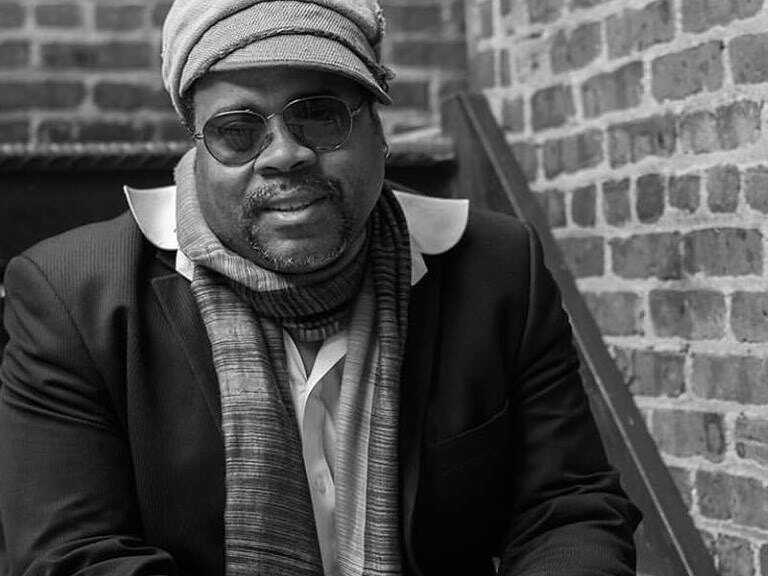
Greg Tate
American writer and musicianWikipedia
6
MENTIONS
3
EPISODES
3
PODCASTS
Search complete. 6 mentions across 3 episodes found for "Greg Tate".
Sep 7, 2026

QuestloveHOST
He says, gangster rap is officially over.
QuestloveHOST
And I was like, what are you talking about? Rich is one of those guys where like, His heroes are like Greg Tate, Stanley Crouch, like the first generation of black critical thinkers.
QuestloveHOST
Rich will call me at six in the morning.
QuestloveHOST
Like a lot of my personality is just the accumulated 20-year cycle of Rich calling me between 6 a.m. and 10 a.m. where we just for four hours just – this but more like oh and yo man like the state of jazz is fucked up right now so he'll go off on a tangent and you know that that wears off with you but he had a theory and this is around the time in which let's cut like four or five years later when you know there's a point when graduation is about to come out for yay and the third album from 50 Curtis? Yeah, Curtis.

Heather RadkeGUEST
And I think that's one way of kind of thinking about cultural appropriation.
Heather RadkeGUEST
Or, you know, there's this famous Greg Tate quote, which is, everything but the burden.
Chelsea Weber SmithHOST
In the 1990s, the runaway hit Baby Got Back by Sir Mix-a-Lot trickled down over the years to permeate so much of American culture, all the way to suburban school dances and popular sitcom punchlines.
Chelsea Weber SmithHOST
But this apparent premiere of the hottest new body part was just the latest iteration of what we could call the longtime Battle of the Butt.
38 MINS LATER
Heather RadkeGUEST
That which you are obsessed with, that which you are afraid of, that you have to destroy is the thing you want more than anything.
Heather RadkeGUEST
And I think that's one way of kind of thinking about cultural appropriation.
Heather RadkeGUEST
Or, you know, there's this famous Greg Tate quote, which is everything but the burden.
Heather RadkeGUEST
You know, that there's a way you can like have all of the parts of blackness that feel appealing and thrilling, I think, to the white experience in the late 19th century, but none of the burden of actually being black.

Preston FrazierGUEST
Um, he had worked with a number of people, including, uh, John Zorn.
Preston FrazierGUEST
He had worked later with Bill Frisell, doing a really wonderful duet album with him, and he had, uh, formulated and founded the rock, the Black Rock Coalition in New York with g- uh, journalist Greg Tate, who, um, was a amazing person and also amazing musician.
Preston FrazierGUEST
So Vernon has always been striving to progress, and he was hearing a sound in his head that he wasn't getting from his own music as a solo artist or as a sideman, so that's when he decided, "Hey, I wanna form a band.
Preston FrazierGUEST
I wanna form it with some New Yorkers who are friends of mine." And that's really the, the genesis of the three-man Living Colour.
Eric SenichHOST
Talk about the Black Rock Coalition.
Eric SenichHOST
How important was it only to, not only to Living Colour's development, but to challenging the music industry's narrow ideas about what Black artists were supposed to sound like?
Preston FrazierGUEST
Yeah, I think that was really the purpose, Eric, that he wanted, that Vernon and Greg Tate wanted to create something which not only re- Brought, um, some notice of Black rock musicians, but also pushed the boundaries forward of rock music, and I think that was something that was part of their initial plan.
Preston FrazierGUEST
It's something which they're, they're still doing, um, in terms of bringing this music to light.