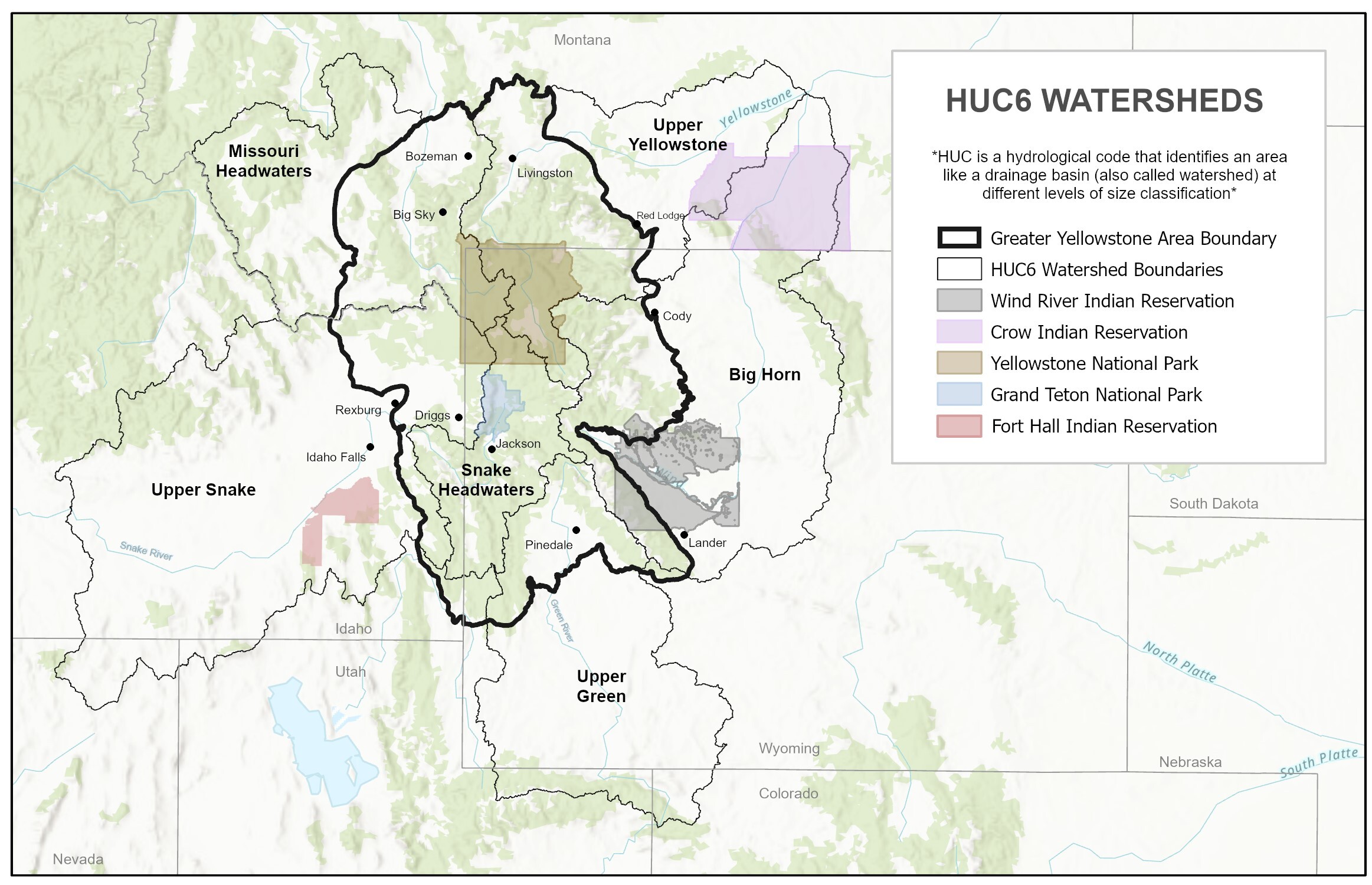
Greater Yellowstone Ecosystem
Mountain rangeWikipedia
25
MENTIONS
9
EPISODES
8
PODCASTS
Search complete. 25 mentions across 9 episodes found for "Greater Yellowstone Ecosystem".
Aug 25, 2026

Jared BeaverHOST
Now, grizzly bears are a bit of a hot topic lately.
Jared BeaverHOST
[upbeat music] In part due to renewed pressure from Idaho, Montana, and Wyoming to delist them under the Endangered Species Act, arguing that the two largest populations, those near the Northern Continental Divide Ecosystem near Glacier and the Greater Yellowstone Ecosystem, have surpassed federal recovery goals.
Hallie MaholdHOST
Now, before European settlement, grizzlies likely numbered as many as 50,000 and ranged from Alaska to Mexico, and from California to the Great Plains.
Hallie MaholdHOST
But by the 20th century, there were thought to be less than 1,000 bears in the lower 48, and in 1975, grizzly bears were listed as threatened under the Endangered Species Act.
Jared BeaverHOST
But for grizzly bear populations to connect and their ranges to continue to expand, that means they're starting to rely on private and working landscapes, what we call the working wild, where ranchers, rural communities, and wildlife all must share space and all make a living.
Hallie MaholdHOST
[upbeat music] Now, while there's increasing awareness in the conservation community about the importance of connected landscapes for wildlife to move around and the critical role that private lands play in supporting wildlife, I think there's less awareness around the fact that grizzly bears need connected habitat, too.
Jared BeaverHOST
This is especially true when you look at the Greater Yellowstone Ecosystem.
Jared BeaverHOST
While biologists estimate there are around 1,000 bears in the area, right now it's largely an island, cut off from the cluster of bear populations in northern Montana, Idaho, and into Canada.

Hugo SindelarHOST
Welcome to Bison Jam, the podcast that covers wide-ranging topics from Yellowstone National Park and the greater Yellowstone ecosystem.
Hugo SindelarHOST
I'm your host, Hugo Sindelar, an assistant professor of film at Montana State University.
Hugo SindelarHOST
Today we are continuing our series about the wildlife of Yellowstone.
12 MINS LATER
Marcus HockettGUEST
i would say most of them are pretty migratory yeah i mean like in general and in the scheme like their migration could only be five or six miles like depending on like but it's gonna generally go high to low so they're you know high range high alpine stuff in the summer lower in the in the winter but um there are some that migrate pretty crazy distances i don't know any numbers off the top of my head but like yeah i mean those ones like specimen ridge and stuff they're gonna walk all the way down and probably end up somewhere in the gardner basin like however far that is and um but there's examples and outside of yellowstone too of some pretty long migrations that's awesome
Hugo SindelarHOST
And so speaking of kind of Yellowstone, you talked about where they're found in the northern area of the park very specifically, but I'm wondering generally where they're found in the greater Yellowstone.
Hugo SindelarHOST
Are they also in, like, Grand Teton, in the mountains outside Yellowstone? Like, in the greater Yellowstone ecosystem, where do you find bighorn sheep?
Marcus HockettGUEST
Everywhere? Historically, yeah.
Marcus HockettGUEST
Yeah, but not currently.

Wes LarsonGUEST
And that really slowed that decline down in Montana.
Wes LarsonGUEST
And then in Wyoming, in the Greater Yellowstone ecosystem, um, they were such a draw to the national park and they were so important to that entire experience that while they were killing their wolves and their mountain lions and some of their other predators, they kind of gave their bears a bit of a break in Yellowstone, and that also allowed that to be another source population in the Lower 48.
Wes LarsonGUEST
So that, you know, in the mid-1900s, we're, up until 1975, we're looking at around 1,000 bears by the time they were protected by the Endangered Species Act in 1975.
Wes LarsonGUEST
Even less than 1,000 in the Lower 48.
Wes LarsonGUEST
So in '75 was kind of the first big step forward for grizzly bears, and that's when they received protections under the Endangered Species Act.
Wes LarsonGUEST
And then the next really great thing that happened was in 1983, the Interagency Grizzly Bear Study Team was formed, and that consisted of people in the National Park Service, in USGS, US Fish and Wildlife Service, that essentially decided they were gonna combine this, you know, amazing pool of knowledge to figure out how to properly conserve this animal and give them the kind of things they need to spread across the West in ways that they used to.
Wes LarsonGUEST
Um, so they had six kind of recovery zones that they outlined, the Greater Yellowstone Ecosystem being one of them.
Wes LarsonGUEST
And I was lucky enough to work, um, when I was in Yellowstone under Kerry Gunther, who is, like, the guy when it comes to Yellowstone grizzly bears.
Hallie MaholdHOST
When I see this 132 grizzly bears in 10 years, at one point we were talking about grizzly bears being down to a number of, was it 136?
Jared BeaverHOST
Yeah, in the Greater Yellowstone Ecosystem.
Jared BeaverHOST
I mean, that right there could've been the tipping point, right? We have to stop and ask, like, why do bears need to cross the roads? And I think it comes down to connectivity.
Hilary CooleySOUNDBITE_SPEAKER
Connectivity means you have gene flow from one area to another.

Sophia Boyd-FlegelHOST
We brought you news earlier in the week that the roadless rule could soon be gone.
Sophia Boyd-FlegelHOST
KHOL's Jennifer Ritchie has since talked to some Greater Yellowstone environmental advocates about what that means.
Jenna McMurtryCORRESPONDENT
The Trump administration announced plans for a full repeal of what's known as the roadless rule.
Jenna McMurtryCORRESPONDENT
For two and a half decades, it has blocked road building and logging on millions of acres of near-pristine national forest land across 10 states.

Mark HinesCORRESPONDENT
conservation NGOs, and there were some agency personnel there.
Mark HinesCORRESPONDENT
So basically they're just trying to build a coalition to, you know, look forward to the conservation of the greater Yellowstone ecosystem.
Mark HinesCORRESPONDENT
And at least from, you know, Joe's, you know, elevator pitch or nutshell summation of what's going on is that, you know, we're looking at a steady and ever increasing number of people moving into the area.
Mark HinesCORRESPONDENT
Yeah.
Jake NicholsHOST
And, you know, he's been in the news for some things that just make you go, oh, you know, outsider with a lot of money.
Jake NicholsHOST
But he's done other things that I'm like, yeah, Joe gets it.
Jake NicholsHOST
Um, so he just hard dude to figure out and at heart, he's interested in preserving the G Y E the greater Yellowstone ecosystem, because if you don't take intentional efforts to preserve and conserve it, uh, yeah, we're going to overrun it.
Jake NicholsHOST
It was interesting that he had a one word answer to what is the biggest challenge facing Starling.

ScottHOST
The roads inside the park are National Park Service roads, not US 287." Again, this could be a new interstate, but it will not be an interstate through Yellowstone National Park.
ScottHOST
The proposal could nevertheless have significant implications outside of the park, especially along that Greater Yellowstone Ecosystem near West Yellowstone, Madison Valley, and then kind of that southeast side as well.
ScottHOST
Converting the mostly two-lane highway to an interstate could eventually require substantial improvements depending on how the designation is implemented and what projects are actually funded.
ScottHOST
The main concern is that the future highway upgrades on the existing two-lane highway to an interstate would increase traffic volumes, increase vehicle speed, and make the physical footprint of the road much higher, which would, would result in fragmenting key habitat, impeding wildlife movement, polluting rivers, and impacting the heritage and rural character of our region.
ScottHOST
It's...
ScottHOST
The amount of funding, the amount of red tape that th- there's going to be for this, it's just not going to happen.
ScottHOST
Now, the impact of the Greater Yellowstone Ecosystem with a highway like this could be huge, especially if they decide not to do wildlife overpasses every mile or two or things like that.
ScottHOST
That's really going to negatively impact the region.

Lizzie PennockGUEST
So this year, FWP said, "We have IPaW 2.0, and here's our new population estimate." Um, and they made some changes with data inputs for territory modeling and pack size, and I think something that was a pretty big revelation was FWP is now saying the average pack size in Montana is four, um, which is low.
Lizzie PennockGUEST
In Yellowstone, I think the average pack size, uh, is almost 12.
Lizzie PennockGUEST
Um, so this has huge repercussions for wolf health as a whole-
JohnHOST
Right
15 MINS LATER
Lizzie PennockGUEST
Like, the main argument that we hear is, "They're recovered.
Lizzie PennockGUEST
This is an ESA conservation success story.
Lizzie PennockGUEST
We've done it," because there are about 2,000 grizzlies, mostly in the Greater Yellowstone Ecosystem and the Northern Continental Divide Ecosystem, which is around Glacier National Park.
Lizzie PennockGUEST
They are not connected, um, so we are not getting that exchange of genetics between those populations.

RJ SindelarGUEST
Yeah.
RJ SindelarGUEST
So Bison Jam is a podcast that kinda covers all the stories from the Greater Yellowstone Ecosystem.
RJ SindelarGUEST
It was actually, um, an idea I had back when I was in school.
RJ SindelarGUEST
Uh, so Marcus and I worked on kind of a, a short-lived, uh, kind of interview slash m- uh, one time was a magazine when we were there.