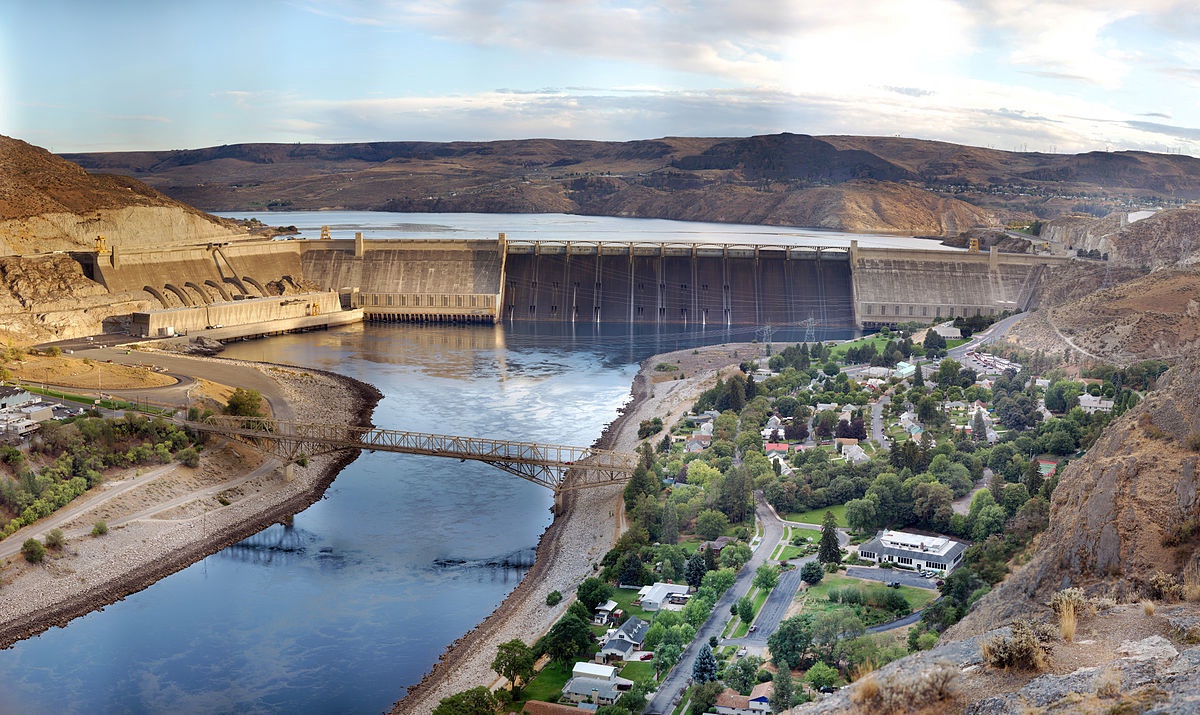
Grand Coulee Dam
8
MENTIONS
7
EPISODES
6
PODCASTS
Search complete. 8 mentions across 7 episodes found for "Grand Coulee Dam".
Sep 29, 2026

David MortensenSOUNDBITE_SPEAKER
Yeah.
Dave SabeyGUEST
Roosevelt's New Deal, when Grand Coulee and Dow's, Hoover Dam, TVA, nothing.
Dave SabeyGUEST
Yeah.
Dave SabeyGUEST
We're living, we're cannibalizing an obsolete structure.

Nick BunkerGUEST
So he went on a great big tour of the Pacific Northwest and Montana and so on.
Nick BunkerGUEST
He went to open the Grand Coulee Dam in Washington State, which is something that he saw as a kind of great legacy of Roosevelt's New Deal.
Nick BunkerGUEST
And he ended up in Chicago in May 1950 with the view to having an enormous rally to be introduced by Adlai Stevenson, of course, who was another coming man within the Democratic Party.
Nick BunkerGUEST
This great big rally where he would have relaunched the party.

speaker_2HOST
Yes.
speaker_1HOST
And enormous amounts of electricity provided by the Grand Coulee Dam.
speaker_2HOST
Yeah.
speaker_1HOST
They built the B Reactor there, which was the first full scale plutonium production reactor in the world.

Dave StewartHOST
Nearly 90 years after Grand Coulee Dam cut these fish off from the ocean, Steven Bird still fishes upper Columbia rainbows that behave remarkably like steelhead.
Dave StewartHOST
Today, we are heading to the far northeastern corner of Washington to talk about spey, swinging soft tackles, reading water, and what Steven has learned from decades spent fishing the upper Columbia River.
Dave StewartHOST
Steven Bird is back on the podcast today.
Steven BirdGUEST
I live in extreme northeastern Washington, a mile from the Canadian border.
Steven BirdGUEST
So I live right where, I live beside the river right where it comes into the States from Canada.
Steven BirdGUEST
We're above Grand Coulee Dam.
Steven BirdGUEST
We don't get salmon and steelhead up h- here anymore, but, uh, we have big trout.
Steven BirdGUEST
Uh, it's also like everywhere else nowadays, very troubled.

speaker_3AUDIENCE
They had presupposed that the entire United States and all of its infrastructure would be abandoned by man, and what structures would still be left 5,000 years hence? There were three structures that they speculated would still be up.
speaker_3AUDIENCE
The World Trade Center, the Centennial Arch in St. Louis, and the Grand Coulee Dam.
speaker_3AUDIENCE
Now, does that tell you anything about how well they built those buildings?
Bill CooperHOST
Yeah, it certainly does.
speaker_0AUDIENCE
They had presupposed that the entire United States and all of its infrastructure would be abandoned by man, and what structures would still be left 5,000 years hence? There were three structures that they speculated would still be up.
speaker_0AUDIENCE
The World Trade Center, the Centennial Arch in St. Louis, and the Grand Coulee Dam.
speaker_0AUDIENCE
Now, does that tell you anything about how well they built those buildings?
Bill CooperSOUNDBITE_SPEAKER
Yeah, it certainly does.

Bryce McPartlandGUEST
The Cascade Mountains end up creating sort of a pretty good barrier.
Bryce McPartlandGUEST
So, you know, west side, east side, east side, where I grew up, I mean, most of the cities didn't really exist or didn't exist in any meaningful, you know, sense until the Grand Coulee Dam was put in.
Bryce McPartlandGUEST
So there's all a network of canals and whatnot that run through there.
Bryce McPartlandGUEST
And Moses Lake, where our headquarters is, I mean, I remember when I was a kid, it was 10,000 people.