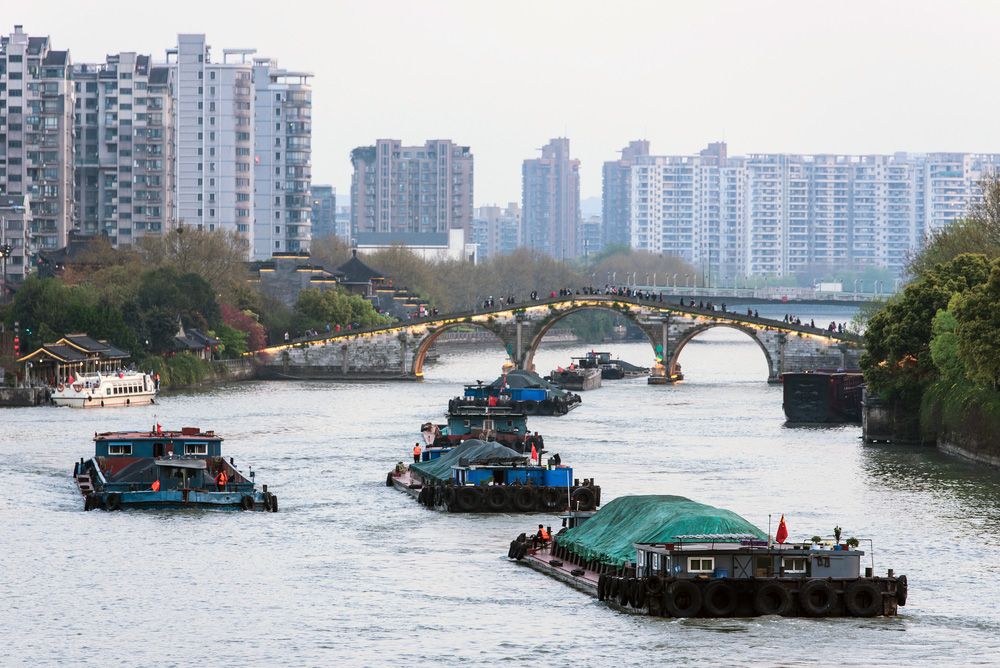
Grand Canal
River in ChinaWikipedia
13
MENTIONS
11
EPISODES
11
PODCASTS
Search complete. 13 mentions across 11 episodes found for "Grand Canal".
Oct 1, 2026

Betty B.NARRATOR
67.
Betty B.NARRATOR
700 miles is said to be the length of the Great Canal in China.
Betty B.NARRATOR
Certain it is that, when this canal was formed, no allowance was made for curvature, yet the canal is a fact without it.
Betty B.NARRATOR
This is a Chinese proof that the earth is not a globe.

Chris StewartHOST
The land tax that made up four-fifths of imperial revenue had been gutted by rebellion, both the Taiping and others.
Chris StewartHOST
The Grand Canal had been cut, the state salt monopoly disrupted, and its mines lost.
Chris StewartHOST
There was, in the whole broken fiscal machine, just one revenue stream left capable of even servicing this new debt.
Chris StewartHOST
and it was the Customs Duties on Foreign Trade at Shanghai and Canton, collected by, that's right, the foreign-run inspectorates.

Craig ClunasGUEST
So the Yongle emperor, as well as these voyages, he had decided to move the entire imperial capital from Nanjing to Beijing and to build a whole new imperial city.
Craig ClunasGUEST
He wants to reinstate the Grand Canal, which rebuilds the economy of China, which is a huge, huge, huge civil engineering project.
Craig ClunasGUEST
There is the whole issue of kind of ongoing war with the Mongols.
Craig ClunasGUEST
The Mongols may have been driven out of China, but they certainly haven't gone away.

Craig ClunasGUEST
So the Yongle Emperor, as well as these voyages, he had decided to move the entire imperial capital from Nanjing to Beijing and to build a whole new imperial city.
Craig ClunasGUEST
He wants to reinstate the Grand Canal.
Craig ClunasGUEST
which rebuilds the economy of China, which is a huge, huge, huge civil engineering project.
Craig ClunasGUEST
There is the whole issue of ongoing war with the Mongols.

John BowmanHOST
So around the same time in the fifth century BC in China, same thing happened.
John BowmanHOST
The Han dynasty raised funds through imperial grain taxes and conscripted organized labor to connect a series of waterways, lakes, and marshes into what would ultimately become the longest water route in the world, the Grand Canal.
John BowmanHOST
So yes, the state narrative was, of course, to create a transport backbone, to link North and South China, to improve food availability, to reduce inequality, to expand trade.
John BowmanHOST
Yes, yes, yes, okay.

Kevin Perez-AllenHOST
the ministers who govern for the boy now have a reason to keep the fleet.
Kevin Perez-AllenHOST
The ministry's half of the pepper is paying salaries in Beijing and repairs on the Grand Canal, the 1,100-mile waterway that carries grain from the south up to the capital.
Kevin Perez-AllenHOST
The officials who would have broken up the ships are now the ones spending the money.
Kevin Perez-AllenHOST
So the fleet sails again every three years.

William HanHOST
Then starting in 1291, Guo Shoujing returned to hydraulic engineering.
William HanHOST
He proposed and then built the Grand Canal leading into Beijing, helping to bring grain into the capital in the less than agriculturally productive north.
William HanHOST
In 1303, the Yuan emperor issued a decree saying that 70 would henceforth be the retirement age for all officials in the dynasty, with one exception.
William HanHOST
Guo Shoujing, though 72 by now, was too important to retire.
1 more episode mentions Grand Canal.
Create an account to see the whole feed, search across every transcript, and follow the entities you care about.