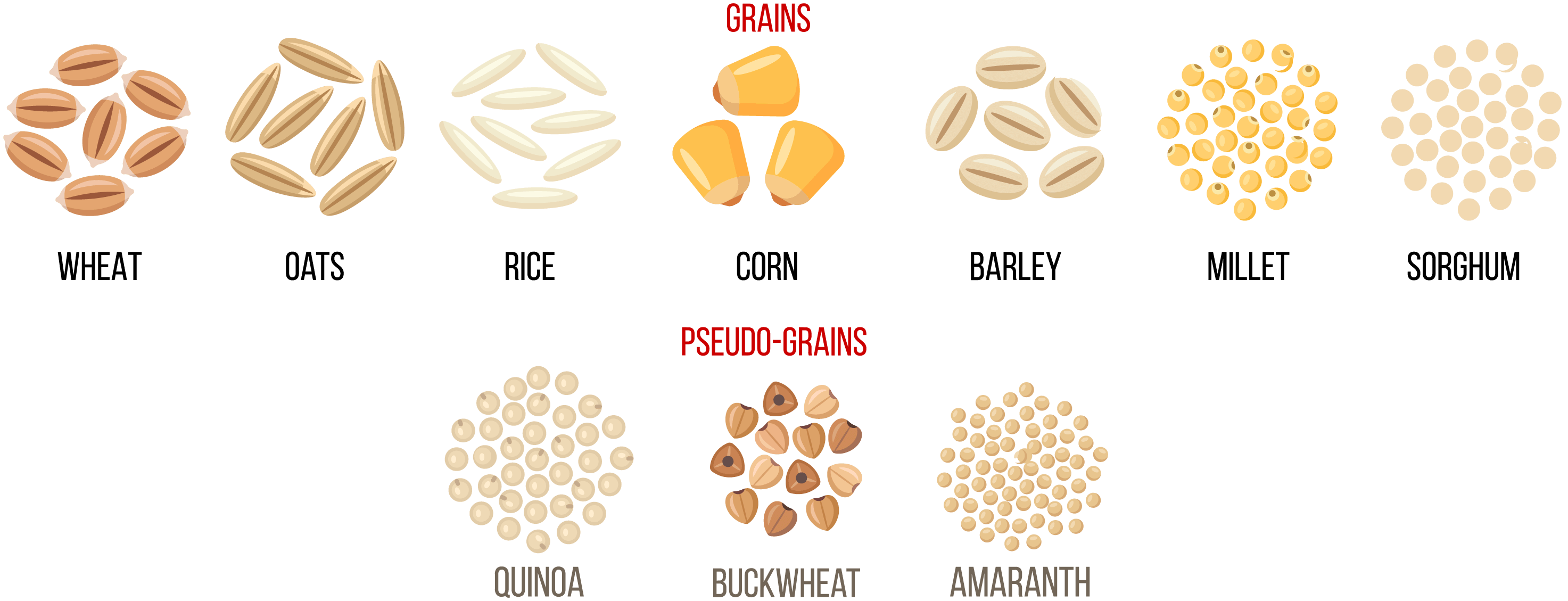
Grain
FoodWikipedia
23
MENTIONS
6
EPISODES
6
PODCASTS
Search complete. 23 mentions across 6 episodes found for "Grain".
Sep 17, 2026

Dan AberhartHOST
Grain has to move out of the Black Sea.
Dan AberhartHOST
Brazil's turning more corn into ethanol.
Dan AberhartHOST
Indonesia wants more palm oil in its fuel tanks.

Trent KlarenbachHOST
From the peak of Saddle Butte to the depth of the Laporte Slough, this is the Trent Clarenbeck Podcast brought to you by the Clarenbeck Grain Report and Clarenbeck Special Crops Report.
Trent KlarenbachHOST
Today's guest is going to be fascinating.
Trent KlarenbachHOST
Longtime friend from Etonia, his name is Jason Dearborn.
Trent KlarenbachHOST
He has been a past guest on the podcast and we are excited to have him here today.
Trent KlarenbachHOST
Jason is with GrainX Global, a founder of GrainX Global, which is transforming global grain trade with integrated solutions that optimize markets, improve efficiency, and unlock new value for farmers, buyers, consumers, and the environment.
Trent KlarenbachHOST
It's going to be a busy podcast today.
Trent KlarenbachHOST
We're going to cover a lot of topics.
Trent KlarenbachHOST
And yeah, I'm excited to have you.

Gary HardgraveHOST
Give Big Day.
Gary HardgraveHOST
Meanwhile, John at the Grains.
Gary HardgraveHOST
John, you have a bit of poetry, a bit of substance, a bit of style for us, mate.
Gary HardgraveHOST
Good morning.

John PoothullilGUEST
So why is the processed foods more affordable? It starts with the government subsidy for agriculture.
John PoothullilGUEST
We give $25 billion in agricultural subsidy, most of which is used for grain farming.
John PoothullilGUEST
If you think about it, Grains were never meant for humans.
John PoothullilGUEST
Otherwise, we would have had beaks to pick them up and the ability to digest the chaff.
John PoothullilGUEST
We don't.

Rachel HesterHOST
Welcome back to The Wooly Way, and surprise everyone, we have wrapped up Season 2, and this is before we start Season 3, so we're not entirely back yet.
Rachel HesterHOST
However, Liv and I have been talking to the Grain folks, and we really wanted to share this information with all of you, so we decided to do a special between-season miniseries.
Rachel HesterHOST
And in today's world, it seems like if you are healthy, you are told to avoid dairy and avoid grains.
Rachel HesterHOST
And we know from milking our sheep that homegrown raw milk from a healthy animal is an entirely different food from what you get at the store.

Paul BlodgettSOUNDBITE_SPEAKER
The people that want to come back and then do the research, these companies, is typically people that I've work for.
Paul BlodgettSOUNDBITE_SPEAKER
It's very close, tight-knit networking in the flour milling or in the grain processing industry.
Paul BlodgettSOUNDBITE_SPEAKER
We're trying to get the word out.
Paul BlodgettSOUNDBITE_SPEAKER
We get a lot of good ag students.
Jeff WickmanCORRESPONDENT
That was Hal Ross Flower Mill Operations Manager Paul Blodgett with information on the mill's connection to industry and students interested in milling science.
Jeff WickmanCORRESPONDENT
You can learn more online by searching for Hal Ross Flower Mill.
Jeff WickmanCORRESPONDENT
More information on the Department of Grain and Food Science is available at grains.k-state.edu. grains.k-state.edu.
Jeff WickmanCORRESPONDENT
This has been Agriculture Today over the K-State Radio Network.