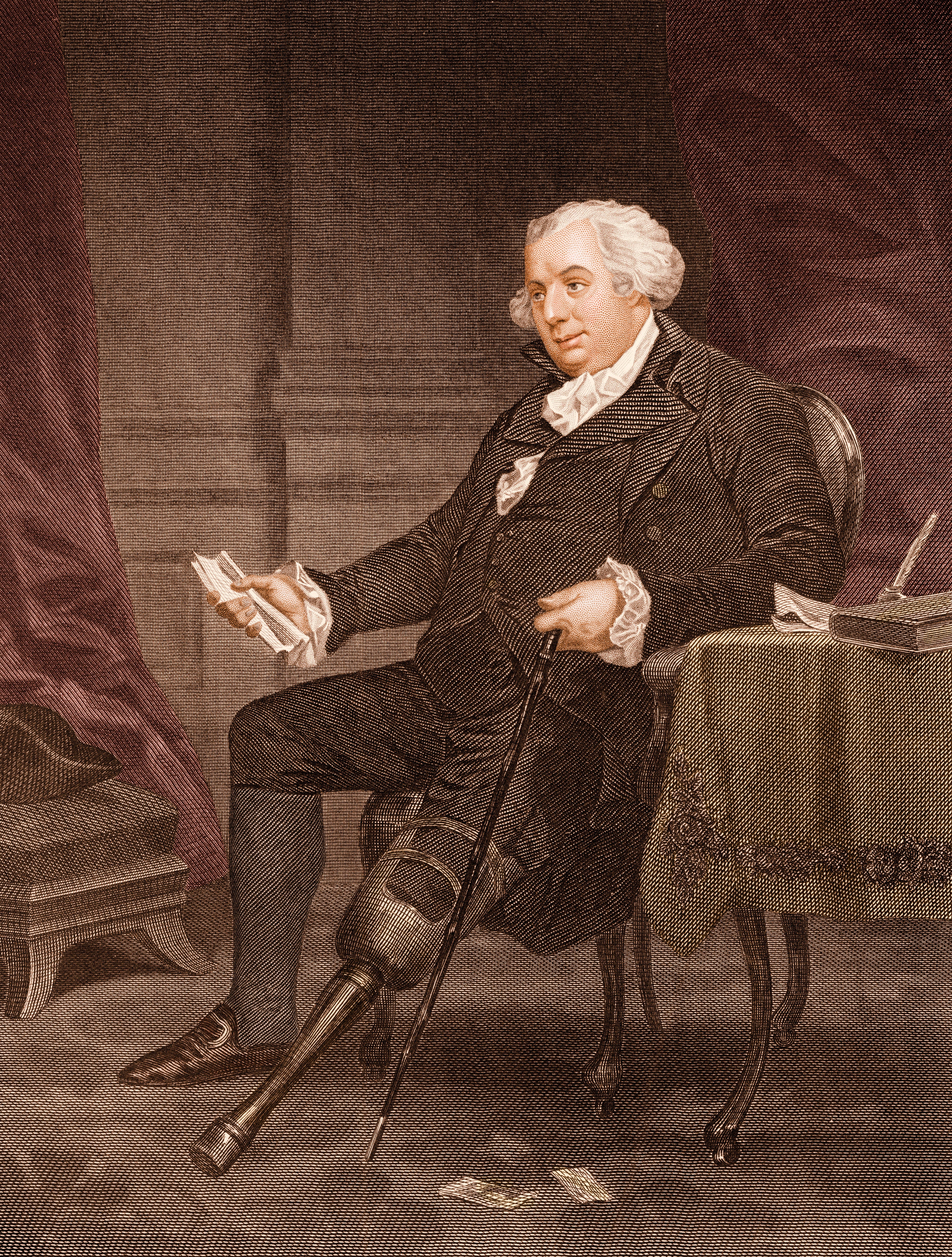
Gouverneur Morris
Founding Father of the United StatesWikipedia
29
MENTIONS
13
EPISODES
11
PODCASTS
Search complete. 29 mentions across 13 episodes found for "Gouverneur Morris".
Nov 18, 2026

Michael BerryHOST
You shouldn't be surprised that they're not.
Michael BerryHOST
When you look at the founding of the United States and you look at Jefferson and Adams and Washington and Monroe, Benjamin Franklin and Gouverneur Morris, when you look at the great Americans and the things they were saying, the things they were writing, the things they understood, the things that were left to posterity, the things that became the blueprints for the foundation of other countries, that's not what was going on on the Barbary Coast.
Michael BerryHOST
which is why you hear the reference to the region in our oldest military songs.
Michael BerryHOST
You don't go on the streets of Kigali or the streets of Mozambique or the streets of Darfur and say, all right, gather around, everybody.

Edward LarsonHOST
Another issue we've talked about before that I was thinking, as you had suggested the topic for today to talk about federalism, we have early on, had some shows about electoral college and how the electoral college seems profoundly unfair.
Edward LarsonHOST
Certainly some of the founders felt that way, and Benjamin Franklin and Gouverneur Morris and James Wilson all wanted popular vote for president.
Edward LarsonHOST
Well, there's a possibility now that we could get it without a constitutional amendment.
Edward LarsonHOST
And that's the legislation that states were passing to that take effect if a majority of states pass legislation where they say they will give their electoral votes to whichever candidate gets a majority of the popular vote nationally.

Micaela FaganGUEST
But three guys did the grid system.
Micaela FaganGUEST
And one of them, his name was Gouverneur Morris.
Micaela FaganGUEST
First name Gouverneur? Gouverneur.
Micaela FaganGUEST
Gouverneur.

Sharon McMahonGUEST
You know, like that seems absurd by today's standards.
Sharon McMahonGUEST
You know, when Hamilton is killed and his best buddy, Gouverneur Morris, is eulogizing him at his own funeral, or at Hamilton's funeral, he speaks to this notion that even the founders did not know if what they were doing would work.
Sharon McMahonGUEST
Right.
Sharon McMahonGUEST
They didn't know if it was good enough.

speaker_5NARRATOR
Opinions were unseen, but marching soldiers were visible to the veriest street urchin.
speaker_5NARRATOR
Now, said Gouverneur Morris, the sheep, simple as they are, cannot be gulled as heretofore.
speaker_5NARRATOR
It was too late to talk about the excellence of the British Constitution.
speaker_5NARRATOR
If any one is bewildered by the controversies of modern historians as to why the crisis came at last— He can clarify his understanding by reading again Edmund Burke's stately oration, On Conciliation with America.

Jeffrey RosenHOST
and it came from how they defined virtue.
Jeffrey RosenHOST
So I'm looking now, and I'll just quickly, at the four founders most influential at the Constitutional Convention, Madison, Roger Sherman, Gouverneur Morris, and James Wilson.
Jeffrey RosenHOST
And just to contrast Madison and Sherman, Madison studies with John Witherspoon at Princeton, and he gets from David Hume, as well as a Calvinist view of human nature, the idea that people are capable of virtue as individuals, but not in groups.
Jeffrey RosenHOST
In all large assemblies of any character composed, passion never fails to rest the scepter from reason, he says in Federalist 55, even if every Athenian had been Socrates, Athens would still have been a mob.

speaker_0HOST
Madison's notes explain.
speaker_0HOST
The ambiguity form had been drawn up by Mr. Gouverneur Morris in order to gain the dissenting members and put into the hands of Dr. Franklin that it might have a better chance of success.
speaker_0HOST
The unanimous consent of the states, not the members, a man could sign as a witness that the 11 delegations had voted aye, which was a fact, without endorsing a word of the documents.
speaker_0HOST
the pen of Mr. Morris performing its last arrangement, placed in Dr. Franklin's hands to deliver.
speaker_0HOST
He meant only to keep himself free.
speaker_0HOST
Nine states, he predicted, would fail to ratify the plan and confusion must ensue.
speaker_0HOST
Gouverneur Morris answered him first.
speaker_0HOST
He too had objections, but considering the present plan as the best that was to be obtained, he should take it with all its faults.

Richard LimGUEST
The country, there are letters to him.
Richard LimGUEST
I think it was Gouverneur Morris.
Richard LimGUEST
I'll have to check, though.
Richard LimGUEST
But he literally says it's it's you.

Julie SilverbrookHOST
The National Constitution Center is a nonpartisan nonprofit chartered by Congress to increase awareness and understanding of the Constitution among the American people.
Julie SilverbrookHOST
At the Constitutional Convention in 1787, Gouverneur Morris played a central role in shaping the language and structure of the Constitution.
Julie SilverbrookHOST
His many contributions throughout the convention earned him the nickname, Penman of the Constitution.
Julie SilverbrookHOST
In 1831, James Madison wrote that it was Morris who revised the preamble, adding the word united.
Julie SilverbrookHOST
Giving the document, it's now familiar words, we the people of the United States.
Julie SilverbrookHOST
While Gouverneur Morris served on key committees and spoke more than any other delegate at the convention, he is often an overlooked and forgotten figure in the American founding.
Julie SilverbrookHOST
In a new book, our guest traces the life and legacy of Gouverneur Morris.
Julie SilverbrookHOST
Scott Greenberger is the executive editor of Stateline, where he leads a team of journalists who report on state policy trends across the country.
speaker_0NARRATOR
And he left that the state conventions be left free to propose amendments, to be taken up afterwards by a second general convention.
speaker_0NARRATOR
A second track, the state's forcing a convention over Congress's head, nearly vanished in the final drafting and was restored on the last Saturday by Gouverneur Morris and Elbridge Gerry together.
speaker_0NARRATOR
Over Madison's mild worry that difficulties might arise as to its form, it stayed.
speaker_0NARRATOR
Each side of the federal balance would hold its own road to amendment.
speaker_0NARRATOR
Three-fourths of the states might be brought to the things fatal to particular states, as abolishing them altogether or depriving them of their equality in the Senate.
speaker_0NARRATOR
the Great Compromise itself repealed by amendment, three-quarters of the Union against the rest.
speaker_0NARRATOR
Sherman moved his protection and lost, and Gouverneur Morris, the man who had fought the equal Senate all summer, rose and moved the sentence that ended the anxiety, that no state without its consent shall be deprived of its equal suffrage in the Senate.
speaker_0NARRATOR
And Madison recorded, This motion, being dictated by the circulating murmurs of the small states, was agreed to without debate, no one opposing it or, on the question, saying no.
3 more episodes mention Gouverneur Morris.
Create an account to see the whole feed, search across every transcript, and follow the entities you care about.