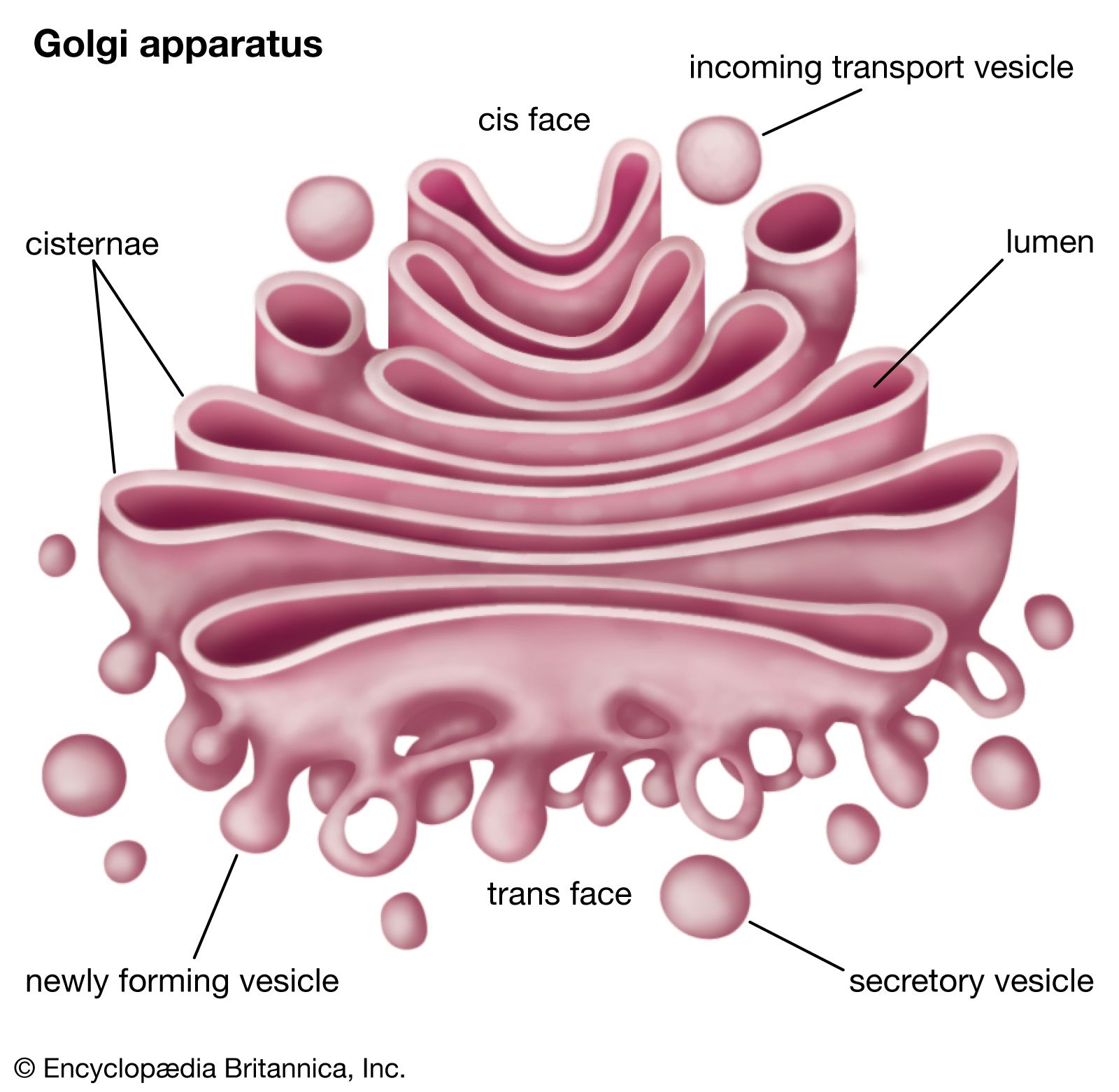
Golgi apparatus
54
MENTIONS
20
EPISODES
10
PODCASTS
Search complete. 54 mentions across 20 episodes found for "Golgi apparatus".
Sep 25, 2026

Daniel J. GuerraHOST
The significance of membrane lipid rafts.
Daniel J. GuerraHOST
Membrane lipid rafts, remember, will detach from endoplasmic reticulum, Golgi membrane, nuclear envelope, mitochondrial membrane, paroxysomal membrane, endosomal, exosomal, as well as vesicular membranes.
Daniel J. GuerraHOST
So from any of these regions where you talk about the endomembranous system plus the plasma membrane, membrane lipid rafts, depending on their mole percent, of two canonical lipids.
Daniel J. GuerraHOST
One is ceramide, not oxyceramide, just ceramide.
Daniel J. GuerraHOST
Now, intracellularly, Ceramides, once they're generated in the endoplastic reticulum, so sphingolytic metabolism requires membrane synthesis and transport.
Daniel J. GuerraHOST
So ceramides made in the ER membrane transported then to the Golgi.
Daniel J. GuerraHOST
That's where they can be added to an oxygen atom in complex lipid synthesis.
Daniel J. GuerraHOST
So that includes the sphingomyelin, the gangliosides, and indeed even ceramide 1-phosphate.

Petra DavelaarGUEST
This membrane of the mitochondria As per Barry Ninem, it has been hypothesized that this mitochondrial outer membrane is an extension of the glycocalyx.
Petra DavelaarGUEST
And it connects into the Golgi and the ER.
Petra DavelaarGUEST
And so it's all connected, if you will.
Petra DavelaarGUEST
And in
Daniel J. GuerraHOST
No, they're not.
Daniel J. GuerraHOST
They're scattered mitochondrial membrane, endoplasmic reticular membrane, even, yeah, the Golgi apparatus membrane.
Daniel J. GuerraHOST
Yes.
Daniel J. GuerraHOST
But ceramide could be quickly produced via sphingomyelinase activity.
9 MINS LATER
Daniel J. GuerraHOST
And this will generate caveolae rosettes, which you can see with microscopy.
Daniel J. GuerraHOST
So there's a wide array of structures and functions of caveolae across all the tissues, interacting with all the intermediary metabolic pathways.
Daniel J. GuerraHOST
going all the way down through because of the signaling to all the function of all the organelles, including, very importantly, the Golgi, the endoplasmic reticulum, mitochondrion, and of course the phagolysisome.
Daniel J. GuerraHOST
So every year I see more and more papers published on caveolae.

SammyHOST
These cellular products are shipped out of the ER in a vesicle, a fluid-filled structure that buds from the smooth ER's lipid membrane carrying cargo to the rest of the cell.
SammyHOST
Those vesicles need to make a quick pit stop at the Golgi apparatus, part manufacturing plant, part protein sorting facility.
SammyHOST
The Golgi is another member of the endomembrane system, which packages proteins into...
speaker_0ADVERTISER
You might be dehydrated.
speaker_0ADVERTISER
Gatorade Zero Powders han sido diseñados científicamente para ayudarte a mejorar el balance de hidratación en el cuerpo.

Steven BarkerGUEST
They, you know, all these drugs are known to bind to 5-HT2T, uh, 5-HT2A receptors.
Steven BarkerGUEST
But these were receptors that were inside the neuron, right? And were, uh, close to the, uh, internal, uh, mitochondrial, uh, structures, uh, that contained the Golgi apparatus, [clears throat] and, and that these receptors were responsible for the neuroplastigenic effect of the psychedelics, right? Wow.
Steven BarkerGUEST
Well, you know, the, the, again, the, you talk about this image we have in our mind of how these things work, is that we all see it binding to the outside of the cell membrane at 5-HT2A receptors, and there being maybe some inversion of those receptors, and they continue on with their, uh, uh, function, and that's how these things work.
Steven BarkerGUEST
Well, you know, it's been known for quite some time there are a lot of compounds that bind very strongly, uh, to 5-HT2A receptors and stimulates production, uh, increase the, the brain level of, uh, serotonin, but they're not hallucinogenic, right? So, uh, the 5-HT2A receptors on the inside, uh, you know, uh, brought about the possibility of explaining, uh, how some of those drugs could bind to 5-HT2A receptors on the outside, uh, but not be psychedelic.
Steven BarkerGUEST
But making it an internal receptor, uh, limits what it will bind with, to only those things that can, uh, penetrate the cell membrane or that are produced inside the cell, right? Not what's being produced necessarily outside the cell.
Steven BarkerGUEST
So, uh, the fact that they can correlate it with, with psychedelic activity, that they could correlate it with, uh, the endo pla- uh, endo plastigen effect, the neuroplastigen effects of the psychedelics in being able to stimulate, uh, neuronal growth and, and all those processes, uh, for, uh, that, that type of stimulation, um, gives a far better understanding of how psychedelics create the, uh, the different, uh, effects that they have, including hallucinations.
EvanHOST
So d- so are you saying, do you think that these intracellular Golgi receptors are the primary mechanism of action for endogenous DMT? Do you think that's the case?
Steven BarkerGUEST
No, I think, yeah, I think it's, uh, it involves [clears throat] both the external binding and the internal binding, and, uh, that it also involves its, uh, binding to other types of 5-HT, uh, receptors, like the 1A and, and others.
Daniel J. GuerraHOST
which can move according to free energy change without any direction by a chaperone protein because of the interaction between the ceramide molecular species and cholesterol, which makes up a major component of these membrane lipid rafts.
Daniel J. GuerraHOST
So these rafts move from endomembranous compartments like the ER and the Golgi to the nuclear envelope, to the mitochondrial outer membrane, to the paroxysmal membrane, to phagolysisomes, to exosomes and endosomes, to vesicles, and of course to the plasma membrane.
Daniel J. GuerraHOST
And that is all absolutely specific.
Daniel J. GuerraHOST
So ceramide is universally necessary for those membrane lipid wraps to have the correct enthalpic contribution to free energy change for them to traffic to all those different membranous systems.
Daniel J. GuerraHOST
So this is very common in the central nervous system.
Daniel J. GuerraHOST
And so if sphingomyelin isn't being turned over, The fatty acids associated with all the phosphoglycerol lipids and sphingolipids, where that sphingomyelin as one molecular species of lipid resides, such as in the plasma membrane or perhaps in the ER or the Golgi of these neurons, will start then to become a pathological biochemical event.
Daniel J. GuerraHOST
So knocking it out or using a short hairpin RNA or an SI RNA, even that kind of pharmacotherapy in the mouse model can give you a short-term positive effect.
Daniel J. GuerraHOST
But that short-term positive effect isn't followed through through a full life cycle of that animal.
Daniel J. GuerraHOST
There's a lysosomal type, which is targeted to the endolysosomal compartment.
Daniel J. GuerraHOST
And once it's processed, that protein, the ASM, it becomes the common ASM precursor protein that is then sent to the Golgi.
Daniel J. GuerraHOST
Look at how sophisticated this maturation of this one enzyme is.
Daniel J. GuerraHOST
But there's also a secreted type, that precursor one could be a secreted, and it's actually released into the extracellular space for its own function.
Daniel J. GuerraHOST
They are uniquely positioned in specific phosphoglycerol and sphingolipid classes so that the membrane has the integrity and fidelity which is necessary for that cell to obtain.
Daniel J. GuerraHOST
So various plasma lemma, endoplasmic reticulum, nuclear envelope, Golgi, lysosome, mitochondrial membrane, peroxisomal membrane, those will have a suite of specific fatty acid composition that will differ according to the cell type within a general framing of necessity for specific fatty acids.
Daniel J. GuerraHOST
And the ones we were talking about last time should then be reflected upon.
Daniel J. GuerraHOST
These would be the ultimate end product for elongation, desaturation of the essential fatty acids, linoleic and alpha-linolenic acid.
17 MINS LATER
Daniel J. GuerraHOST
but you might get an alteration in the signaling because of that oxidative damage altering the proteome within the plasma membrane.
Daniel J. GuerraHOST
And many of those proteins, remember, are going to be receptors and channels and otherwise regulating alterations in flux of amino acids, nucleic acids, and proteins and lipids.
Daniel J. GuerraHOST
within subcellular compartments, such as the ER to the Golgi to the plasma membrane, or maybe in membrane lipid rafts throughout the cell.
Daniel J. GuerraHOST
So these interactions are where all of the serious biochemical turnovers occur.
10 more episodes mention Golgi apparatus.
Create an account to see the whole feed, search across every transcript, and follow the entities you care about.