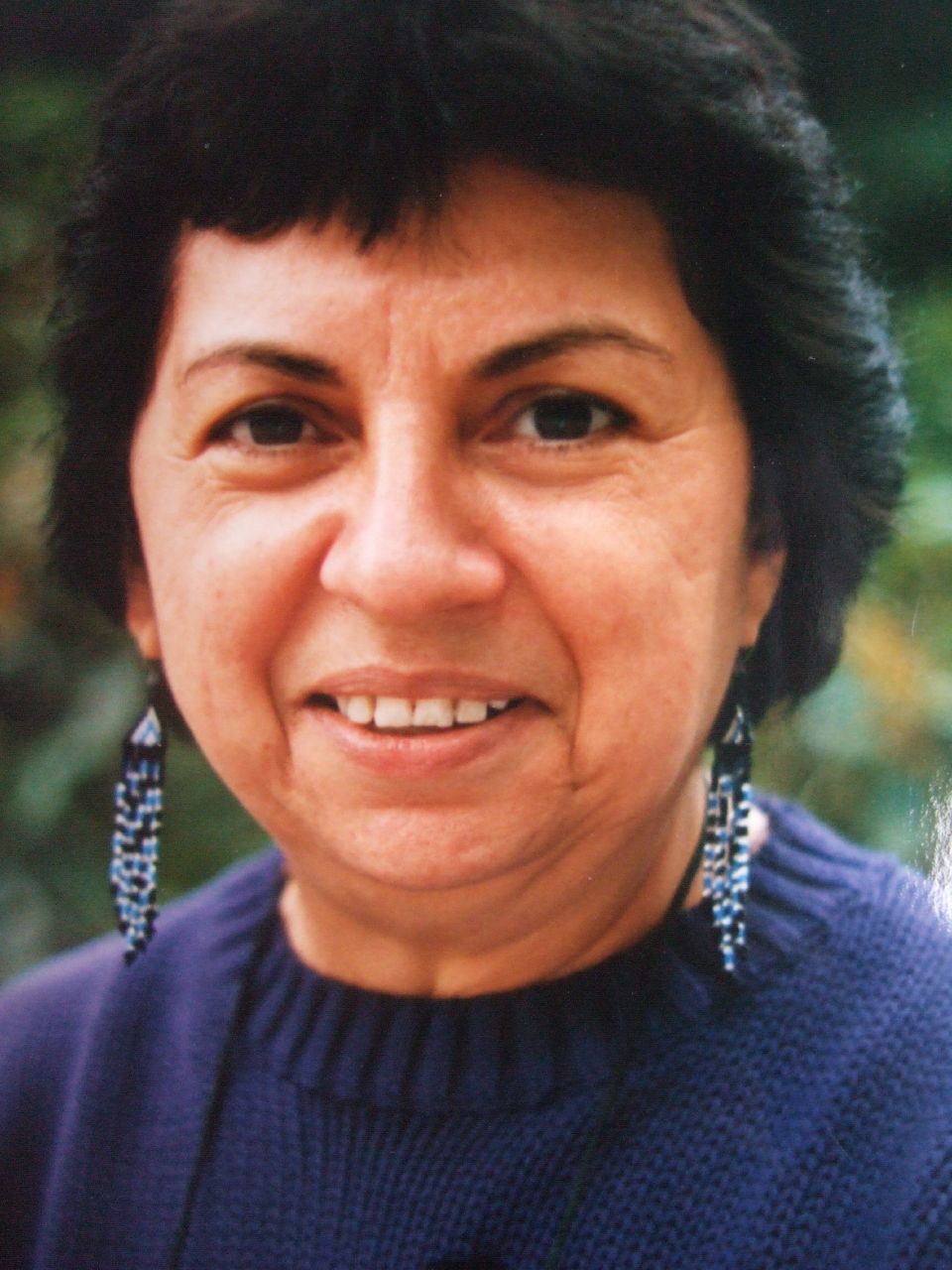
Gloria Anzaldúa
American philosopher and scholarWikipedia
21
MENTIONS
16
EPISODES
15
PODCASTS
Search complete. 21 mentions across 16 episodes found for "Gloria Anzaldúa".
Oct 20, 2026

Alvaro MarquezGUEST
I think there's a lot of people like this.
Alvaro MarquezGUEST
And as I was preparing for this conversation, I was really thinking about the Chicana queer scholar, Gloria Anzaldúa.
Alvaro MarquezGUEST
This whole concept of nepantla, it's such a powerful concept.
Alvaro MarquezGUEST
This concept of nepantla comes from a queer feminist epistemology that's really trying to name an in-between state where you're neither fully one thing or another, and you're living in between different cultures, languages, paradigms.

Leny StrobelGUEST
Authors that I have read.
Leny StrobelGUEST
Just yesterday I was reading Joy Harjo, and, and I always will be thankful for Gloria Anzaldúa, and bell hooks, and Paulo Freire, and all my spiritual mentors, and some of the mentors I've had through my graduate studies, and yeah.
Oceana SawyerHOST
Mm-hmm.
Leny StrobelGUEST
And now I'm also thinking my mentors, the river, [laughs] maybe the creek outside my house-

Natalie KivellGUEST
So there's a project they've been working on for a long time called Proclaiming Our Roots, and it's digital storytelling of Afro-Indigenous participants.
Natalie KivellGUEST
But it was really kind of built for this idea that similar to how we read maybe like Gloria Anzaldúa from decades ago around, you know, I either have to be woman or I have to be lesbian or I have to be queer.
Natalie KivellGUEST
It was the same thing here.
Natalie KivellGUEST
I have to be Black or I have to be Indigenous.
Natalie KivellGUEST
I don't get to be both.
Natalie KivellGUEST
And so... like how we start asking these questions, again, rooted in theories, like, you know, looking at borderland theories out of Gloria Anzaldúa came on before any of the stuff we were doing in community psychology.
Natalie KivellGUEST
How does that help us think about even what you were talking about before that identity isn't this kind of structured category, but this fluid way that we're co-constructing through a colonial lens to try to create, I don't know, categories of hierarchy and repression.
Natalie KivellGUEST
And what does it mean as we're kind of like moving through it in our, our own ways and our own spaces to, to reclaim like our whole selves.

Mary ReynoldsHOST
How does this concept challenge traditional ideas of activism and personal transformation?
Brenda L. SendejoGUEST
Well, so that is a concept by Gloria Anzaldúa that I build on.
Brenda L. SendejoGUEST
It's the idea of making face, right? Our own identities.
Brenda L. SendejoGUEST
We are the creators of our own identities, Anzaldúa says, right? We make our own faces.

Mary ReynoldsHOST
How does this concept challenge traditional ideas of activism and personal transformation?
Brenda L. SendejoGUEST
Well, so that is a concept by Gloria Anzaldúa that I build on.
Brenda L. SendejoGUEST
The idea is of making face, right? Our own identities.
Brenda L. SendejoGUEST
We are the creators of our own identities, Anzaldua says, right? We make our own faces.

Mary ReynoldsHOST
How does this concept challenge traditional ideas of activism and personal transformation?
Brenda L. SendejoGUEST
Well, so that is a concept by Gloria Anzaldúa that I build on.
Brenda L. SendejoGUEST
It's the idea of making face, right? Our own identities.
Brenda L. SendejoGUEST
We are the creators of our own identities, Anzaldúa says, right? We make our own faces.

Mary ReynoldsHOST
How does this concept challenge traditional ideas of activism and personal transformation?
Brenda L. SendejoGUEST
Well, so that is a concept by Gloria Anzaldúa that I build on.
Brenda L. SendejoGUEST
It's the idea of making face, right? Our own identities.
Brenda L. SendejoGUEST
We are the creators of our own identities, Anzaldúa says, right? We make our own faces.

Mariana AlessandriGUEST
Like, from the place of pain, you could wanna trash it like anything.
Mariana AlessandriGUEST
And Gloria Anzaldúa is actually the philosopher I talk about when talking about depression, and I think she would've trashed it if given the choice at all.
Eric ZimmerHOST
Yeah, yeah.
Mariana AlessandriGUEST
Right? So, so I think hating it is perfectly 100% within your rights, and it's individual, right? There are some people who end up saying, "Oh, well, this actually turned out to be okay for me," whatever.

Ross VictoryHOST
She had a phrase for that: la trampa de lenguaje, the trap of language.
Ross VictoryHOST
Now, you may remember a similar concept from Gloria Anzaldúa's episode.
Ross VictoryHOST
Alejandra won the Guggenheim Award in 1968 and the Fulbright in 1971 while that trap was closing.
Ross VictoryHOST
The prestige never became permission.

Katy BallardHOST
Mm-hmm.
Leslie C. Sotomayor IIHOST
Like, you know, the W- G- GS pr- pr- professor that I had spoke about Gloria Anzaldua and Cherrie Moraga and Sojourner Truth and Angela Davis.
Leslie C. Sotomayor IIHOST
Like, that's where I learned all-
Katy BallardHOST
Right
6 more episodes mention Gloria Anzaldúa.
Create an account to see the whole feed, search across every transcript, and follow the entities you care about.