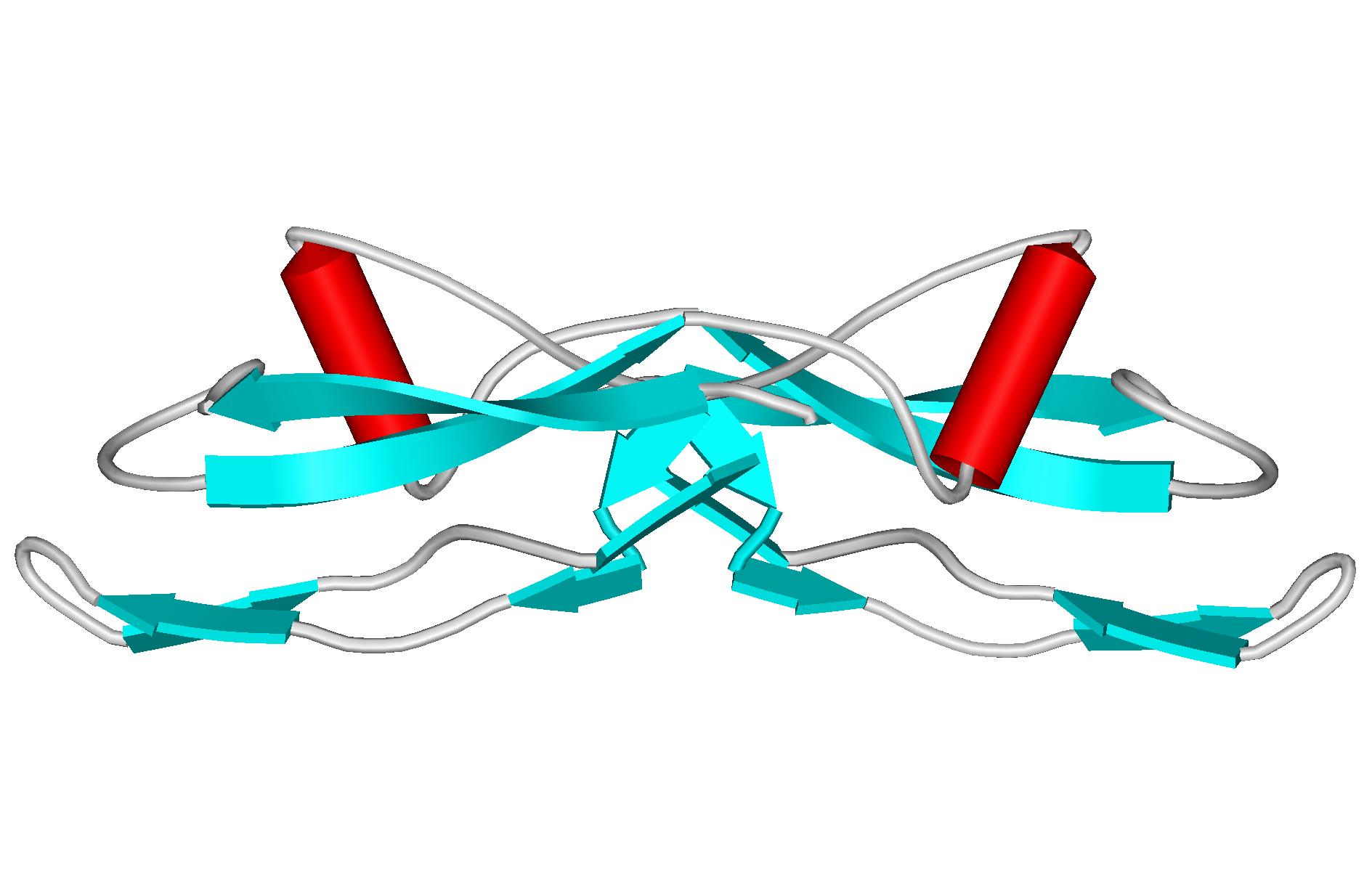
Glial cell line-derived neurotrophic factor
ProteinWikipedia
30
MENTIONS
7
EPISODES
7
PODCASTS
Search complete. 30 mentions across 7 episodes found for "Glial cell line-derived neurotrophic factor".
Nov 2, 2026

Paul AustinHOST
Tobias is co-director of the Global Iboga Therapy Alliance, and he's now working towards a Phase IIa clinical trial of low doses of ibogaine for Parkinson's at the University of Zurich.
Paul AustinHOST
Today, we are going to get into how an Ibogaine holiday ended Tobias's opiate addiction, why full-spectrum Iboga feels so different from clinical Ibogaine hydrochloride, the 2016 conference that I attended in Tepoztlan, Mexico, where patient D first went public, what GDNF is and why neurosurgeons try to deliver it through the skull, The 80-day protocol that cut one patient's freezing from hours a day to about half an hour.
Paul AustinHOST
Why roughly 40% of patients don't respond and why the cause of Parkinson's doesn't predict who will.
Paul AustinHOST
The four checks that Tobias runs before combining Ibogaine with any medication.
12 MINS LATER
Paul AustinHOST
Okay, because it said he took a small dosage twice a day for 30 days, and after the first couple weeks began to notice that he could use his fingers to pick up objects again, and then after a month, he had seen a gradual improvement in all of his symptoms to the point where he could carry on a normal conversation and coordinate previously impossible tasks such as buttoning his shirt.
Paul AustinHOST
And there is... a post-treatment interview with patient D, which we'll link to in the show notes.
Paul AustinHOST
But I'm sort of curious, before we get into the research paper that you studied, what I heard about Iboga and Ibogaine in terms of why it might be useful for Parkinson's had something to do with GDNF.
Paul AustinHOST
Now, On the podcast before, our listeners have heard about BDNF, brain-derived neurotrophic factor, which is often a precursor to neuroplasticity.

Roger BarkerGUEST
So one way to try and think about treaty policies has been to try and rescue what's left by giving grace factors.
Roger BarkerGUEST
So a fertilizer for the dopamine cells, of which probably the most well-researched and is currently in trials is a thing called GDNF, glial cell line derived neurotrophic factor that was discovered in 1993.
Roger BarkerGUEST
And the idea there is you infuse it and you're trying to rescue the cells that are left, get the fibers that are there to survive and ideally to sprout and take on more roles within it.
Roger BarkerGUEST
Now, that has had a mixed history.

Alejandro JungerGUEST
but with other effects.
Alejandro JungerGUEST
I mean, it boosts production of BDNF, brain-derived neurotropic factor, GDNF, glial-derived neurotropic factor, NGF, neuron growth factor.
Alejandro JungerGUEST
So it's like a growth factor, growth hormone for the brain.
Alejandro JungerGUEST
There were studies done by Stanford University of athletes with traumatic brain injury were that after Ibogaine, six months after Ibogaine, their Gruyere cheese brain was completely normal.

Sharnael Wolverton-SehonGUEST
And so I did a lot of research on like how it works with the different neurotransmitters, how some of the people who would be a good candidate, who wouldn't, the differences between this and ayahuasca or some of the other kind of more traditional psychedelics.
Sharnael Wolverton-SehonGUEST
I also looked into, you know, how it works with your brain chemistry specifically with the BDNF and the GDNF, which why does it help with people with Parkinson's or MS or Lyme's or autoimmune? Like what is the strategy or the components that even make that available to support someone with those issues, Alzheimer's or any kind of dementia stuff? I also interviewed several hundred if not a thousand people who went through it and got their testimonies for some of them and, or got permission just to listen and hear about some of what they saw and what they walked away with.
Sharnael Wolverton-SehonGUEST
So there's a lot packed in there that explains why it would be important.
Sharnael Wolverton-SehonGUEST
And I, I wish that it wasn't illegal.
24 MINS LATER
Sharnael Wolverton-SehonGUEST
People just walk away.
Sharnael Wolverton-SehonGUEST
It resets the brain.
Sharnael Wolverton-SehonGUEST
BDNF and the GDNF, basically it's something that we have and that we create within our body to make the brain pathways create and stick.
Sharnael Wolverton-SehonGUEST
And so when we're in our one to two year old time, that's when our highest chemistry is there for us to learn motor skills.

Karl SterlingHOST
He was on the show years ago, and then, you know, he wrote several books and all that, but...
Karl SterlingHOST
There's a lot around the area of exercise helping the brain to create neuroprotective, you know, BDNF and maybe GDNF, I'm not sure.
Karl SterlingHOST
But other things, you know, get more blood and oxygen to the brain.
Karl SterlingHOST
But how is it that the brain will change? Are there other ways the brain changes from exercise? And would like resistance training be included in this?

Wassilios MeissnerGUEST
So there are phase one trials currently ongoing to generate more data to understand what the potential interest is from SA before then potentially moving into larger trials.
Wassilios MeissnerGUEST
There's also a small trial that's applied neurotrophic factor GDNF, so quite differently neurosurgical approach to see if local administration into the butamine may have beneficial effects on the fate of dopamine neurons, but also on non-dopamine neurons and the butamine.
Wassilios MeissnerGUEST
And with that, I'm having potentially impact on progression of motor features.
Wassilios MeissnerGUEST
So it's quite a very active field currently.

Rod PaulsenGUEST
So it, it's what we call functionally selective at that receptor, and that plays a big part in its anti-addictive effects.
Rod PaulsenGUEST
Um, it also releases BDNF as well as GDNF, and GDNF seems to have some role in restoring the health of dopamine neurons, which is great for addictions, among other things.
Talia EisenbergHOST
So related to S-- do you, uh, do you believe that you can change during this critical period, you can actually tr- change your brain chemistry for good and, you know, you change your behaviors, then you get more dopamine, you get more endor- healthy endorphins.
Rod PaulsenGUEST
Yeah.
21 MINS LATER
Rod PaulsenGUEST
Yeah.
Talia EisenbergHOST
Then can you talk about the critical period and what's happening from a pharmacological perspective there?
Rod PaulsenGUEST
There's something going on with both BDNF, which is a growth factor for your brain, as well as GDNF, another growth factor for your brain.
Rod PaulsenGUEST
And then there's probably also this cognitive reprocessing component, but I couldn't say exactly, like, how that's all working.