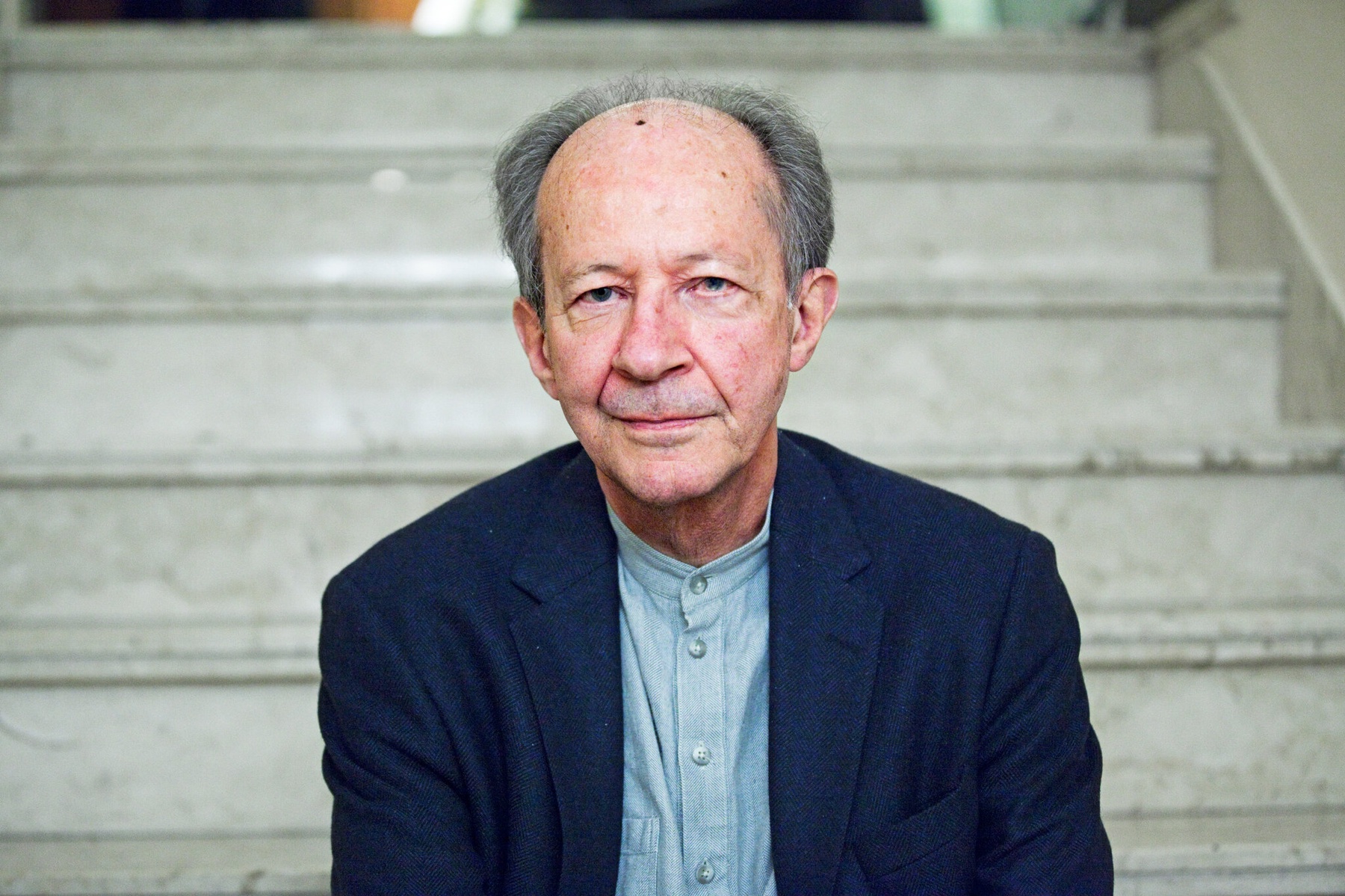
Giorgio Agamben
Italian philosopherWikipedia
12
MENTIONS
9
EPISODES
8
PODCASTS
Search complete. 12 mentions across 9 episodes found for "Giorgio Agamben".
Sep 18, 2026

ChrisHOST
I'm Preston.
ChrisHOST
And this week we're reading Giorgio Agamben's famous essay, What is an Apparatus? What is an apparatus? Well, so you know when you go to the shoe store and you try to find the shoe that fits and you say, I'd like a 6.5 and they say, I only have a 7? And then you go, okay, well, how long would it take to order in a size 7? And they say, well, it's going to take about a week and a half as the crow flies.
ChrisHOST
And then you eventually get it and you pay for it.
ChrisHOST
Isn't that a measure of distance? That's probably not going to be considered an apparatus.
37 MINS LATER
ChrisHOST
So actually, Ferragombin...
ChrisHOST
Hold on, I think we're on to something that might be at least better...
ChrisHOST
Sometimes it's hard with Agamemnon to find a better.
ChrisHOST
There's obviously always a worse.

Oliver MarchartGUEST
In the German version of my book, which you mentioned, Post-Foundational Political Thought, the German version is called The Political Difference.
Oliver MarchartGUEST
I also discuss Rancière and Agamben as examples.
Oliver MarchartGUEST
Of course, Rancière, again, would protest against being labeled a Heideggerian.
Oliver MarchartGUEST
But in that sense, it serves me well, because what is... key in the heideggerian uh idea of the ontological difference is that the ontological and the ontic that is the realm of being as such and particular ontic beings you know this glass of water and whatever it is you know there is a difference and heidegger says we forgot to ask the being question the question about what is being right And this being question is silently asked all the time.

PillsHOST
Now, that's just, that's just how it is.
PillsHOST
You remember Agamben? Agamben when, when the, the COVID lockdown happened.
VictorHOST
The state of exception stuff? Yeah.
PillsHOST
Yeah, he's like, "Okay, this is it.
PillsHOST
So, you know.
VictorHOST
Yeah.
PillsHOST
But Agamben was really useful when we were trying to read Israeli propaganda about Palestinians.
PillsHOST
So-

Irfan AhmadGUEST
Yeah, so quickly, I'll make two points.
Irfan AhmadGUEST
One is the book is also a critique, especially in the preface of Agamben, who is a major philosopher and political theorist.
Irfan AhmadGUEST
So during the COVID, he said that the scaling of the state of exception, which is a key term for him.
Irfan AhmadGUEST
So he said that actually the COVID or the viral threat has replaced terrorism as a ground for intensifying the state of exception.
Irfan AhmadGUEST
And my point is that, no, it has not replaced, okay? Because terrorism, by the way, itself is also sometimes described as a virus, right? So unlike Agamben, who talks about replacement of terrorism as a ground for a state of exception by the viral threat, I say that no, they coexist.
Irfan AhmadGUEST
Okay, that is one point.
Irfan AhmadGUEST
The second point about conclusion, let me say this, that actually the book has a conclusion which is titled anti-conclusion.
ChrisHOST
Yeah, I mean, there is an aspect of Byung-Chul Han that's sort of almost tragic.
ChrisHOST
By the way, some of his early work, we will at some point read some of his early critiques on late Foucault and Agamben.
ChrisHOST
on biopower are actually really cool.
ChrisHOST
This is sadly something I've felt that he's struggled with as he writes.

Brother LunkGUEST
Well, there's an Italian philosopher.
Brother LunkGUEST
He's actually a contemporary philosopher who goes, his name is Giorgio Agamben.
Gio PennacchiettiHOST
Thank you for listening to the Content Minded Podcast.
Gio PennacchiettiHOST
This concludes the free public version of the episode.

Helena AndrejkoGUEST
It touches on the ethics and the state became this powerful, godlike, omnipresent, completely this entity that was reaching beyond their rights.
Helena AndrejkoGUEST
And so I think it was, it's Giorgio Agamben.
Helena AndrejkoGUEST
It's an Italian philosopher.
Helena AndrejkoGUEST
He talks about the state of emergency.

C. Derick VarnHOST
H- How does this permanent state of emergency legally shield civilians when they committed extrajudicial torture or murder? And then also, how do you think this has affected American law overall?
Gautham RaoGUEST
So the, the permanent emergency concept, you know, I borrow this from the, from the Italian social theorist Giorgio Agamben, and others have written a great deal.
Gautham RaoGUEST
I was, I was very influenced in my own training by critical theory and social theory and so, you know, Walter Benjamin and the, the Frankfurt School and stuff like this.
Gautham RaoGUEST
So, you know, it was something that I, as a historian, as an empirical historian, you're sort of taught to shy away from, from applying theoretical labels to things.

Bayo AkomolafeGUEST
To create settlements, to create civilization, modernity needed to create the fugitive, right? The plantation had fugitives.
Bayo AkomolafeGUEST
Cities have vagabonds, right? Every boundary-making work is already a creation of a bare zone, bare land or bare state, to use the words of Giorgio Agamben.
Bayo AkomolafeGUEST
So there is always the work of creating the monstrous in order to legitimize the internal, right? But sometimes the rituals with which we stabilize settlement, the rituals with which we say hello and goodbye and practice the economies between us, those rituals start to become tautological, right? And they don't produce anything else because they're stuck like ants in a death spiral.
Bayo AkomolafeGUEST
They keep going around in this sensorial trap and nothing else can be done except all the things that we already know how to do.