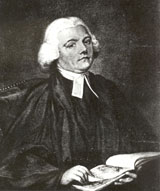
Gilbert White
Parson and naturalistWikipedia
35
MENTIONS
18
EPISODES
18
PODCASTS
Search complete. 35 mentions across 18 episodes found for "Gilbert White".
Sep 30, 2026

speaker_0NARRATOR
There was no doubt about it.
speaker_0NARRATOR
I was back in Selborne, the Selborne of Gilbert White, after an absence of twenty years.
speaker_0NARRATOR
I parted company with Bylett then, and let him go on ahead.
speaker_0NARRATOR
When the grating of his wagon wheels had died away at the bottom of the hill, I set about making my own breath-bated entry into the place alone.
speaker_0NARRATOR
I raised the latch of the churchyard gate and passed in.
speaker_0NARRATOR
That is a hard word I have just written, but I suppose a true one.
speaker_0NARRATOR
Looking back on it now, through the vista of twenty sane and sobering years, the pilgrimage I then made to the shrine of Gilbert White stands out as nothing less than an orgy of sentimentalism.
speaker_0NARRATOR
That it was so, sincerely and unconsciously, that my every thought and act at the time was a pure, unforced affair of the heart and no designed conceit, only aggravates the case.

speaker_3NARRATOR
It is the work of art nearest to life itself.
speaker_3NARRATOR
Crusoe, then, and Gilbert White, and Thomas Edward, the shoemaker-naturalist of Banff, and Lubbock, of Norfolk Fauna fame, have influenced and moulded one boy's life; and Christopher Davies, Swan and her Crew, confirmed it.
speaker_3NARRATOR
My designs have never been towards owning a bona-fide yacht, but rather to small craft that take up scant sea-room with a minimum of raffle and trouble.
speaker_3NARRATOR
The Moor's long-boat, with the shoulder-of-mutton sail and the cabin amidships, was my ideal.

speaker_8NARRATOR
From porch to porch rang out clear voices in early greeting, and window lattices swung open with jingling clatter.
speaker_8NARRATOR
there was sudden commotion in the farmyards where the poultry were crowding out blinking and clamouring from their dark roosting places selborne was awake again and setting about another day's business in the old cheery red-cheeked burly hampshire way in the misty blue sky overhead there was no cloud to break the formless span yet as we wandered through the sun-bathed silence of the little churchyard a constant rain was falling a rain of dropping leaves for ever slanting and twirling down alike on mantling grass and lichen gilded tomb yellow from the elm trees amber from the chestnuts grey from the spreading poplars russet from flaming beech and bough red and russet gold and grey turning and pirouetting down through the dew moist hazy sunlight in a never-ending cascade of changing colour long ago the falling leaves had hidden the old grey cobbles of the church path so that the heaviest footstep was silenced in them and in the angle of the porch the vanished wind of yesterday had blown them up into a great brown heap that rose nearly to the sill of the little lance windows hard by every green mossy stone around us had formed a barrier for the drifting leaf harvest and the wind had piled up its ruddy treasure behind and left it there for the thrushes to scatter when we should have gone on our way eastward in the little churchyard beyond the reach of the falling autumn leaves there was open land as yet untenanted by the ever-gathering throng of quiet sleepers and here in a spreading plain of silver the dew lay white and glistening under the still strong radiance of the morning light only where the blackbird had left his track in it sweeping away the white dew gossamer as he went was the green of the grass visible crossing and recrossing and winding in and out the pathway of his journeyings had chiselled out a pattern intricately through the due veneer quaint curves and parallels traversed the bright sward everywhere and knots and ribbons and rosettes of velvet green made a soft glowing backdrop for the rich impasto of the water-drops to sunwood the glittering plains seemed colourless save for a dusky golden sparkle here and there but seen obliquely the surface broke up into a maze of gem-like gleamings changing every moment into some new shade of iridescence yet giving to the eye the general effect of silver molten white and with the strengthening sun-glow the tiny drops were every moment drawn together on the swaying tips of the grass blades where gathering large to a fall they seemed like gorgeous butterflies fanning their wings of amber and green and blue as the sunshine broke the fluttering light points up into a tangle of ray ribbons to the dazzled eye everywhere out on the sunny breadth of grassland with the increasing heat of the morning these hovering bright-veined creatures were born into a moment's glory trembling vividly through the whole gamut of rainbow colour until presently with one last burning flash of crimson they dropped and vanished into the white due ocean below through the long dark hours of the night we had journeyed towards the shrine we knew so well in fancy yet in truth had never seen with the chimes of midnight london already lay behind us twinkling in the darkness at silent slumbering kingston we had parted with the river lapping by forlornly in its moonlit gulf below then surrey hill and dale trooped by like dim shadows ever changing yet ever the same beneath the quiet night mile after mile and hour by hour we journeyed under the misty moonlight with the faint autumn breeze creeping chillily in every hedgerow and singing inconstantly in the dark waving tree-tops that blotted out the star-shine overhead and when at length the laggard day began to fret the steep sky with its dawning and the rich autumnal tints gloomed out once more from every hill wondering thoughts began to stir within us as the callow moon waxed dimmer and more golden and the weary way ahead grew less and less whether we should find some stately marble in the public place raised by selborneans reverently in the master's undying honour or whether the people's tribute would rest over his grave perchance within the quiet sanctuary where he stood and taught so many busy peaceful years yet this would be unmeet for then the swallows that he held so dearly could not circle round his resting-place as they must love to do on every shimmering breathless summer day and some at least must linger all the winter through as he believed they did to tend his grave he could be lying nowhere but out under the blue heaven free to the winds and the sunshine with all the sights and sounds of furred and feathered life and every bright-hued blossom of the seasons ready in wood and meadow-land against the time of his awakening and when at last the golden chanticleer of selborne gleamed out star-like ahead through the autumn mists shining like another star of olden time and when we stood at length within the precincts of the little god's acre with the busy murmur of the village behind us and the dreamy sun-barred stillness of the churchyard stretched before even then no inkling of the truth about him was revealed to us we had seen no monument in the village way nor on the broad pleister where the stones of the pathway might well have been hollowed by his footsteps nor was there tablet or inscription of any kind on the old house where he dwelt and laboured for so long though some one had newly fixed a little brown shining angel over the portal with an open volume in its arms yet a passing waggoner had told us that he lay in the westward shadow of the church and thither we went expectantly to see what selborne had done there in his honour through the little wicket gate and past the roses swaying so indolently on their long green stems under the wide dark yew-tree where the starlings were calling onward down the leaf-strewn pathway through the never-ending torrent of chestnut amber and gold and round by the graveyard fallows with their glistening dew brocade and then we deemed our quest an easy one he must lie there under the distant tall grey monolith with the white medallion on its face selborne we thought had done him indeed some measure of honour withal sparingly nay almost ungenerously yet drawing near to read what compensation of glowing words were graven to his memory we found an unfamiliar name upon the stone and thus it was with every grave we visited the carefully tended monument with the asters blooming round it was not his the iron-railed marble wreathed in pale everlastings sheltered a stranger the white stone cross glimmering through the distant barricade of green carried a gilded epitaph to some unknown every stone we visited told the same blank story bewildered we journeyed on from place to place threading our way reverently between the crowding tombs bright with their garniture of lichen gold at last we began to search among the lowliest graves that hid themselves uncared for amidst the couch grass and the daisies and then at length we found it half hidden under the thronging verdure a little mean crumbling stone moss-eaten neglected and almost illegible but that some kindly soul had scraped the long accumulations of grime from the simple lettering g w twenty sixth of june seventeen ninety three thus to our shame be it written is the grave of gilbert white the father and founder of english practical natural history edition after edition of his work appears each outvying the other in its gold and purple yet his grave remains neglected uncared for down in the little sleepy hampshire village it is in vain to leave the matter to selborne there is an inconspicuous tablet to his memory within the church and the inhabitants have given unto themselves a water supply and labelled it with his name more they will never do it is for the people of england for every one who loves the green country and the song of birds to join in raising a fitting monument to the man who has done more than any other to help on our knowledge of god's creatures that move and have their being under the blue english sky and if we of the motherland do not our duty speedily to gilbert white a great ignominy awaits us for the americans will step in and do our duty for us a magnificent edition of his work will soon be issued overseas already selborne is becoming the stratford-on-avon of the american naturalist Let us, then, be up and doing what remains to be done, before the eleventh hour shall have passed irrevocably by.
speaker_8NARRATOR
That concludes Chapter 18, and is the end of Section 8.
speaker_8NARRATOR
End of Sidelights of Nature in Quill and Crayon by Tickner Edwards

Colin Heber-PercySOUNDBITE_SPEAKER
But heaven knows how many sermons I've written down there in my folder.
Colin Heber-PercySOUNDBITE_SPEAKER
And to a degree, I want to share this with you, to a degree, I've managed to assuage my feelings of guilt and cheapness by discovering recently that the Reverend Gilbert White, 1720 to 1793, famous for his natural history of Selborne, left behind after his death only 36 sermons.
Colin Heber-PercySOUNDBITE_SPEAKER
Now it's possible these are White's only surviving sermons because they are in fact the only sermons he ever wrote.
Colin Heber-PercySOUNDBITE_SPEAKER
In a fluent copper plate hand with remarkably few corrections or deletions.
6 MINS LATER
Colin Heber-PercySOUNDBITE_SPEAKER
Eternity is, Kierkegaard says, the true repetition.
Colin Heber-PercySOUNDBITE_SPEAKER
And he goes on, repetition begins in faith.
Colin Heber-PercySOUNDBITE_SPEAKER
And while Gilbert White stands in the pulpit and repeats verbatim the same sermon we heard last Easter, we are different.
Colin Heber-PercySOUNDBITE_SPEAKER
We have changed over the course of the intervening year.

Nicholas James BridgewaterNARRATOR
It is the work of art nearest to life itself.
Nicholas James BridgewaterNARRATOR
Crusoe, then, and Gilbert White, and Thomas Edward, the shoemaker-naturalist of Banff, and Lubbock of Norfolk Fauna fame, have influenced and moulded one boy's life; and Christopher Davies, Swan and her crew, confirmed it.
Nicholas James BridgewaterNARRATOR
My designs have never been towards owning a bona-fide yacht, but rather to small craft that take up scant sea-room with a minimum of raffle and trouble.
Nicholas James BridgewaterNARRATOR
The Moor's long-boat, with the shoulder-of-mutton sail and the cabin amidships, was my ideal.

Ruth GoldingNARRATOR
It might be a powerful instrument of education, general and sociological, but publishers will not reprint it, at least they do not.
Ruth GoldingNARRATOR
And yet it is forty times more interesting and four hundred times more educational than Gilbert White's remarks on The Birds of Selborne.
Ruth GoldingNARRATOR
I will leave you to guess what X is, but I do not offer a prize for the solution of a problem which a vast number of my readers will certainly solve at once.
Ruth GoldingNARRATOR
If those who are worrying themselves about the change in our system of marriage would read X, they would probably cease from worrying.

speaker_2NARRATOR
It is the work of art nearest to life itself.
speaker_2NARRATOR
Crusoe, then, and Gilbert White, and Thomas Edward, the shoemaker-naturalist of Banff, and Lubbock of Norfolk Fauna fame, have influenced and molded one boy's life; and Christopher Davies, Swan and her Crew, confirmed it.
speaker_2NARRATOR
My designs have never been towards owning a bona-fide yacht, but rather to small craft that take up scant sea-room with a minimum of raffle and trouble.
speaker_2NARRATOR
The Moor's long-boat, with the shoulder-of-mutton sail and the cabin amidships, was my ideal.

Phyllis VincelliNARRATOR
Accordingly, in his remarks on nature and natural history there is a decided prevalence of that peculiarly introspective and moralizing mood, characteristic of the poet naturalist as distinct from the scientist, which seeks to transmute the mere facts and results of external observation into symbolical thoughts and images which may illustrate the life of man.
Phyllis VincelliNARRATOR
It is this human self-consciousness that differentiates Thoreau from the naturalist and observer pure and simple, such as Gilbert White.
Phyllis VincelliNARRATOR
It has been remarked by Mr. John Burroughs that it was supernatural rather than natural history that Thoreau studied, and that he made no discoveries of importance in the scientific field because he looked through nature instead of at her, and was more intent on the natural history of his own thought than of that of the bird.
Phyllis VincelliNARRATOR
It is no doubt true that Thoreau's keenness of vision was generally in proportion to the interest of the subject with which he had to deal.
49 MINS LATER
Phyllis VincelliNARRATOR
As a poet naturalist, however, Thoreau is distinctly akin to Richard Jeffries and other writers of that school.
Phyllis VincelliNARRATOR
Jeffries' character was richer and more sensuous than Thoreau's, but they had the same mystic religious temperament, the same impatience of tradition and conventionality, the same passionate love of woods and fields and streams, and the same gift of brilliant language in which to record their observations.
Phyllis VincelliNARRATOR
It is curious to compare these modern devotees of country life with the old-fashioned naturalists of whom Isaac Walton and Gilbert White are the most illustrious examples.
Phyllis VincelliNARRATOR
While the honest old angler prattles on contentedly, like the babbling streams by which he spent his days, with here and there a pious reflection on the beneficence of Providence and the adaptation of means to ends and while the kindly naturalist of Selborne devotes himself absolutely and unreservedly to the work of chronicling the fauna and flora of the district about which he writes these later authors have brought to the treatment of similar subjects a far deeper insight into the beauty and pathos of nature and a power of poetical description which was not dreamed of by their simple yet no less devoted predecessors it is mainly to Thoreau in America and to Jeffreys in England that we owe the recognition and study of what may be called the poetry of natural history a style of thought and writing which is peculiar to the last thirty or forty years the study of nature has of course been from time immemorial one of the great subjects of poetry but so far it was nature in its more general aspects it was not till comparatively recent years that there was discovered to be poetry also in the accurate and patient observation of natural phenomena we have now learnt that natural history which was formerly regarded as a grave and meritorious study of a distinctly prosaic kind may be made to yield material for the most imaginative and poetical reflections when Thoreau died in eighteen sixty-two Richard Jeffreys was a boy of fourteen busily engaged among his native Wiltshire downs in laying the foundation of his wonderful knowledge of outdoor life as far as I am aware there is no mention of Thoreau in his writings nor any indication that he had read him yet one is often struck by suggestive resemblances in their manner of thought take for instance that half-serious half-whimsical contention of Thoreau's which has probably been more misunderstood than any other of his sayings that Concord in its natural features contains all the phenomena that travellers have noted elsewhere and compare it with the following opinion expressed by Jeffreys it has long been one of my fancies that this country is an epitome of the natural world and that if any one has come really into contact with its productions and is familiar with them and what they mean and represent then he has a knowledge of all that exists on the earth in reading these words one has a difficulty in remembering that they were not written by Thoreau the association of Thoreau's name with the district in which he lived and died is likely to become closer and closer as the years go on great nature lovers it has been truly remarked have the faculty of stamping the impress of their own character on whole regions of country so that there are certain places which belong by supreme and indisputable right to certain persons who have made them peculiarly and perpetually their own as the lake district is inseparably connected with the names of the poets who dwelt and wrote there as the scotch borderland owns close allegiance to scott and the ayrshire fields to burns and as the little hampshire village of selborne is the inalienable property of gilbert white so the thoughts of those who visit concord turn inevitably to thoreau thoreau's affections and genius says one of his admirers were so indissolubly bound up with this country that now he is gone he presents himself to my mind as one of these local genii or deified men whom the scandinavian mythology gave as guardians to the northern coasts and mountains these beings kept off murrain from the cattle and sickness from men they made the nights sweet and salubrious and the days productive if thoreau had lived in the early ages of greece he would have taken his place in the popular imagination along with his favorite god pan that a personality so stubbornly and aggressively independent as thoreau's would be a stumbling block to many critics good and bad alike might have been foreseen and indeed was foreseen from the first what an easy task it would be said one who understood him unusually well for a lively and not entirely scrupulous pen to ridicule his notions and raise such a cloud of ink in the clear medium as entirely to obscure his true and noble traits Footnote John Vice, Christian Examiner, July 1865.
8 more episodes mention Gilbert White.
Create an account to see the whole feed, search across every transcript, and follow the entities you care about.