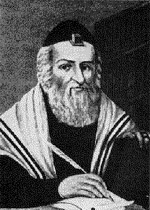
Gershom ben Judah
RabbiWikipedia
86
MENTIONS
35
EPISODES
15
PODCASTS
Search complete. 86 mentions across 35 episodes found for "Gershom ben Judah".
Sep 26, 2026

Aryeh LebowitzHOST
Only if it has simanim is it going to be motar.
Aryeh LebowitzHOST
So how much of the simanim would it need in order to be motar ba'akhila? Meaning, Rabbeinu Gershom explains, according to the Chachamim, anything that's yotze minatahar is automatically tar.
Aryeh LebowitzHOST
I don't care what the baby looks like.
Aryeh LebowitzHOST
It comes from a kosher animal, it's kosher.

Shalom RosnerHOST
Those would be called hornet honey or grasshopper honey, and that's why that's not what-- It's connected.
Shalom RosnerHOST
Rabbeinu Gershom said it's connected to the sheretz itself, and therefore, uh, that would not be the one that is, that is, uh, kosher.
Shalom RosnerHOST
[gulps] [thud] The Rambam, I saw some of the, uh, mefarshim talk about the da'as of Chazal here, where they know exactly how the honey was made, that the nectar was taken, and then it was put in the, uh [lips smack] it, it's deposited in the, in the, um, [paper rustles] in the honeycombs.
Shalom RosnerHOST
The Rambam says, "dvash devorim u-dvash serim mutar b'peshe'eino mitamtes gufan ela kosen oso me-al ha'asavim b'tok fihem," they gather it from their, from the grass, uh, from the flowers mi- in their mouths, "u-makiy os o son," and they spit it out, "b'kaveras k'dei sheyimtsu o oso le'echol mimen hu b'mos ha'shanam." So they have what to eat in the winter.

Moshe ElefantHOST
type of urine, and I saw two different approaches on Rishonim, how to understand what the Gemara means to say here.
Moshe ElefantHOST
Rabbeinu Gershom says that since people don't drink it, so certainly it's like perish, it's just like waste, and it's certainly mutter.
Moshe ElefantHOST
The Torah says that there's no question that, of course, that their usur, since they come back they come from a non-kosher animal, we're not allowed to drink it.
Moshe ElefantHOST
Another pshad is, the Gemara didn't focus on it because it's not a really relevant question.

Gideon RothsteinHOST
The Maharashidam is living in the 1500s and the Rashba lives in the 1200s.
Gideon RothsteinHOST
So the Rashba in the 1200s says that when Rabbeinu Gershom made his ruling to not marry two wives, that was only because the worry was that you'd have people who would be prutsi, who would just marry lots and lots of women, and you'd have a problem.
Gideon RothsteinHOST
We said last time also was worried that maybe he wouldn't be able to support her.
Gideon RothsteinHOST
But we just didn't want two marriages going on at the same time.
17 MINS LATER
Gideon RothsteinHOST
If you have a fully Jewish woman who leaves her husband, and then hired her into a non-Jewish household, and now she acts as a non-Jew, and she says she's not Jewish, she declares, you know, she has, sadly, in Qasr Shalom, a Attach yourself to this other religion, the Shiddur in the Yom Kippur said.
Gideon RothsteinHOST
He thinks that this husband can get married, in this case, clearly a second wife.
Gideon RothsteinHOST
It doesn't have to bear upon him because Rabbeinu Gershom certainly didn't mean to include that when a woman leaves the religion like this, that... that the husband should be stranded, right? Stranding Jews is nothing that we can imagine that somebody would create, that Ravina Gershon would mean to create a situation of stranding.
Gideon RothsteinHOST
So that would be all the more so, because in our situation, we don't even know if this first wife was Jewish at all, because we have doubts about her conversion.

David LapinHOST
This morning, two people who never met each other during their lifetime, as far as I know, met in my study and helped me understand an idea that I was picking up in a thread in Rabbeinu Gershom.
David LapinHOST
Now, remember, Rabbeinu Gershom is so critical that it was Rabbeinu Gershom who brought the Torah of Bavel to Europe, to Western Europe.
David LapinHOST
After the time of the Goenim, it was right at the very beginning of the period of the Rishonim.
David LapinHOST
And Rabbeinu Hananel did that in North Africa.
David LapinHOST
So you had these two great go'anim, Rabbeinu Gershom in Europe and Rabbeinu Hananel in Africa.
David LapinHOST
And they were the link between the go'anim of Bavel, that was the continuation of the period of the Gemara, and the dawn of the period of the Rishonim, both in North Africa and in Western Europe.
David LapinHOST
So these two people are crucially important.
David LapinHOST
There are many Mesechters, we've got them one of them, at least on the side of the Gemara here, and we've got Rabbeinu Gershom.

Aryeh LebowitzHOST
That was the accusation over here.
Aryeh LebowitzHOST
Rabbeinu Gershom, however, says, no, kuvyostos means a kidnapper, a goni v'nefashos.
Aryeh LebowitzHOST
That's what Rashi writes in Kiddush and Daf.
Aryeh LebowitzHOST
Yud Aleph and Ksubas and Masechas Chulun as well.
Aryeh LebowitzHOST
That was the accusation over here.
Aryeh LebowitzHOST
Rabbeinu Gershom, however, says, no, kovyostos means a kidnapper, a goni v'nefashos.
Aryeh LebowitzHOST
That's what Rashi writes in Kiddush and Daf, you're alif and subas and masechas as well and that's what rashbam writes in masechas but also says well wait a second uh why would we accuse him of being a kidnapper what does that have to do with money that was taken money that was collected and and doesn't seem to have been used so toast says no no there were two conversations that happened that were happening over here Ganav Hayah relates to how do you account for the discrepancy in the Maksa Shekel.
Aryeh LebowitzHOST
Kuvyustos Hayah is how do you relate to the discrepancy in the numbers of the Leviyim.

Darren PlatzkyHOST
I thought that there was a Rashi over here, but isn't...
Darren PlatzkyHOST
Uh, there's a, there's a, there's a Rabbeinu Gershom that says, [reading foreign language] That's what...
Darren PlatzkyHOST
That's just what Rabbi Eleazar saw.
Darren PlatzkyHOST
Rabbi Eleazar saw Rabbi Yochanan in his dream explaining this Pasuk, and that's Rabbi, that's Rabbi Yochanan's timer.

Shimon NeubortHOST
And this, of course, is only as far as biblical law is concerned.
Shimon NeubortHOST
However, Rabbeinu Gershom, about a thousand years ago, banned divorcing a woman against her will.
Shimon NeubortHOST
Gimel, the Torah further says in that verse, and he writes, that she can only be divorced if it is in writings.
Shimon NeubortHOST
The next word is La, to her or for her, Ushma.

Shimon NewbertHOST
And this, of course, is only as far as biblical law is concerned.
Shimon NewbertHOST
However, Rabbeinu Gershom, about a thousand years ago, banned divorcing a woman against her will.
Shimon NewbertHOST
Gimel, the Torah further says in that verse, and he writes, that she can only be divorced if it is in writings.
Shimon NewbertHOST
The next word is La, to her or for her, Ushma.
25 more episodes mention Gershom ben Judah.
Create an account to see the whole feed, search across every transcript, and follow the entities you care about.