German Empire
EmpireWikipedia
320
MENTIONS
129
EPISODES
100
PODCASTS
Search complete. 320 mentions across 129 episodes found for "German Empire".
Oct 28, 2026

Thomas777GUEST
know, he was very much observing these things, you know, kind of like in their epoch, you know, and he was very much, you know, if you want to talk about punctuated decline and crisis and, you know, what and kind of like, you know, a culture's self-conscious efforts to survive laid bare, not just amidst modernity, but amidst, you know, like an existential crisis relating to, you know, a power political event of truly kind of like world-seeking proportions.
Thomas777GUEST
I mean, that was the Great War, and that was the situation of the German Empire, and to a lesser degree, you know, the Austro-Hungarian, their Austro-Hungarian allies.
Thomas777GUEST
But, you know, that And there was not a lot of real scholarship about that that could be viewed as kind of the heir apparent to people like Fichte, in my opinion.
Thomas777GUEST
But beyond that, I mean, beyond Spengler's cultural resonance in his epoch, he was trying to answer the question, like, what was happening in Germany? There was some kind of collision going on between the way people understood themselves racially and historically.

ThomasGUEST
thinker but um my point is this kind of stuff came back into vogue like decades later but you know spangler he really was like an inner war theorist okay and that's one of the reasons why you know hitler wanted an audience with him you know kind of anybody's anybody in germany um you know people you know like like people on the far left you know like reactionary monarchist types you know hitler himself you know spangler was a man about town because he was up on something people viewed as profound But beyond that, I mean, aside from, you know, kind of the merit on its own terms of his sort of conceptual vision or his kind of theoretical model, you know, he was very much observing these things, you know, kind of like in their epoch, you know, and he was very much, you know, if you want to talk about punctuated decline and crisis and, you know, what and kind of like, you know, a culture's self-conscious efforts to survive laid bare, not just amidst modernity, but amidst, you know, like an existential crisis relating to, you know, a power political event of truly kind of like world-seeking proportions.
ThomasGUEST
I mean, that was the Great War, and that was the situation of the German Empire, and to a lesser degree, you know, the Austro-Hungarian, their Austro-Hungarian allies.
ThomasGUEST
But, you know, that There was not a lot of real scholarship about that that could be viewed as the heir apparent to people like Fichte, in my opinion.
ThomasGUEST
Beyond that, beyond Spengler's cultural resonance in his epoch, he was trying to answer the question, what was happening in Germany? There was some kind of collision going on between the way people understood themselves racially and historically And, you know, their ability to live in the world.

Christopher DillonHOST
So in January 1918, Leon Trotsky is the lead negotiator for the Bolsheviks.
Christopher DillonHOST
He spoke fluent German, and he negotiates the Treaty of Brest-Litovsk that ends the hostilities between the German Empire and Russia.
Christopher DillonHOST
So Russia is forced to give up a third of its population and a third of its agricultural land.
Christopher DillonHOST
This is a couple of very important consequences for the course of the German Revolution.

AbaiNARRATOR
END OF SECTION 7
Tom CrawfordNARRATOR
The Eclipse Observations In the history of science, the year 1919 is likely to be known, not as the year of the overthrow of the German Empire, but as the year of the overflow of Newton's law of gravitation.
Tom CrawfordNARRATOR
The British astronomers who went to Africa to observe the eclipse of the sun, May 29, 1919, came back with the proof that a ray of light passing close by the Sun is bent out of its straight course.
Tom CrawfordNARRATOR
The photographs taken during the six minutes when the Sun was shadowed show the surrounding stars in different positions from where they are seen when the Sun's disk is not in their midst.

Lynette CalkinsNARRATOR
Gertrude met him at dinner, danced with him, played whist with him, and dismissed him as noisy and rather funny.
Lynette CalkinsNARRATOR
Concerning Prince Bülow, who was to succeed Bismarck as Chancellor of the German Empire and to be the progenitor of the Great War, she was quite vague, referring to her first meeting with him among a list of guests as, And Mr. Bülow, who I think is an Austrian diplomat, all nice people.
Lynette CalkinsNARRATOR
Later, she conceded that Bülow was the German Minister, but said a great deal more about his beautiful Italian wife.
Lynette CalkinsNARRATOR
Mr. Harding, a secretary at the British legation in Constantinople, she liked.

Tim O'CallaghanHOST
However, only one in five of the pigeons were successful, with the Prussians using hawks to intercept them.
Tim O'CallaghanHOST
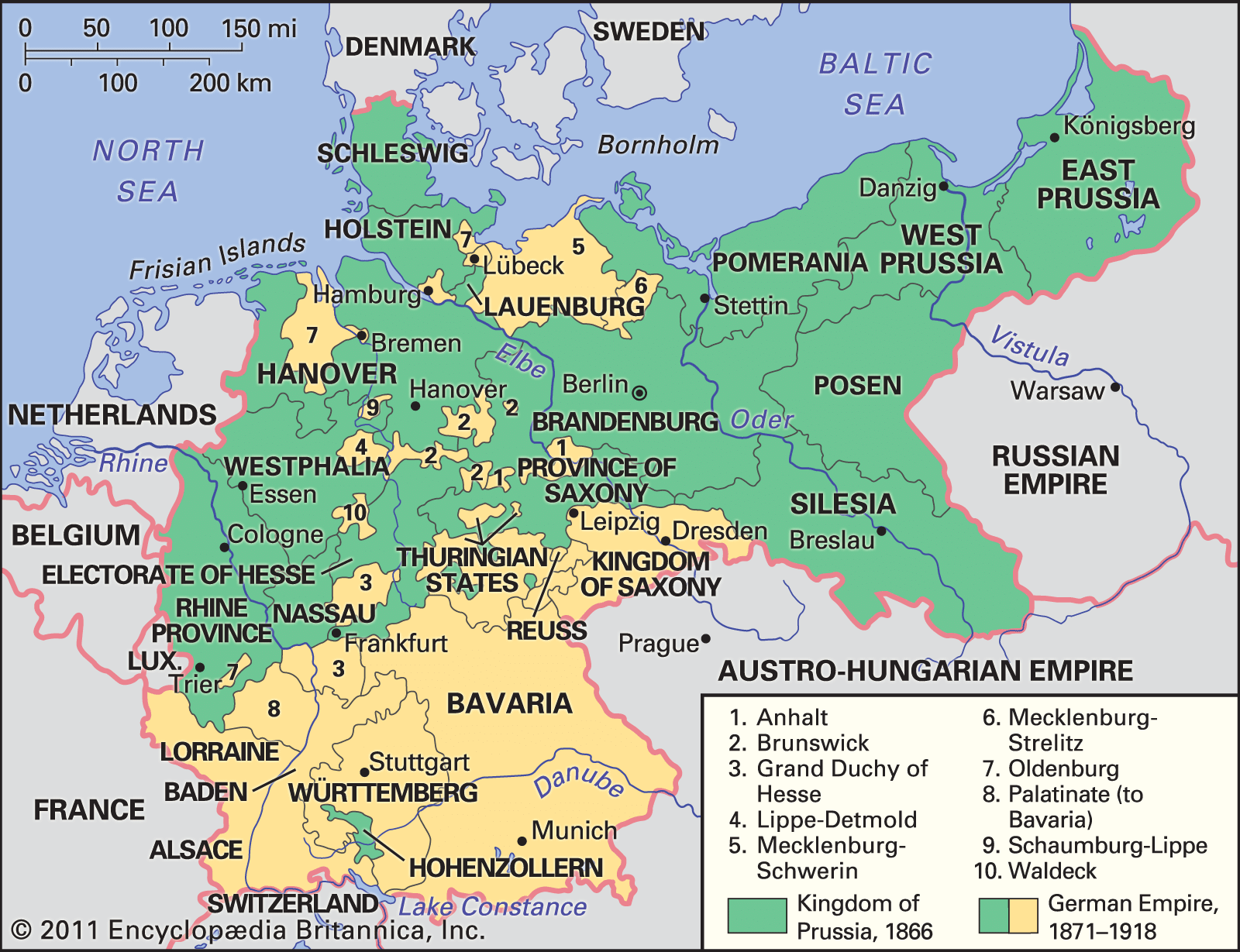
In January 1871, Bismarck's hopes of a unified Germany were realised as the German Empire was declared at the Palace of Versailles, just outside Paris.
Tim O'CallaghanHOST
He then ordered his army to bombard the city, and on the 28th of January, the Parisians surrendered.
Tim O'CallaghanHOST
Food and aid flooded into the city following the armistice, and a peace treaty was signed in Frankfurt in May 1871 between France and the now newly unified Germany.
Matthew Raphael JohnsonGUEST
Keep in mind that universally hated, he's being absolutely sarcastic there.
Matthew Raphael JohnsonGUEST
Remember, it was the Russian Empire that put the emperor of Austria-Hungary back on his throne that defended the German Empire prior to the war, of course.
Matthew Raphael JohnsonGUEST
That was one of the only countries in Europe that didn't hate the idea of German unification.
Matthew Raphael JohnsonGUEST
So he's being very sarcastic there.

speaker_6NARRATOR
His name, Karl Wolf, the SS general who betrayed Hitler.
speaker_6NARRATOR
The man known to history as Karl Wolff was born on the 13th of May 1900 in the city of Darmstadt in the Hessen region of the German Empire.
speaker_6NARRATOR
His full baptismal name was Karl Friedrich Otto Wolff.
speaker_6NARRATOR
Karl was named after his father.
speaker_6NARRATOR
And, quite incredibly, given his youth, he was rapidly promoted to become a lieutenant.
speaker_6NARRATOR
Nevertheless, the first foray into military life would be short-lived.
speaker_6NARRATOR
In November 1918, As the German Empire collapsed at home and Kaiser Wilhelm II abdicated his throne, an armistice was agreed between Germany and the main Entente powers.
speaker_6NARRATOR
The First World War was at an end, and young men like Karl Wolf began making their way home to a country that was collapsing into chaos.
Matthew Raphael JohnsonGUEST
Keep in mind that universally hated, he's being absolutely sarcastic there.
Matthew Raphael JohnsonGUEST
Remember, it was the Russian Empire that put the emperor of Austria-Hungary back on his throne that defended the German Empire prior to the war, of course.
Matthew Raphael JohnsonGUEST
That was one of the only countries in Europe that didn't hate the idea of German unification.
Matthew Raphael JohnsonGUEST
So he's being very sarcastic there.

Tony RobinsonNARRATOR
In the midst of turmoil, Hitler rose to power in Germany, promising to erase the humiliation of the nation's World War I defeat.
Tony RobinsonNARRATOR
His aim was not just regaining territories lost after Versailles, but expanding the German Empire into Eastern Europe.
Tony RobinsonNARRATOR
Germany's expansionism between 1936 and 1939, first in the Rhineland, then in Austria and Czechoslovakia, went unchallenged by the world's leaders.
Tony RobinsonNARRATOR
Hitler next turned his sights on Poland.
119 more episodes mention German Empire.
Create an account to see the whole feed, search across every transcript, and follow the entities you care about.