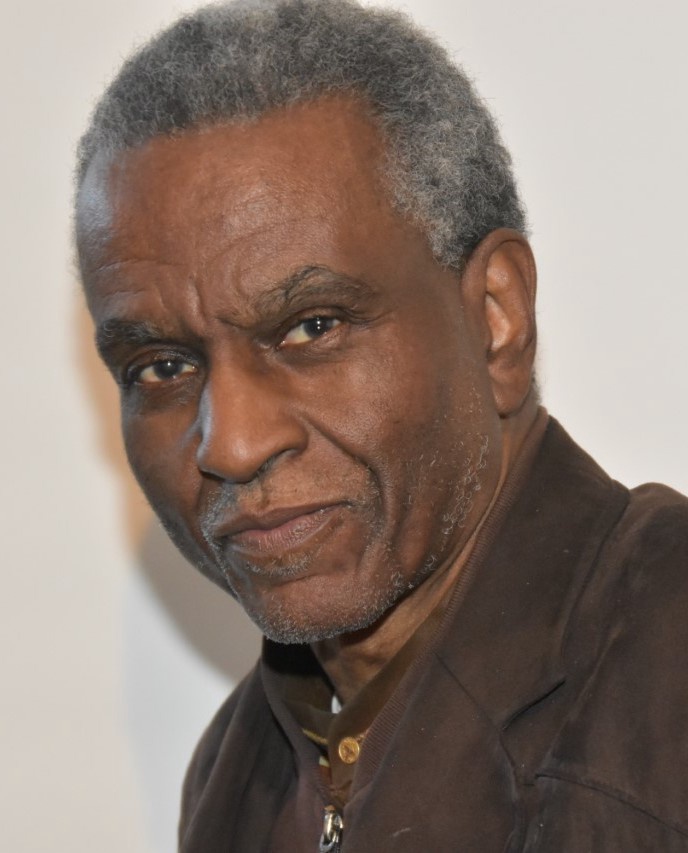
Gerald Horne
American historian and writerWikipedia
15
MENTIONS
10
EPISODES
9
PODCASTS
Search complete. 15 mentions across 10 episodes found for "Gerald Horne".
Sep 25, 2026

Amin TMKHOST
and follow the british empire and then the nazis and you know fascist japan
Denzel CaldwellGUEST
nazis nazis like we wish we could do that You know what I mean? Like when Gerald Horne said that, you know, it's actually more historically accurate to call neo-Nazis neo-Americans.
Denzel CaldwellGUEST
That shows you how how dastardly this empire has perfected this type of violence.
Denzel CaldwellGUEST
So, yeah, I'm with you.

Edward BloomHOST
I'll give you just one quick example.
Edward BloomHOST
I had my graduate students this semester read some chapters from Gerald Horne's Counter-Revolution of 1776.
Edward BloomHOST
And Gerald Horne's such an interesting scholar, such a polymath, and makes a lot of fascinating points in that book.
Edward BloomHOST
But my students loved it.
Edward BloomHOST
It felt to them like the British had the high ground and the colonists had the low ground, were the bad guys.

Edward BlumHOST
I'll give you just one quick example.
Edward BlumHOST
I had my graduate students this semester read some chapters from Gerald Horne's Counter-Revolution of 1776.
Edward BlumHOST
And Gerald Horne's such an interesting scholar, such a polymath and makes a lot of fascinating points in that book.
Edward BlumHOST
But my students loved it.
Edward BlumHOST
It felt to them like the British had the high ground and the colonists had the low ground, were the bad guys.

speaker_2SOUNDBITE_SPEAKER
Proud to be black men.
Walter TurnerHOST
Dr. Gerald Horne is the John Jay and Rebecca Moore's Chair of History and American Studies at the University of Houston.
Walter TurnerHOST
His research addresses issues of race, internationalism, politics, civil rights, and the global connection between developments in Asia, Africa, the United States, and Europe.
Walter TurnerHOST
In the last two years, Dr. Horne has penned several books focusing on the Americas, Race to the Revolution, The U.S. and Cuba During Slavery, and Jim Crow.
34 MINS LATER
Gerald HorneGUEST
But by that time, you have the Jewish population that had fled from the Iberian Peninsula to the Netherlands, to Brazil, then to Jamaica, and then to Manhattan.
Gerald HorneGUEST
Okay.
Walter TurnerHOST
We're speaking with Dr. Gerald Horne.
Walter TurnerHOST
He is John Jay and Rebecca Moore's Chair of History and American Studies at the University of Houston.

Carl NelsonHOST
Yeah, I'm glad you mentioned Germany.
Carl NelsonHOST
I got tweets from a couple of our listeners out in London that wanted me to get in touch with Gerald Horne because the Reform Party there, which is right of the right wing party, the conservative party in the UK, they've gotten...
Carl NelsonHOST
Billions of dollars from an American crypto person and adding fuel to the fire there to foment what's going on in the UK.
Carl NelsonHOST
And they're concerned.
Carl NelsonHOST
They're watching to see how their people will deal with it if they reject this new reform party.
Carl NelsonHOST
led by Nigel Farage, if they're going to, and this is a question they asked me to ask Dr. Horne, so next time Gerald Horne is on, we're going to deal with this issue for them.
Carl NelsonHOST
But yeah, because that money too, they're coming to influence British elections, just like what they possibly probably did in Germany.
Carl NelsonHOST
So it is a global
Carl NelsonHOST
Right.
Carl NelsonHOST
And there's some things going on in Trinidad and Tobago that most of the folks, you know, Dr. Gerald Horne shares with us some of the problems or some of the issues, I have to say, that are taking place there now with your prime minister is sort of a cozying up to Donald Trump and that has sort of ruffled some feathers with the rest of the Caribbean nations.
Carl NelsonHOST
Can you share what's going on with us, with the family?
David AbdullahGUEST
Yes, sure.

Nick ShepleyHOST
A minority oppressed for centuries would not exchange racial loyalties for class ones so easily.
Nick ShepleyHOST
Liberal and radical African-American scholars such as Gerald Horne and Manning Marable highlighted the extent to which African-Americans who comprised a disproportionately high percentage of inner city residents experienced much higher levels of crime, poverty and deprivation than their white counterparts.
Nick ShepleyHOST
Other studies of the 1990s demonstrated the alarming extent of both individuals and institutionalized racism in America in American law enforcement agencies.
Nick ShepleyHOST
Well, the human cost of inner city decay was made clear in a series of revelations by journalists and street gang members, which showed the disturbing levels of alienation and violence in ghetto youth culture.

Chris de PloegGUEST
because you can kind of redistribute the land, you can kind of recreate a kind of solidarity based on whiteness against the indigenous population, and obviously in the case of the United States, against the enslaved.
Chris de PloegGUEST
And we see this, whether it's the United States, whether it was Australia, Gerald Horne has done a lot of great work on this, especially in terms of the United States, where you see that in Europe, people are constantly fighting each other, whether it's along class lines, along religious lines, but within the United States, they can kind of find this new solidarity.
Chris de PloegGUEST
based on whiteness.
Chris de PloegGUEST
And because the class tensions are kind of diffused there, they've also become much more effective imperialists outside of their own borders.

Jason MilesHOST
Warren hates hip hop.
Jason MilesHOST
I challenge anyone that there's so many Gerald Horne fans because of the 1776 book, but you know, read what he had to say about rap.
Jason MilesHOST
Not a fan.
Jason MilesHOST
Stanley Crouch, you know, he's a bit of a conservative, but still those guys were not fans of

Gautham RaoGUEST
There are-- There is a tradition that is informed in the mid-twentieth century by Marxism, you know, thinking of Herbert Aptheker, and then up through, you know, in, in-- when we get into African American studies, uh, uh, understanding slave revolts in, in a much more central [inhales] way to the American story.
Gautham RaoGUEST
So, uh, Gerald Horne's work comes to mind here as a good example.
Gautham RaoGUEST
So there, there are certainly examples of people who are thinking of things, uh, in this way.
Gautham RaoGUEST
But, you know, I do think there, there had been a, a disjuncture between the consensus historians' understanding of what American history was and what exceptions to that story were, or perhaps side stories, and that was, you know, heavily white middle class story.