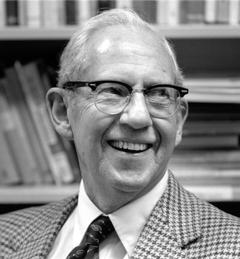
George Stigler
American economistWikipedia
12
MENTIONS
12
EPISODES
10
PODCASTS
Search complete. 12 mentions across 12 episodes found for "George Stigler".
Sep 18, 2026

Ann CoulterGUEST
Regulation will stop new, their competitors from even getting into the market.
Ann CoulterGUEST
Um, this was described by the Nobel Prize-winning economist George J. Stigler.
Ann CoulterGUEST
Um, he won the Nobel Prize for this, you know, 30 years ago.
Ann CoulterGUEST
W- do we have to keep relearning this? Um, what they're trying to do is drive their m- market price up.
Ann CoulterGUEST
Regulation will stop- ... knew their competitors from even getting into the market.
Ann CoulterGUEST
Um, this was described by the Nobel Prize-winning economist George Stigler.
Ann CoulterGUEST
Um, he won the Nobel Prize for this, you know, 30 years ago.
Ann CoulterGUEST
W- do we have to keep relearning this? Um, what they're trying to do is drive their m- market price up.

Tom HaughHOST
So it's not in Daly's pocket, but it's in all these other guys' pockets.
Tom HaughHOST
Now, as George Stigler used to say, if there actually was a serious auction, a serious bid process, where everybody got their 10%, 15%, 20% profit, whatever it happens to be in that particular industry, when that phone call happens, the guy goes, what are you talking about? You paid fair price.
Tom HaughHOST
There's nothing there.
Tom HaughHOST
There's no VIG.

speaker_0HOST
A former Anthropic employee, Jacob Coxon, has taken to the airwaves warning that AI could, in his words, kill us all.
speaker_0HOST
As Coulter reports, this catastrophizing follows a well-worn pattern first identified by Nobel laureate economist George Stigler more than 50 years ago.
speaker_0HOST
Large incumbents love regulation because compliance costs act as a moat, blocking smaller competitors from entering the market.
speaker_0HOST
She traces the same script through the old airline cartel.
Tom HaughHOST
The, uh, the idea that our politicians and, and, and, and probably because the, you know, the politicians ...
Tom HaughHOST
What did George Stigler say? "Politics is a business, you just don't understand the business."
John FlanniganPANELIST
Mm-hmm.
Tom HaughHOST
Um, the idea of, you know, I'll use the term Pritzker's wife, and I don't know if she does this, I assume she does, would, would buy a TV online f- you know, and, and not pay tax on it is e- extraordinary to me.

Shelley LundbergGUEST
Other social scientists should do that, um, which amounts to the same thing in some sense.
Shelley LundbergGUEST
Um, so there's an old paper by, uh, Gary Becker and George Stigler, uh, well-known economists, who say explicitly economists should simply assume that preferences are stable and they're kinda similar across people.
Shelley LundbergGUEST
'Cause what we really want to do is to predict changes in and variations in behavior in terms of the constraints that people face, their prices, their wage rate, the regulations surrounding the markets in which they operate.
Shelley LundbergGUEST
And that view is not so extreme now, um, but I think we're still hanging on to a field that's called welfare economics, which is our framework for assessing the impacts of policies.

Shelley LundbergGUEST
Other social scientists should do that, um, which amounts to the same thing in some sense.
Shelley LundbergGUEST
Um, so there's an old paper by, uh, Gary Becker and George Stigler, uh, well-known economists, who say explicitly economists should simply assume that preferences are stable, and they're kinda similar across people.
Shelley LundbergGUEST
'Cause what we really want to do is to predict changes in and variations in behavior in terms of the constraints that people face, their prices, their wage rate, the regulations surrounding the markets in which they operate.
Shelley LundbergGUEST
And that view is not so extreme now, um, but I think we're still hanging on to a field that's called welfare economics, which is our framework for assessing the impacts of policies.

Shelley LundbergGUEST
Other social scientists should do that, um, which amounts to the same thing in some sense.
Shelley LundbergGUEST
Um, so there's an old paper by, uh, Gary Becker and George Stigler, uh, well-known economists, who say explicitly economists should simply assume that preferences are stable and they're kinda similar across people.
Shelley LundbergGUEST
'Cause what we really want to do is to predict changes in and variations in behavior in terms of the constraints that people face, their prices, their wage rate, the regulations surrounding the markets in which they operate.
Shelley LundbergGUEST
And that view is not so extreme now, um, but I think we're still hanging on to a field that's called welfare economics, which is our framework for assessing the impacts of policies.

Shelley LundbergGUEST
Which amounts to the same thing in some sense.
Shelley LundbergGUEST
So there's an old paper by Gary Becker and George Stigler, well-known economists, who say explicitly economists should simply assume that preferences are stable and they're kind of similar across people.
Shelley LundbergGUEST
Because what we really want to do is to predict changes in and variations in behavior in terms of the constraints that people face, their prices, their wage rate, the regulations surrounding the markets in which they operate.
Shelley LundbergGUEST
And that view is not so extreme now, but I think we're still hanging on to a field that's called welfare economics, which is our framework for assessing the impacts of policies.

Shelley LundbergGUEST
Other social scientists should do that, um, which amounts to the same thing in some sense.
Shelley LundbergGUEST
Um, so there's an old paper by, uh- Gary Becker and George Stigler, uh, well-known economists who say explicitly economists should simply assume that preferences are stable and they're kinda similar across people.
Shelley LundbergGUEST
'Cause what we really want to do is to predict changes in and variations in behavior in terms of the constraints that people face, their prices, their wage rate, the regulations surrounding the markets in which they operate.
Shelley LundbergGUEST
And that view is not so extreme now, um, but I think we're still hanging on to a field that's called welfare economics, which is our framework for assessing the impacts of policies.
2 more episodes mention George Stigler.
Create an account to see the whole feed, search across every transcript, and follow the entities you care about.