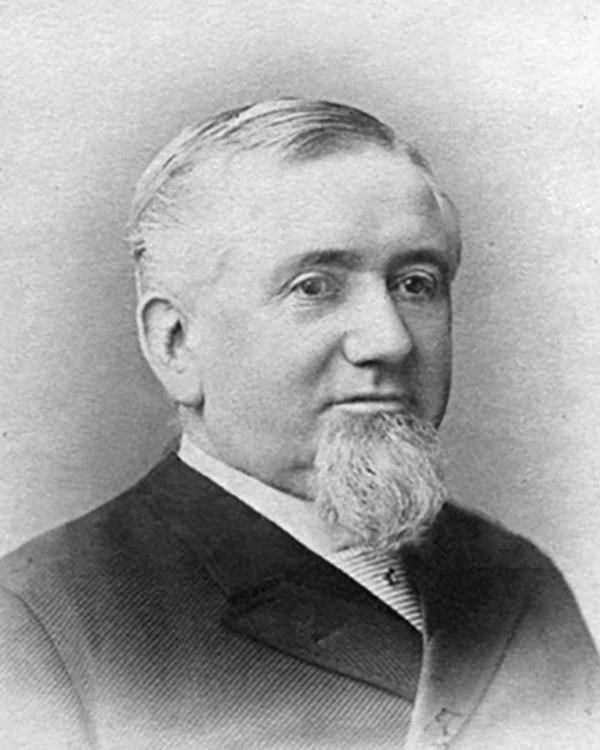
George Pullman
American engineer and industrialistWikipedia
81
MENTIONS
14
EPISODES
12
PODCASTS
Search complete. 81 mentions across 14 episodes found for "George Pullman".
Sep 15, 2026

Clint SmithHOST
And this is where things really took off.
Clint SmithHOST
See, in 1867, just two years after the end of the Civil War, a white man named George Pullman founded the Pullman Company.
Clint SmithHOST
This company specialized in manufacturing luxury passenger cars for trains.
Clint SmithHOST
As the Pullman Company monopolized the train car...

Troy SenikGUEST
But in the second term, adopts a somewhat more aggressive posture, but it's mostly in the use of executive power in sort of outside settings.
Troy SenikGUEST
For instance, when he sends federal troops to Chicago for the Pullman strike, it's not as much in the relationship with Congress.
Troy SenikGUEST
Cleveland is actually quite content most of the time.
Troy SenikGUEST
I mean, there will be some light political pressure applied, like by our current standards to members of Congress.
7 MINS LATER
Troy SenikGUEST
They're becoming more populous.
John BatchelorHOST
This is the Gilded Age.
John BatchelorHOST
This is when extremely well-to-do men like George Pullman.
John BatchelorHOST
will vouchsafe the firing into crowds by federal troops and call it law and order.

Paul PrescottGUEST
And, you know, starting at a time where the Black press, Black churches were against unions.
Paul PrescottGUEST
They were saying, "No, Henry Ford is hiring us." D- you know, "George Pullman's hiring us." And he slowly just built up connections in churches, YMCA, YWCA, uh, fraternal organizations.
Paul PrescottGUEST
Slowly, slowly, slowly building.
Paul PrescottGUEST
And the networks developed in the '30s and '40s, a lot of those same people were kind of anchoring the movement in the '50s and '60s.

Bill FedererGUEST
But the Pullman Railroad Car Company, as you alluded to, was great.
Bill FedererGUEST
George Pullman had a big factory, and he built neighborhoods around it for the workers to live in so they didn't have to transport all the way from their home to the work.
Bill FedererGUEST
They would just live next to the factory.
Bill FedererGUEST
And he had shops where the people could shop.

speaker_3HOST
We're digging through U.S. Department of Labor archives that detail the chaotic birth of the holiday.
speaker_3HOST
We've got historical accounts of the 1894 Pullman strike, a fascinating Forbes breakdown exploring the ideological war between the global May Day and the American Labor Day, and even some cultural reflections on how the American public eventually traded, you know, barricades for barbecues.
speaker_4HOST
The archival material is especially revealing, I think, because it highlights this massive cognitive dissonance.
speaker_5HOST
Yeah.
19 MINS LATER
speaker_4HOST
To understand the crisis that forced the creation of the Federal Labor Day, we have to move our timeline forward to 1893, and we have to shift our focus from New York City to the industrial heartland just outside Chicago, Illinois.
speaker_3HOST
Yeah.
speaker_4HOST
We need to examine the empire of George Pullman.
speaker_3HOST
George Pullman is a titan of the Gilded Age.

Evan LindmanHOST
So this timing, guys, it wasn't random.
Evan LindmanHOST
It came right after the Pullman strike that same year, which turned deadly.
Evan LindmanHOST
Basically, and here's some history here of the Pullman strike here, guys.
Evan LindmanHOST
This will be like a little bit long, but it's really cool.
Evan LindmanHOST
The Pullman strike started at the Pullman Palace Car Company in Chicago, which made railroad cars.
Evan LindmanHOST
George Pullman had built an entire company town for his workers.
Evan LindmanHOST
Interesting.
Evan LindmanHOST
An entire town for his workers.

CDAHOST
They
XOHOST
worked brutally long hours, were expected to respond to being called George, the first name of George Pullman, regardless of their actual names, and were paid poverty wages supplemented by tips from white passengers.
XOHOST
A. Philip Randolph spent 12 years organizing the Brotherhood.
XOHOST
fighting the Pullman Company, fighting the government, fighting the AFL, which initially refused to recognize
XOHOST
Absolutely.
XOHOST
If
CDAHOST
you're working for George Pullman, your name is George.
CDAHOST
That's how everybody

ChristinaHOST
We probably could have done a whole episode on this.
ChristinaHOST
So George Pullman, whom the strike is named after, was a wealthy business owner of a train car company.
ChristinaHOST
You might have heard of like Pullman cars.
ChristinaHOST
They were kind of like nice train cars where you could like travel in it.
ChristinaHOST
So he kind of owned this town and his workers who worked on the railroad and made these train cars all lived there.
ChristinaHOST
Well, there was a recession in the 1890s and business wasn't doing that well.
ChristinaHOST
So George Pullman laid off a lot of workers in the town that he owned, where the only job you could get was pretty much on the railroad.
ChristinaHOST
And the people he didn't lay off, he cut wages by 30%.

Rob MarkHOST
The boycott so severely damaged the rail industry across the U.S. that it positively shifted the power balance toward unions.
Rob MarkHOST
Pullman rail car tycoon George M. Pullman of Chicago refused to negotiate with his workers, most of whom were already working 16-hour days.
Rob MarkHOST
He fired thousands of them and imposed a 25% wage cut on the rest, exacerbating an economic depression that had begun the year before.
Rob MarkHOST
Some of the picket lines became so violent with pro- and anti-union arguments that President Cleveland dispatched 8,000 federal troops to control the situation.

Scott HinkleNARRATOR
Meanwhile, the employers were meeting.
Scott HinkleNARRATOR
They met in the mansion of George M. Pullman on Prairie Avenue or in the residence of Wirt Dexter, an able corporation lawyer.
Scott HinkleNARRATOR
They discussed means of killing the eight-hour movement, which was to be ushered in by a general strike.
Scott HinkleNARRATOR
They discussed methods of dispersing the meetings of the anarchists.
4 more episodes mention George Pullman.
Create an account to see the whole feed, search across every transcript, and follow the entities you care about.