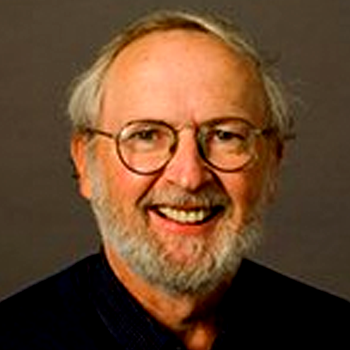
George Marsden
American historianWikipedia
21
MENTIONS
9
EPISODES
8
PODCASTS
Search complete. 21 mentions across 9 episodes found for "George Marsden".
Oct 15, 2026

John MuetherGUEST
Um, he's sort of a historian.
John MuetherGUEST
Uh, and this is, was actually began as his dissertation at Notre Dame under George Marsden.
John MuetherGUEST
But he talks, he describes the contemporary evangelical church today as beset with juvenilization.
John MuetherGUEST
And, um, this is how he defends, defines this term.

Andrew M. HenryHOST
Starting in 1910, a Protestant Christian group published a series of essays called The Fundamentals that stipulated what all Christians should believe, though through a Protestant lens.
Andrew M. HenryHOST
According to the historian George Marsden, Protestant fundamentalism really took off in the 1920s, though, as a reactionary backlash against modernism, a backlash against the theory of evolution, growing popularity of liberal theology, and biblical critical scholarship.
Andrew M. HenryHOST
As you might have picked up in this video, the publication of new Bible translations was the animating force behind the King James Onlyist movement.
Andrew M. HenryHOST
All of the criticism was leveled against scholarly critical editions, but scholars of fundamentalism in recent years have modified Marsden's anti-modernism theory.
Andrew M. HenryHOST
For example, the historian Margret Bentroth notes that Christian fundamentalism is selectively anti-modernist.
Andrew M. HenryHOST
Christian fundamentalists are often on the cutting edge of technology, from radio to television, and now even TikTok.
Andrew M. HenryHOST
Moreover, fundamentalists are not isolationists, as Marsden suggested.
Andrew M. HenryHOST
Other historians, like Matthew Avery Sutton, argue they have consistently worked to reform and transform their culture in ways that match their beliefs and ideologies, which is what we see with the modern Christian nationalist movement in American politics.

Paul VanderKlayHOST
Um, and then also, I don't know, were you a part of the, um, the blogging moment where you had of...
Paul VanderKlayHOST
So Alia Marsden, um, is in my cohort here.
Paul VanderKlayHOST
She had been, she had been blogging as a woman, a fe-- you know, woman Christian, this whole blogging thing, and then there was that moment when somebody basically said, "Hey, wait a minute.
Paul VanderKlayHOST
These women bloggers are pro-"
24 MINS LATER
Paul VanderKlayHOST
Mid-20 teens, especially with the election of Donald Trump, everything sort of comes apart in terms of that expectation.
Paul VanderKlayHOST
And I, you know, I think Calvin, Calvin University with the...
Paul VanderKlayHOST
Because it is owned by the Christian Reformed Church, um, you know, when the Christian Reformed Church took this strong turn towards a renewed confessionalism, and one might argue, say, a young, restless, and reformed confessionalism, as opposed to, let's say, the 1970s with Waltersdorf and Plantinga and Marsden and Mao, a much more open, and with Mao especially, sort of an open evangelicalism, um, you know, this-- these are the waters that are, that, that a place like CT has to navigate on, on top of the fact of what you talked about earlier, that, you know, journalistically, CT, I'm sure, was doing very well, and then now everything in terms of print journalism has to adjust with respect to the internet.
Paul VanderKlayHOST
So I don't know.

Kate BowlerHOST
Y- you're here at Duke.
Kate BowlerHOST
You're working with George Marsden.
Kate BowlerHOST
Some of you might not know the name George Marsden.
Kate BowlerHOST
He was a historian who really laid the groundwork for how we understand, um, conservative Protestantism.
Kate BowlerHOST
It used to be that we would, uh, that w- this group, this is like a very broad picture, but a group we now refer to as fundamentalists had largely retreated from popular culture.
Kate BowlerHOST
I see.
Diana Butler BassGUEST
And so, uh, I graduated from college in 1981, went to seminary in 1982.
Diana Butler BassGUEST
George Marsden, who became my graduate advisor, wrote a book called Fundamentalism and American Culture in 1980.

John SimonHOST
So this...
John SimonHOST
Have you ever heard of George Marsden?
Taylor TreadwayHOST
I've heard of James Marsden.
John SimonHOST
Cyclops? [laughs]
John SimonHOST
No, I don't think so.
Taylor TreadwayHOST
Oh, yeah.
John SimonHOST
Uh, George Marsden was a, I think he was a Calvin College church history professor.
John SimonHOST
Um, studied at a few, I think he studied at Westminster, so he's, he's, you know, he's been out there.

Bryan DawsonHOST
... objectively bad.
Zach CarterGUEST
Yeah, you're, um, you've highlighted on something that, uh, George Marsden describes in the early 20th century, um, that, uh...
Zach CarterGUEST
Ca- and you mentioned evangelicalism early.
Zach CarterGUEST
Evangelicalism is a really complicated, uh-
Zach CarterGUEST
But-
Bryan DawsonHOST
Sure
Zach CarterGUEST
... uh, George Marsden talks about that period in the early 20th century, the fundamentalism modernist controversies, when-
Bryan DawsonHOST
Yeah

Bryan DawsonHOST
Homosexuality, transgenderism, communism, secular humanism, radical LGBTQ nonsense, the sexualization of children, promiscuity, all of these things, wherever you land, if you're filled with the Spirit of God, going to a church that's preaching His Word, you should know and be able to see and see that these things are objectively bad and the way to fight back against that is to create more Christians, right, that realize that that's objectively bad.
Zach CarterGUEST
Yeah, you've highlighted on something that George Marsden describes in the early 20th century that, and you mentioned evangelicalism early.
Zach CarterGUEST
Evangelicalism is a really complicated nomenclature because there's the way that like, I would define it in my particular domain, and then there's the way like the Washington Post defines it, and those are mutually exclusive in a lot of ways.
Zach CarterGUEST
But George Marsden talks about that period in the early 20th century, the fundamentalism modernist controversies when modernism really begins to threaten society.
Zach CarterGUEST
and revised society at the turn of the 19th century into the 20th.
Zach CarterGUEST
And so he describes the process where all these disparate groups, many like you highlighted, Pentecostals, for example, and found themselves on the same side of cultural issues as people that they would not have necessarily admitted into church membership.

Felicia Wu SongGUEST
some other ways of engaging scriptures and imagining who God is.
Felicia Wu SongGUEST
And it was in college that I read George Marston's book about fundamentalism that I had this kind of thunderous moment of, this is my church and what's a group of Chinese people doing here? inhabiting this very American particular moment in America.
Felicia Wu SongGUEST
Like it was just, I don't know.
Felicia Wu SongGUEST
It was a moment of disclosure for me.
Paul VanderKlayHOST
And in fact, the great phrase in our culture about this is, I'm a professional, which means I'm sold into the institution.
Paul VanderKlayHOST
You read George Marsden's The Twilight of the American Enlightenment, where he where he talks about the early post-war period.
Paul VanderKlayHOST
Great little book based on a series of lectures that George Marsden gave.
Paul VanderKlayHOST
And he talks about this anxiety in the 50s about the corporate man.
Paul VanderKlayHOST
And you can imagine that because after this this enormous, traumatic, world-shaking period, which is the First and Second World War, the Great Depression and in between.