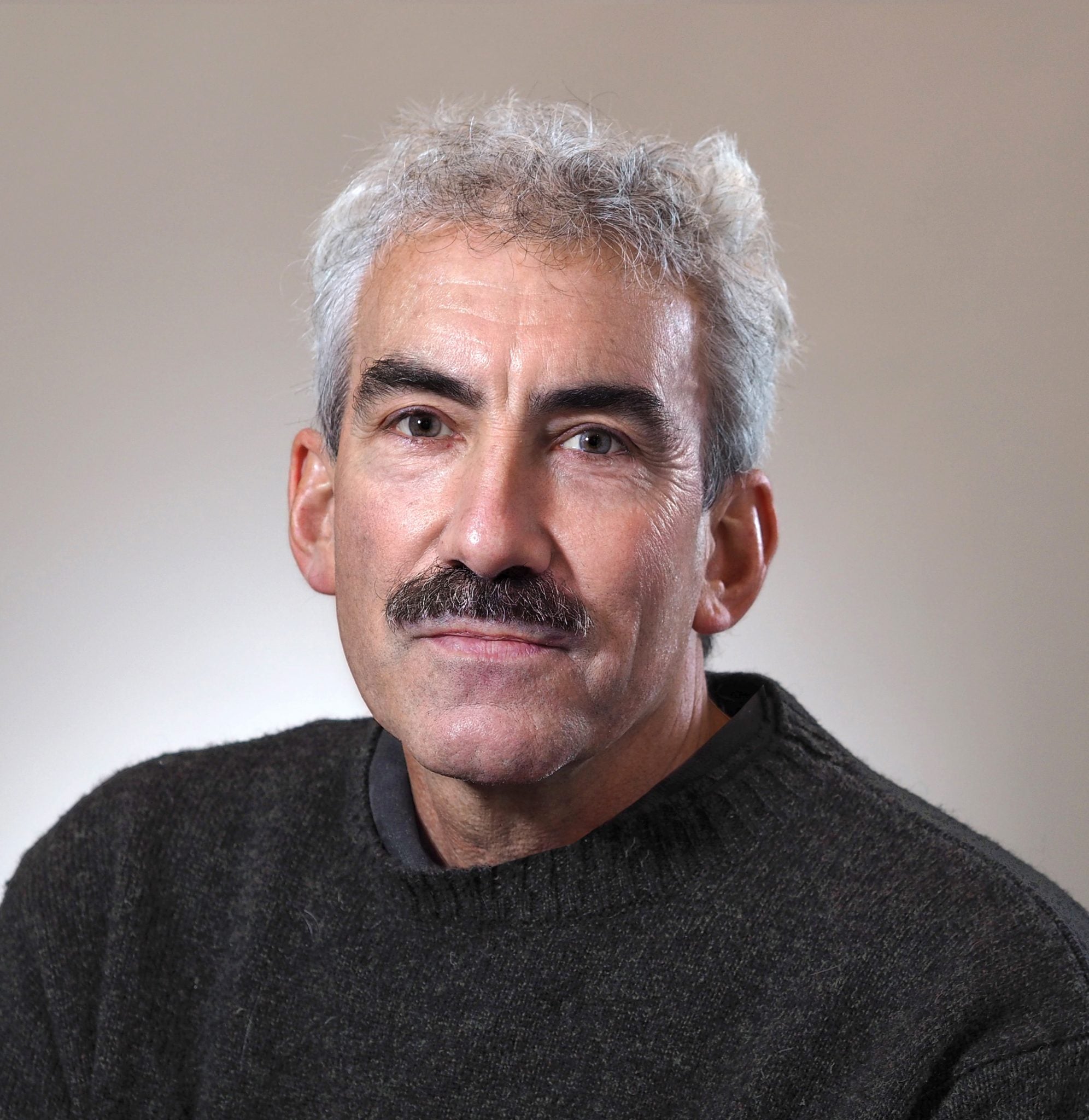
George Loewenstein
American economistWikipedia
12
MENTIONS
12
EPISODES
12
PODCASTS
Search complete. 12 mentions across 12 episodes found for "George Loewenstein".
Sep 6, 2026

Stephen DubnerHOST
[laughs]
Angela DuckworthHOST
George Loewenstein is a behavioral economist, and he wrote this paper in the '80s about anticipatory utility.
Angela DuckworthHOST
The novel idea was that we don't only wanna think about your utility from what you're consuming at the moment but also the anticipation of consuming something in the future can provide utility today.
Angela DuckworthHOST
It's like the future version of savoring.

Tiffany GrimesHOST
So stick with me.
Tiffany GrimesHOST
Researcher George Lowenstein has studied what happens when we make predictions and decisions across different emotional states.
Tiffany GrimesHOST
So this is so fascinating to me.
Tiffany GrimesHOST
When we're in what researchers call a hot state, so we can identify that with being angry or afraid or high stress, in pain or craving something, we tend to underestimate how much that temporary state is influencing what we want and what we're likely to do.

speaker_2HOST
Which actually brings up something I wanted to run by you.
speaker_2HOST
What's that? There's this concept in psychology called the information gap theory of curiosity, coined by George Lowenstein back in the early 90s.
speaker_2HOST
Oh,
speaker_3HOST
yes.

Sarah SchauerHOST
Before we go any further, I seriously regret not picking up this book.
Sarah SchauerHOST
It's called It's On You, How Corporations and Behavioral Scientists Have Convinced Us We're to Blame for Society's Deepest Problems by Nick Chatter and George Lowenstein.
Sarah SchauerHOST
And this is what I fucking mean by do not ever beat yourself up for your health problems.
Sarah SchauerHOST
This is a known carcinogen.

CornHOST
about a pillow.
CornHOST
George Lowenstein, 1994 Information Gap Theory The core insight is that curiosity isn't a pleasant state of wonder.
CornHOST
It's the discomfort of knowing you don't know something.
CornHOST
It's a cognitive itch.

Julia MinsonGUEST
And there is research on it.
Julia MinsonGUEST
So Maurice Schweitzer, for example, does research on apologies and Shereen Chandra and George Lowenstein do research on apologies.
Julia MinsonGUEST
And, you know, apologies are incredibly powerful, sort of.
Julia MinsonGUEST
Surprisingly powerful in that when you say, you know, I'm sorry, I did that wrong.

Mike HardenbrookHOST
There's a behavioral science idea that helps explain part of this.
Mike HardenbrookHOST
George Loewenstein calls it a hot-cold empathy gap.
Mike HardenbrookHOST
Basically, when we're in one state, we're surprisingly bad at predicting how much another state will change what we want.
Mike HardenbrookHOST
There was this study with smokers where people weren't craving a cigarette, and they underestimated how valuable that cigarette would feel later when they actually were craving one.

Richard ShottonHOST
So there's an amazing set of studies, you know, both in the financial world and the medical world.
Richard ShottonHOST
Um, George Loewenstein at Carnegie Mellon did the, the, the first ones, which show that- If you make people feel too guilty or too scared or, or, uh, too worried, often what they do is behave like the, the metaphorical ostrich, and they, they stick their, their head in the sand.
Richard ShottonHOST
So what I love about that as an argument is reframing the same problem from one which is guilt-inducing or, um, sorrow-inducing to something that gives an element of, of, of positivity, yet still leaving a very clear role for the, the donor to get involved.
Richard ShottonHOST
It's, I think it's a, a brilliant insight.

Mike KnightHOST
Those thoughts can make a substantial investment feel more proportionate.
Mike KnightHOST
Another striking study came from Dan Ariely, George Loewenstein, and Drazen Prelec.
Mike KnightHOST
Participants were asked whether they would pay an amount based on the final digits of their own Social Security number for various products and experiences.
Mike KnightHOST
Those digits were arbitrary, but people with higher numbers later offered more money.

speaker_0HOST
Why is that?
speaker_1HOST
It comes down to the neurochemistry of curiosity Specifically, the information gap theory, which was proposed by a behavioral economist named George Loewenstein in the 1990s.
speaker_0HOST
Okay, let's unpack this theory.
speaker_0HOST
What did Loewenstein say?
2 more episodes mention George Loewenstein.
Create an account to see the whole feed, search across every transcript, and follow the entities you care about.