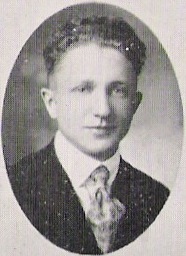
George Kingsley Zipf
American linguist and philologistWikipedia
9
MENTIONS
4
EPISODES
4
PODCASTS
Search complete. 9 mentions across 4 episodes found for "George Kingsley Zipf".
Oct 15, 2026

speaker_1HOST
We have to turn to the mathematics of complex systems: power laws and fractals.
speaker_0HOST
Zipf's law is a power law, right? Explain that.
speaker_1HOST
George Kingsley Zipf was a linguist in the 1930s.
speaker_1HOST
He found that the most frequently used word in English, the, accounts for about seven percent of all words.
speaker_1HOST
The second most frequent, of, accounts for three and a half percent, exactly half.
speaker_1HOST
Exactly.
speaker_1HOST
That creates a steep L-shaped curve, not a bell.
speaker_1HOST
And Zipf's law describes city populations, earthquakes, wealth distribution, and extreme stock market movements.

Larry BernsteinHOST
What is a power law? Tell us about George Zip's observation about geography.
Shlomo AngelGUEST
George Zipf's law says that when you rank cities by their population size, the second city is going to be half the size of the largest city population.
Shlomo AngelGUEST
The third city is going to be one third the size and so on.
Shlomo AngelGUEST
When you do group countries with large numbers of cities, you do get a result that approximates

BrewHOST
However, there is proof that he likely didn't write the manuscript himself.
BrewHOST
Let's take a look at Zipf's law.
BrewHOST
It's basically a law about how often words show up in a language and whether they follow a predictable pattern.
BrewHOST
The most common word, like the in English, is used about twice as often as the next most common word, of, three times as often as the third and, and so on.
BrewHOST
This is common with most languages out there, and when applied to the manuscript, it follows Zipf's law.
BrewHOST
That possibility rules out both graphomania and glossolalia, as they usually produce chaotic output without consistent structure.
BrewHOST
However, does that rule out a hoax? Gordon Rugg, a researcher who's been poking at this mystery for over a decade, claims that the manuscript's content is very possible to fake.
BrewHOST
And more importantly, they follow Zip's law.

Mignon FogartyHOST
It shows up in a huge number of languages.
Mignon FogartyHOST
So who discovered this pattern? Well, the law gets its name from a Harvard linguist named George Kingsley Zipf.
Mignon FogartyHOST
And here's my favorite part.
Mignon FogartyHOST
He apparently wasn't a huge fan of math.