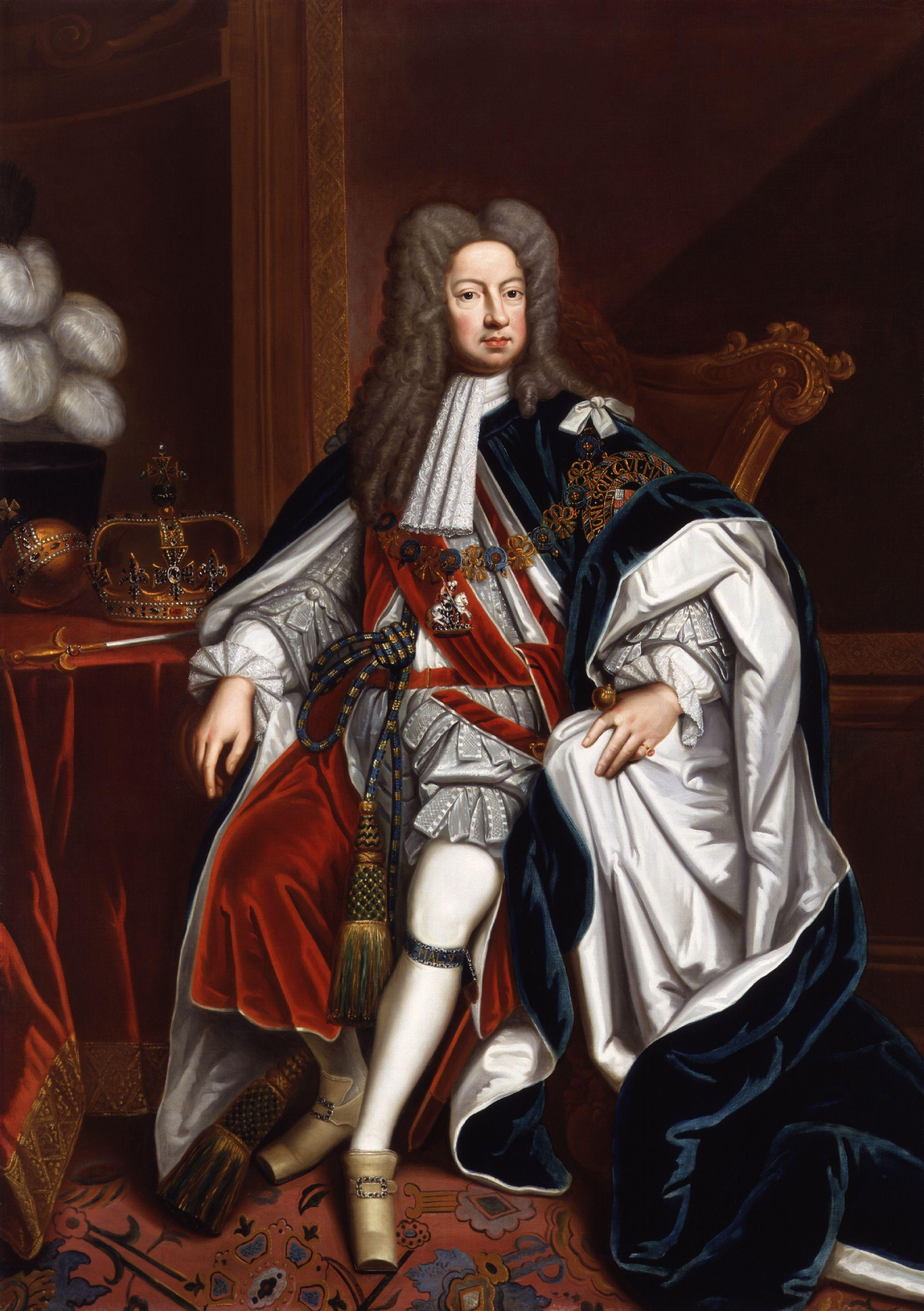
George I of Great Britain
Former King of Great Britain and IrelandWikipedia
153
MENTIONS
63
EPISODES
44
PODCASTS
Search complete. 153 mentions across 63 episodes found for "George I of Great Britain".
Sep 29, 2026

Alex von TunzelmannHOST
Hanover is in Saxony, kind of in the middle towards the top, if you want to look at a map.
Alex von TunzelmannHOST
Jörg Ludwig became King George I of Great Britain.
Alex von TunzelmannHOST
How did that go?
Jan RügerGUEST
Well, it went well, surprisingly well, I would say, for a number of reasons.
Jan RügerGUEST
With George I, the interesting aspect is that he crosses the sea to be crowned King of Britain.
Jan RügerGUEST
But of course, a part of his new kingdom don't want that.
Jan RügerGUEST
They're the Jacobites.

Lindsay HolidayHOST
I'm Lindsay Holliday and I'm spilling the tea on history.
Lindsay HolidayHOST
potential British monarchs rejected for George I.
Lindsay HolidayHOST
In 1700, 11-year-old Prince William, Duke of Gloucester, lay dying while his mother Anne watched in anguish.
Lindsay HolidayHOST
He had suffered since birth with a host of inbreeding-related health problems, but this time the doctor's bleeding and blistering did nothing to help.
Lindsay HolidayHOST
The succession skipped over 41 closer relations until they got to the nearest living Protestant, Sophia, Electress of Hanover.
Lindsay HolidayHOST
The Act of Settlement of 1701 declared that all future British monarchs must be her descendants.
Lindsay HolidayHOST
She ended up dying before Anne and the throne went to her son, George I.
Lindsay HolidayHOST
But who were the 41 royals who got rejected? French princes, Italian kings, a queen of Spain and a couple of Holy Roman Empresses.

AlistairNARRATOR
We have had in England kings who did not understand our language.
AlistairNARRATOR
George I had no English, and Walpole, as we know, managed him with good punch and bad Latin.
AlistairNARRATOR
And it is more than possible that, what with the Latin and what with the punch, George I had not at all times a precise idea of the British constitution or of the significance of the documents which he signed.
AlistairNARRATOR
But it has not been suggested that the badness of Walpole's Latin had any more effect on the validity of those documents than the goodness of the punch, or that the Elector of Hanover was absolved from the obligations imposed by the English coronation oath because he thought that it meant something else in German.
AlistairNARRATOR
Nor is the Act of Settlement invalid because George was not able to read it, and the document by which he and his successors are bound, and in virtue of which they occupy the throne, was the English version understood and accepted by the nation, and not the, possibly inaccurate, Latin version in which it was explained to the king.

AlistairNARRATOR
We have had in England kings who did not understand our language.
AlistairNARRATOR
George I had no English, and Walpole, as we know, managed him with good punch and bad Latin.
AlistairNARRATOR
And it is more than possible that, what with the Latin and what with the punch, George I had not at all times a precise idea of the British constitution or of the significance of the documents which he signed.
AlistairNARRATOR
But it has not been suggested that the badness of Walpole's Latin had any more effect on the validity of those documents than the goodness of the punch, or that the Elector of Hanover was absolved from the obligations imposed by the English coronation oath because he thought that it meant something else in German.
AlistairNARRATOR
Nor is the Act of Settlement invalid because George was not able to read it, and the document by which he and his successors are bound, and in virtue of which they occupy the throne, was the English version understood and accepted by the nation, and not the possibly inaccurate Latin version in which it was explained to the king.

Luella MargaretNARRATOR
His clarion or coach horn, or whatever instrument of music it was he blew, has vanished.
Luella MargaretNARRATOR
The parish book records that in the time of George I, a boy broke it off, melted it down, and was publicly flogged in consequence, the last time, apparently, that the whipping post was used.
Luella MargaretNARRATOR
But Gabriel still twists about as manfully as he did when old Peter, the famous smith, fashioned and set him up with his own hand in the last year of King Henry VIII, as it is said to commemorate the fact that on this spot stood the stakes to which Cecily Harfleet, Lady of Blossholm, and her foster mother, Emlyn, were chained to be burned as witches.
Luella MargaretNARRATOR
So it is with everything at Blossholm, a place that time has touched but lightly.

Papa GeeHOST
His letters reached the royal court.
Papa GeeHOST
King George I sent a surgeon named Nathaniel Saint-Audrey to investigate.
Papa GeeHOST
When he arrived in November, Howard told him Mary was in labor with her 15th rabbit.
Papa GeeHOST
The royal surgeon examined her and removed part of the rabbit himself.

speaker_6NARRATOR
Queen Anne died on August 1, 1714, and for a time the skies over Hendel threatened to cloud, for on the very day of her passing the Elector of Hanover was proclaimed by the secret council King of England.
speaker_6NARRATOR
He arrived in London on September 20, and was crowned George I at Westminster a month later.
speaker_6NARRATOR
Here was a pretty kettle of fish, his former master to whose service he had most certainly not returned in a reasonable time, suddenly seated on the English throne, and not even a new te deum prepared against his coming to the land which Hendel now regarded as home.
speaker_6NARRATOR
Hendelian luck got him out of what might have been a serious predicament.
speaker_6NARRATOR
he must have trusted to his destiny in the first place to help him out of an obviously awkward situation and being tactful he made no open move to aggravate it george i was and remained intensely german brought to england with him a compact body of germans chamberlains secretaries even his pair of elderly mistresses the baroness kiel monsega and madame schulemberg and all manner of comforts and consolations he could not find in his new island kingdom he made no effort to shed his german love of music wherefore as roland points out he could not punish handel without punishing himself and after he heard handel's fascinating new opera amadigi in may seventeen fifteen he lost all idea if indeed he ever harbored any of disciplining his former servant He appointed Handel music master to the Little Princesses, and when, in 1716, the monarch had to go to Hanover, the composer accompanied him on the trip, took occasion to study musical developments in Germany, and even wrote a passion on a text by Heinrich Brooks.
speaker_6NARRATOR
Here is the point to consider for a moment the tale of the water music, one of the most venerable Hendelian anecdotes.
speaker_6NARRATOR
The story runs somewhat as follows.
17 MINS LATER
speaker_6NARRATOR
Strange, all this difference should be twixt Tweedledum and Tweedledee.

AlistairNARRATOR
We have had in England kings who did not understand our language.
AlistairNARRATOR
George I had no English, and Walpole, as we know, managed him with good punch and bad Latin.
AlistairNARRATOR
And it is more than possible that, what with the Latin and what with the punch, George I had not at all times a precise idea of the British constitution or of the significance of the documents which he signed.
AlistairNARRATOR
But it has not been suggested that the badness of Walpole's Latin had any more effect on the validity of those documents than the goodness of the punch, or that the Elector of Hanover was absolved from the obligations imposed by the English coronation oath because he thought that it meant something else in German.
AlistairNARRATOR
Nor is the Act of Settlement invalid because George was not able to read it, and the document by which he and his successors are bound, and in virtue of which they occupy the throne, was the English version understood and accepted by the nation, and not the possibly inaccurate Latin version in which it was explained to the king.

David WalesNARRATOR
We are familiar with the journals, newspaper advertisements, and other writings that provide contemporary reports on this custom, but it is to the artist we turn for a more clearly defined view.
David WalesNARRATOR
The painter saw, arranged, and gave us a visual image, sometimes richly informative, as in Tea Party in the Time of George I, of the different tea time items and how they were used.
David WalesNARRATOR
The unknown artist of this painting, done about 1725, has carefully illustrated each piece of equipment considered appropriate for the tea ceremony and used for brewing the tea in the cups held with such grace by the gentleman and child.
David WalesNARRATOR
Throughout the 18th century, the well-equipped tea table would have displayed most of the items seen in this painting, a teapot, slop bowl, container for milk or cream, tea canister, sugar container, tongs, teaspoons, and cups and saucers.
David WalesNARRATOR
Even a brief investigation of about 20 inventories, itemized lists of the goods and property of deceased persons that were required by law, reveal that in New York between 1742 and 1768, teapots, cups and saucers, teaspoons, and tea canisters were owned by both low and high income groups in both urban and rural areas.
David WalesNARRATOR
The design and ornament of the tea vessels and utensils, of course, differed according to the fashion of the time, and the various items associated with the beverage provide a good index of the stylistic change in the 18th century.
David WalesNARRATOR
The simple designs and unadorned surfaces of the plump, pear-shaped teapot in Tea Party in the Time of George I and the spherical one seen in the portrait Susanna Truax mark these pieces as examples of the late Baroque style popular in the early part of the 18th century.
David WalesNARRATOR
About mid-century, teapots of inverted pear shape associated with the Rococo style began to appear.
53 more episodes mention George I of Great Britain.
Create an account to see the whole feed, search across every transcript, and follow the entities you care about.